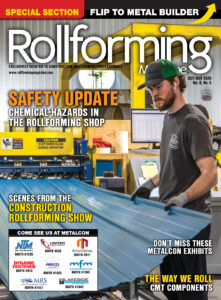



Regular safety meetings, proper equipment training and maintaining clean work areas are crucial to protecting your employees and your business.
Metal roofing contractors face unique challenges when it comes to workplace safety. Whether you’re operating a single sheet metal bender in your shop or running multiple machines on your manufacturing floor, safety needs to be a top priority. In a recent MetalTalk, Chad Rowe, director of business development at MetalForming LLC, shared insights about safety in the metal bending industry that every contractor should know.
The safety crisis in metal manufacturing
When you start bending metal for your roofing projects, you become the manufacturer, which carries significant safety implications. Chad points out, “As I purchase equipment, as I start using this equipment, I am truly manufacturing my own goods to use. So, I am a manufacturer, and that opens up a whole different set of safety requirements and topics. Unfortunately, manufacturing continues to be ranked in the top two of injuries reported by the Bureau of Labor and Statistics.”
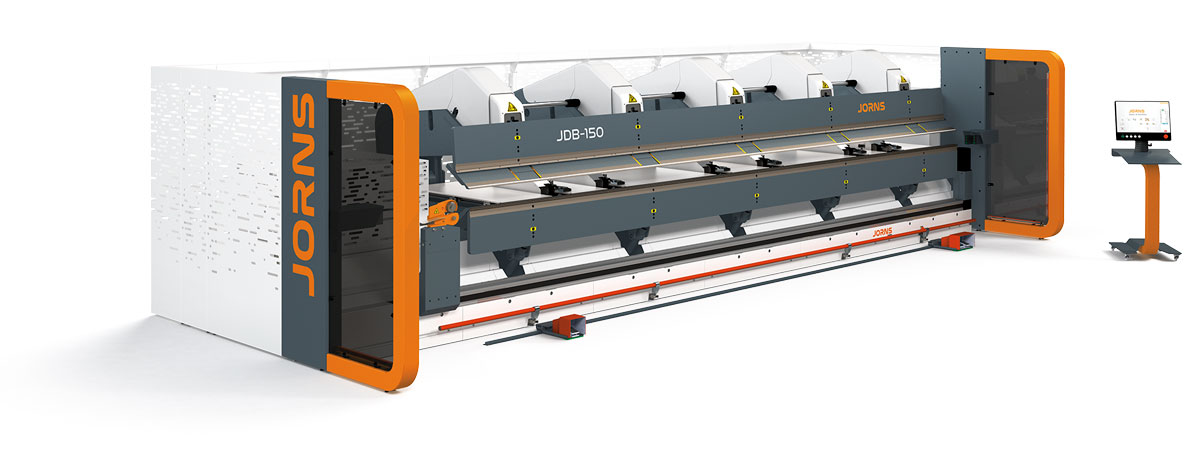
The good news is that safety technology has evolved dramatically over the years. Modern CNC-controlled machines and fully automated systems offer significantly improved safety features compared to older equipment, making now the perfect time to reassess your operation’s safety measures.
Protecting your most valuable investments
Workplace accidents can devastate your business financially and harm your team. Chad emphasizes this dual concern: “There can be a large financial burden when an injury does happen or when an accident does happen. And our people, our employees, that’s our biggest investment that we’re making into a company.”
Even if you operate just one machine in your shop, implementing manufacturing-level safety protocols is essential. Chad recommends: “There are on-the-jobsite safety briefings that happen every single day. There’s no reason that those same principles don’t apply. They do still apply even inside a facility in a manufacturing environment.”
Safety as a factor in purchasing decisions
Chad notes that safety features should be a primary consideration when evaluating new metal bending equipment to add to your business. “There’s some equipment that is inherently safer than others… I think safety is a big factor when looking at some of these higher end systems that maybe gets overlooked at times, or we’re just looking for the activity and throughput when there are other factors that can be considered.”
Before investing in new equipment, ask vendors about safety features, training requirements and how the machine complies with current safety standards. The initial investment in safer equipment can save substantial costs and prevent injuries down the road.
One of the most promising safety innovations Chad mentions is light curtain technology. These systems use photoelectric beams to create an invisible fence around dangerous machine areas. When someone breaks the beam, the machine automatically stops operation.
Conclusion
Safety in metal roofing manufacturing isn’t just about compliance—it’s about commitment to your people and your long-term success. As Chad Rowe emphasizes, every contractor who begins bending metal becomes a manufacturer, inheriting the responsibilities that come with it. By prioritizing regular safety meetings, proper training, and smart equipment choices, you not only reduce the risk of accidents but also build a culture of safety that protects your most valuable assets: your employees. In the end, a safe shop is a productive shop—and a strong foundation for a thriving business.