

Originally Published as: Tech Support: Where to turn for equipment help from select manufacturers
When a machine goes down, production stops—and every minute of downtime can mean missed deadlines, delayed shipments, frustrated customers, and lost revenue. In today’s fast-paced construction roll-forming world, technical support has evolved beyond a simple service call. Manufacturers are expected to function as long-term technical partners, helping customers maximize runtime, train operators, troubleshoot problems remotely, and keep equipment running efficiently for years—or even decades—after installation.
The quality of technical support behind a machine can be just as important as the machine itself. Fast access to knowledgeable technicians, readily available replacement parts, remote diagnostics, preventative maintenance programs, and ongoing operator education all play a major role in determining how quickly a shop can recover when problems arise. In many cases, the difference between a minor interruption and a multi-day shutdown comes down to the responsiveness and expertise of the equipment manufacturer.
The following interviews with several equipment manufacturers reveal a common theme: support is no longer viewed as a separate department—it is part of the overall customer relationship. Companies such as Acu-Form, The Bradbury Group, Englert, Howick Ltd., Metal Rollforming Systems, MetalForming, New Tech Machinery, and SWI Machinery each approach support in their own way, but all emphasize rapid response, operator training, preventative maintenance, and direct access to experienced technicians.
Some manufacturers prioritize highly personalized support with direct access to in-house technicians, while others leverage sophisticated remote diagnostics, global ticketing systems, and field service teams capable of rapid deployment. Several companies stress the importance of preventative maintenance and operator education to reduce emergency service calls altogether. Others point to spare parts availability and internal communication systems as key factors in minimizing downtime.
Together, these conversations provide insight into what you can expect for modern equipment support—and why evaluating technical service capabilities has become an essential part of purchasing and operating metal-forming equipment.
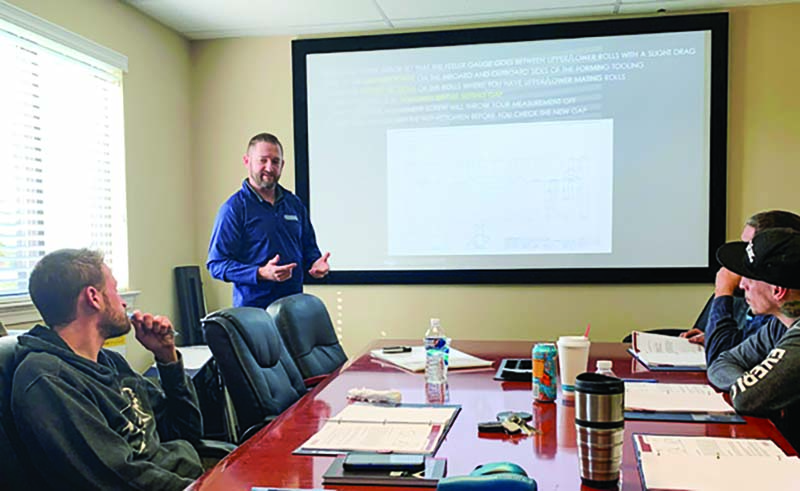
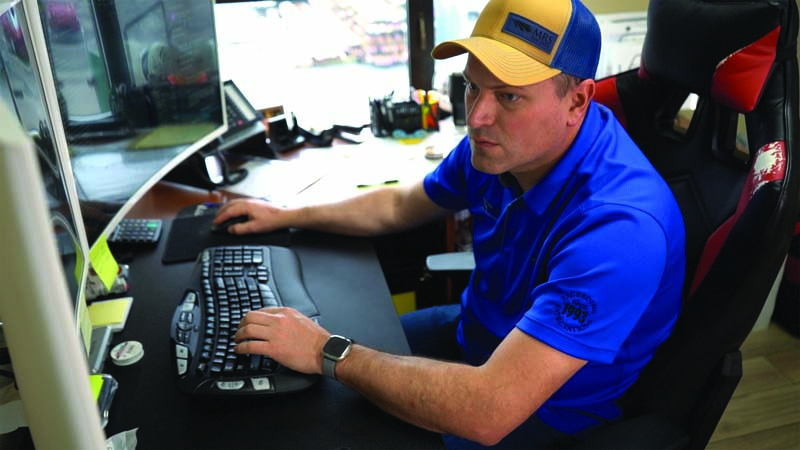
Photo courtesy of The Bradbury Group
Acu-Form: Keeping Support Personal and Practical
For Acu-Form Equipment, technical support starts with direct access to knowledgeable people who understand the machines firsthand. According to Wayne Troyer, support calls are handled entirely in-house rather than outsourced through a call center.
“Our calls are all answered by in-house techs,” Troyer explained. It will be either Wayne himself or the floor manager.
That direct access allows many problems to be solved quickly over the phone. When remote troubleshooting is not enough, the company aims to move quickly with field service support.
“If we can’t fix the problem over the phone, normally we can have a tech crew out at their facility within 24 hours,” Troyer said.
Parts availability is another major focus. Troyer noted that approximately 95 percent of replacement parts are stocked on shelves and available for next-day shipment. Rather than encouraging customers to overstock spare components, Acu-Form prefers maintaining inventory internally so customers can rely on rapid delivery when needed.
Training also plays a central role in the company’s support philosophy. Customers receive owner’s manuals, maintenance schedules, and detailed checklists covering weekly, monthly, and quarterly service items during installation and startup training.
“We make sure they know what to do if there is something they’re missing or something that they have a question on,” Troyer said.
At the same time, Troyer cautions operators against attempting major adjustments without guidance, particularly as equipment becomes more electronically sophisticated.
“If you’re not sure, please give us a call,” he said. “We can help you rather than the operator going in there making adjustments, moving parts, and then in the end it’s actually more work for us.”
The Bradbury Group: Large-Scale Support with Long-Term Focus
At The Bradbury Group, customer support revolves around minimizing downtime through a combination of in-house expertise, remote diagnostics, field service, and preventative maintenance.
“When production stops, customers need fast answers and experienced people that understand the equipment,” said Ron Dies, Field Service Manager at The Bradbury Company.
The Bradbury Group consists of 16 companies operating under one organization, giving customers access to a broad network of technical resources. The Bradbury Company alone employs 17 dedicated Field Service Engineers supporting customers throughout North America and internationally.
The company maintains 24/7 support capabilities, with emergency responses often beginning within an hour. Same-day technician dispatch is frequently possible, depending on travel logistics.
Remote diagnostics have also become an increasingly important part of the support process. Dies explained that many problems can now be identified remotely through controls systems analysis before determining whether onsite support is necessary.
“When customers are down, those situations move to the front of the line,” Dies said. “If necessary, we will redirect inventory, move parts already allocated to other projects, or expedite manufacturing efforts.”
Training remains another core priority. The company provides onsite operator and maintenance training designed to improve troubleshooting skills, machine understanding, and overall production efficiency.
“One thing that separates The Bradbury Group is the depth of experience available to customers,” Dies said. “Many of the machines we continue to support have been operating in the field for decades.”
Rather than viewing support as something limited to startup and installation, the company emphasizes long-term relationships throughout the life of the equipment.
Englert: Proactive Service and Ongoing Partnership
For Englert, support begins with speed and accessibility. According to James Hazen, Director of Roofing Sales, machine downtime is treated as an emergency because contractors are often operating on active jobsites where delays can quickly become costly.
“When one of our machines goes down on a job site, we treat it as an emergency because we know your time is money,” Hazen said.
Customers typically work directly with a Territory Manager who already understands both the equipment and the customer’s operation. Troubleshooting may happen over the phone, through live video, onsite, or through one of Englert’s Field Service Locations.
If additional support is needed, the company’s customer service line creates an immediate CRM ticket and routes the issue to the appropriate technical expert. Hazen noted that callbacks are typically immediate and always within two hours.
Training is customized based on the customer’s experience level. Rather than offering a rigid standardized program, Englert tailors instruction to the operator and maintenance staff involved.
“We provide as much training as needed—not a one-size-fits-all package,” Hazen explained.
Support also continues well beyond warranty periods. Englert offers ongoing preventative maintenance programs, inspection visits, seasonal service trips, and scheduled “tune-up” days at Field Service Centers.
“We believe the best way to serve you is to prevent problems before they happen,” Hazen said.
The company also ties service programs to material purchases, allowing customers to earn loyalty service hours that can be applied toward maintenance and repairs.
Howick LTD: Global Coverage and Self-Sufficiency
Howick Ltd. has built its support strategy around accessibility, global coordination, and helping customers become increasingly self-sufficient over time.
According to Deon Anderson, Head of Global Sales, many customers still prefer speaking directly with a technician rather than navigating automated systems.
“Our techs always answer the phone,” Anderson said. “They never not answer the phone.”
The company also utilizes an online portal and ticketing system where customers can upload photos, videos, and service requests. Because support teams operate across the United States, United Kingdom, and New Zealand, tickets can often be picked up quickly regardless of time zone.
“We pride ourselves on our support and backup,” Anderson said. “If they’re not moving, production loss is costing them money.”
Training begins during machine commissioning and setup, with additional support available based on customer needs and experience levels. Rather than relying heavily on standardized classes, Howick focuses on individualized training and direct communication.
“We try and focus on individual needs rather than try to catch everyone as a whole,” Anderson explained.
The company’s online portal also provides customers with maintenance schedules, documents, videos, and knowledge-base resources designed to help operators troubleshoot and maintain equipment independently.
“The way our machines are built, maintenance is relatively easy to do so people can be self-sufficient,” Anderson said.
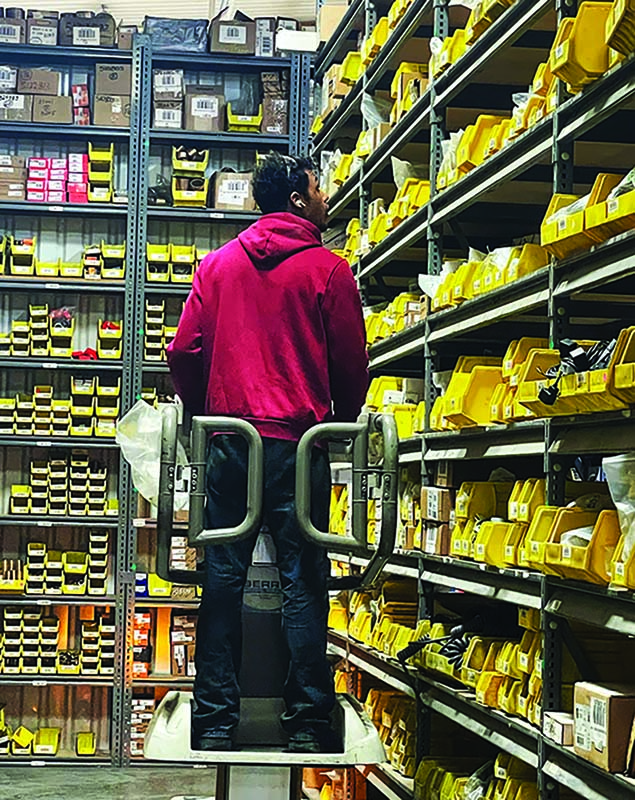
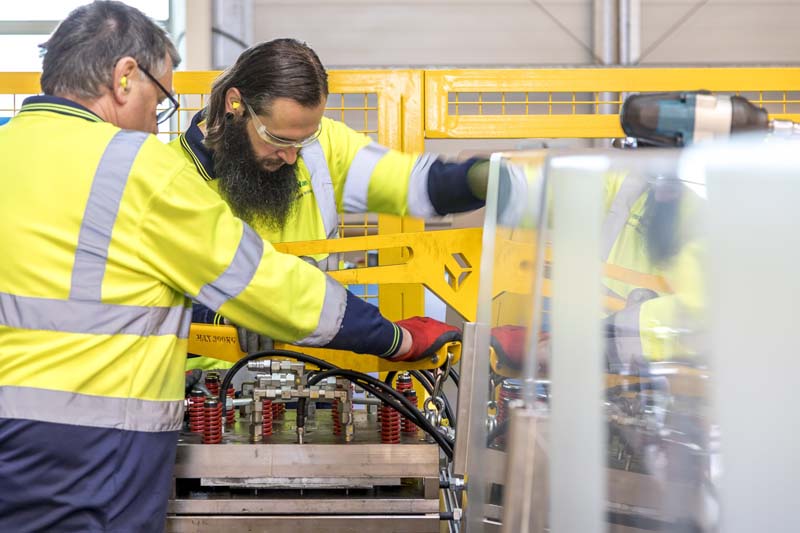
Preventative maintenance service agreements are also common, with some customers scheduling multiple service visits per year for tooling inspections, punch checks, and overall machine evaluations.
Anderson emphasized that support extends throughout the entire organization—not just within the service department.
“We’re quite unique at Howick,” he said. “Someone can ring sales or the tech team and they’re still going to get an answer or resolution because they all have that knowledge base.”
Metal Rollforming Systems: Technology-Driven Troubleshooting
At Metal Rollforming Systems, support combines direct communication with increasingly advanced troubleshooting technologies.
“We operate with 100 percent in-house support—no call centers, no phone trees, and no runaround,” said Bill Griffin, President of Metal Rollforming Systems.
Support technicians begin their careers as equipment assemblers, giving them firsthand mechanical knowledge of the systems they later support in the field.
The company utilizes a wide range of remote diagnostic tools, including remote software access, augmented reality headsets, photo sharing, FaceTime, WhatsApp, and traditional phone support.
“That translates into faster, more accurate diagnostics and real-world solutions—not scripted responses,” Griffin said.
If remote troubleshooting fails to resolve the issue, field technicians can be dispatched immediately. In urgent situations, scheduled preventative maintenance visits may even be reassigned to prioritize emergency downtime.
As the OEM, Metal Rollforming Systems maintains inventory for current equipment as well as obsolete components supporting machines more than 30 years old.
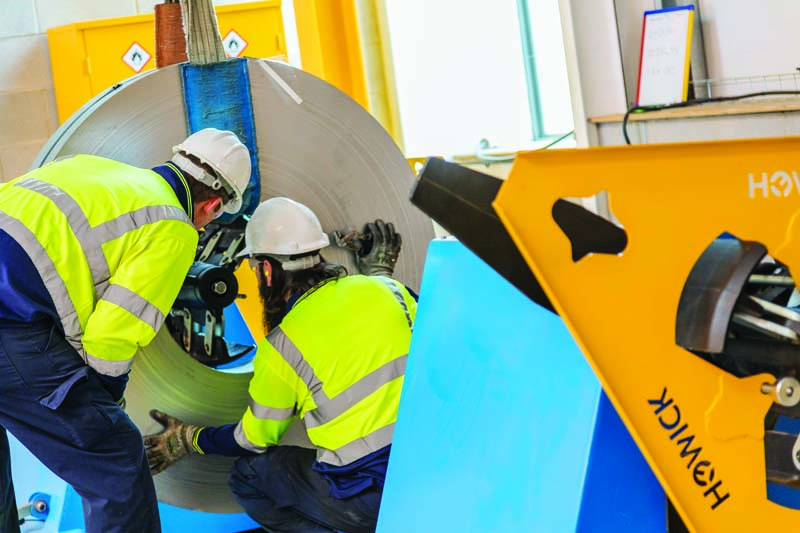
Training remains heavily hands-on. Every installation includes onsite commissioning and practical operator instruction focused not only on machine operation but also on troubleshooting and field service.
“Our goal is to make customers as self-sufficient as possible,” Griffin said.
The company also emphasizes preventative maintenance programs, post-service reporting, customized spare parts strategies, and ongoing technical communications designed to keep customers informed and connected.
“One of our biggest differentiators is continuity of people,” Griffin explained. “Customers typically work with the same individuals over time.”
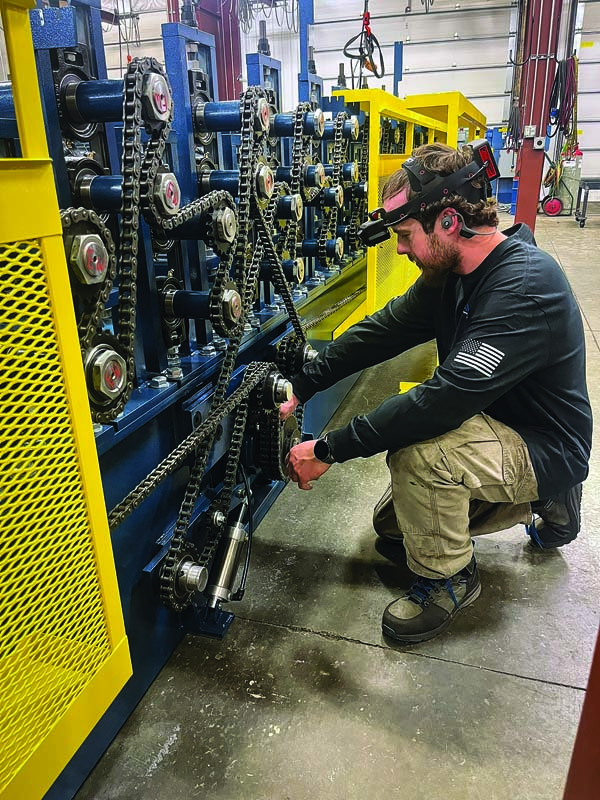
MetalForming LLC: Combining Scale with Digital Transformation
For MetalForming, technical support relies on a large internal team combined with aggressive investment in digital systems and remote diagnostics.
According to Martin König, Executive Vice President of Operations, the company currently maintains 20 technical support personnel in the back office alongside 17 field technicians.
“When calling into the main number, the customer can select the department that most fits their need and directly talk to a person that can help,” König explained.
Every service request generates a ticket that is immediately assigned to the appropriate technician. If a machine is completely down, the assigned technician responds within an hour of first contact.
The company estimates that approximately 90 percent of reported issues can be resolved remotely through TeamViewer access or manufacturer diagnostic tools.
“Machines that are completely down are MetalForming’s top priority,” König said.
Each morning, company leadership reviews all machine-down cases to determine escalation needs and identify the fastest resolution path. The company keeps the most requested spare parts in stock to limit machine downtime. In some situations, MetalForming will even cannibalize components from inventory machines to restore customer production.
Training is integrated into every installation, with operators and maintenance staff receiving instruction on operation, maintenance schedules, and troubleshooting procedures. For more complex applications, application engineers become heavily involved in the training process.
MetalForming offers preventative maintenance including training plus customizable Service Level Agreements and parts packages if the customer is interested in keeping critical components on hand.
MetalForming also offers free lifetime refresher training at its Peachtree City, Georgia, facility.
“Our experienced technical support team will talk the operators through the troubleshooting and educate the customer what to look out for going forward,” König said.
The company is also investing heavily in integrated CRM, CPQ, and ERP systems aimed at improving response times, knowledge tracking, parts availability, and machine uptime.
“Everybody at MetalForming understands that everybody is touching the customer,” König said.
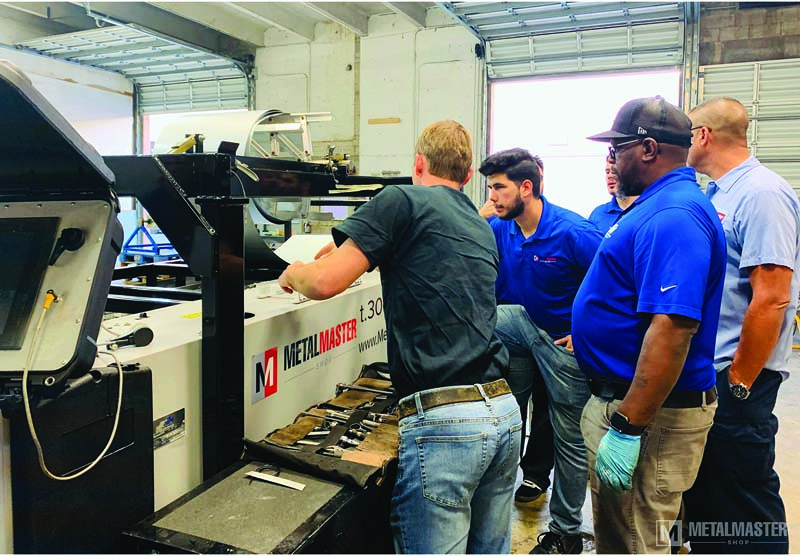
Photo courtesy of New Tech Machinery.
New Tech Machinery: Accessible Support and Continuous Training
For New Tech Machinery, technical support follows a structured process designed to quickly connect customers with the right expertise while keeping resolution times as short as possible. According to Rick Zand, support begins when a customer calls into the service line and is placed in a queue. “Once it is their turn, one of our service techs will call them to assess the situation,” he explained. From there, technicians evaluate the issue, including the age of the machine to determine whether it may be a warranty-related concern, and work to guide the customer through troubleshooting steps.
In many cases, problems can be resolved remotely. “We try to walk the customer through their issue, or in some cases all they need is to buy parts,” Zand said. When remote support isn’t enough, customers can schedule a service technician to visit their location or arrange to bring the machine in for service. Zand noted that customer feedback on the process has been consistently positive: “We get a lot of compliments on our service department and take pride in our abilities to help others.”
Training and ongoing education are also central to New Tech Machinery’s support approach. Internally, the company emphasizes continuous learning as machines evolve. “We are always working to learn more and more every day,” Zand said. For customers, training begins with free in-house instruction included with every machine, with optional onsite training available. In addition, customers can return at any time for retraining, whether to refresh skills or onboard new employees.
Beyond direct service, the company provides a range of self-guided support resources. “We can provide the customer with extensive videos on our website and YouTube channel that could help with their issues,” Zand said, adding that many customers benefit from online literature and service videos. A network of distributors may also offer localized support when needed. Zand emphasized one important operational rule: “Don’t ever operate the roll-forming machine without the safety covers on it.”
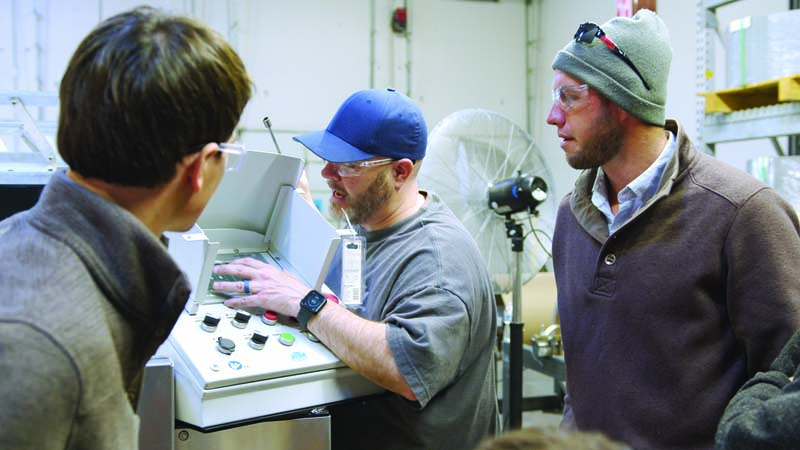
Photo courtesy of New Tech Machinery.
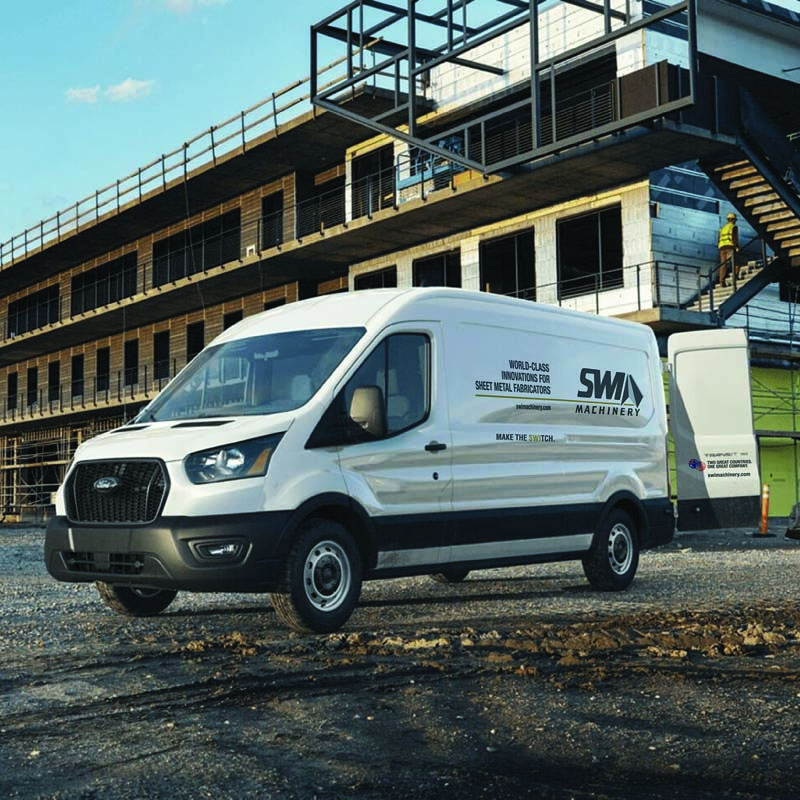
SWI Machinery: Speed, Global Coverage, and Operator Independence
At SWI, technical support is built around rapid response, global coverage, and empowering customers to resolve issues efficiently.
According to SWI’s Jason Smoak, customers typically begin by contacting a field service technician directly. If that technician is unavailable, calls are quickly routed to the next available team member or to the company’s U.S. office, with response times typically measured in minutes.
All SWI slitters and folders are equipped with remote access software, allowing technicians to log in and assist with troubleshooting and diagnostics from anywhere. The company’s global footprint further strengthens response capabilities, with its Australia-based headquarters providing support during U.S. overnight hours.
In the field, SWI maintains seven U.S.-based technicians, each equipped with service vehicles stocked with parts. Additional inventory is held at the company’s Georgia facility, with late-day shipping available to expedite urgent repairs. Smoak noted that restoring production takes priority over administrative processes, allowing parts to be shipped immediately when needed.
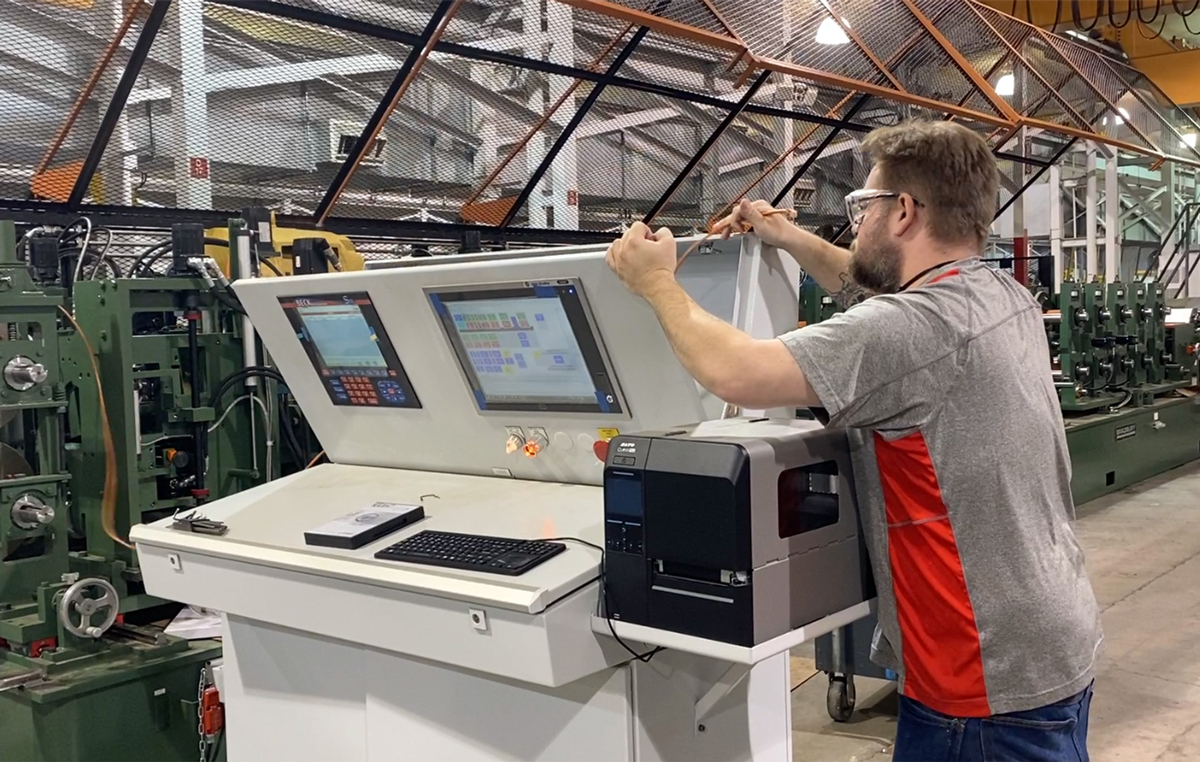
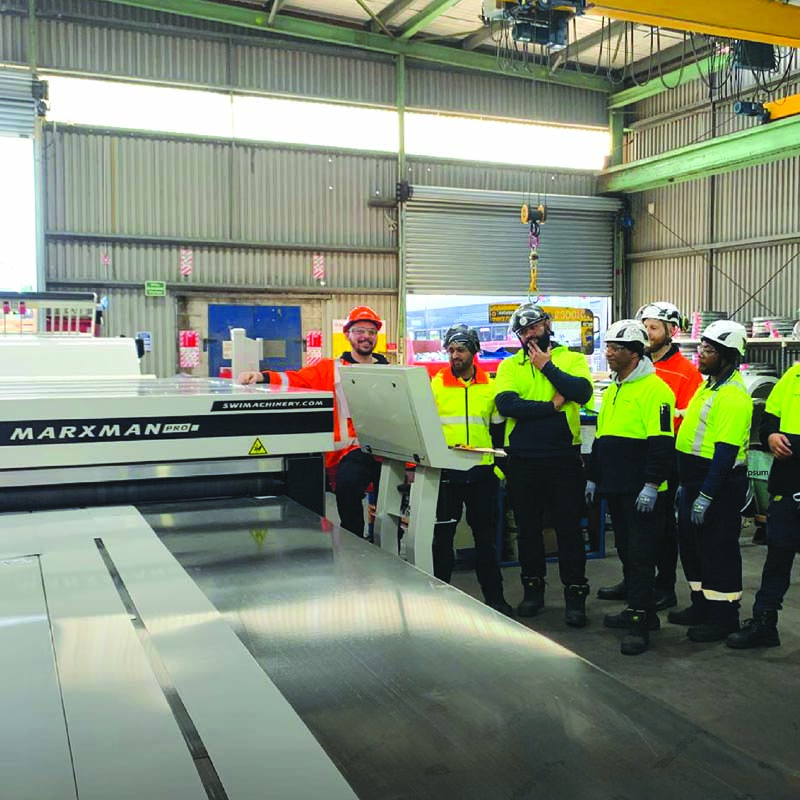
Training is designed to support operator independence. Each machine installation includes hands-on instruction, supported by detailed manuals with illustrations and step-by-step guidance. Documentation is provided both in print and directly within the machine interface, giving operators immediate access to maintenance and troubleshooting resources.
Beyond emergency service, SWI emphasizes ongoing engagement throughout the life of the equipment. Preventative maintenance programs are customized to customer needs, and software updates are provided at no cost. While the company focuses on equipping customers to minimize service interruptions, it also encourages proactive communication to address potential issues early.
“We make a strong effort upfront to equip and empower our customers so they don’t need us,” Smoak said. “But we also welcome those proactive conversations—they’ve led to many of our technological advancements.”
Technical Support as a Competitive Advantage
Across all the conversations, one theme becomes clear: technical support is not viewed as a secondary service added after the sale. For construction rollformers operating in increasingly competitive and time-sensitive markets, support has become part of the equipment itself.
Whether through direct access to experienced technicians, remote diagnostics, preventative maintenance, operator education, or aggressive parts stocking, manufacturers are increasingly being judged not only by how well their machines perform—but by how quickly they respond when something goes wrong.
For rollformers evaluating future equipment purchases, these support systems may ultimately become just as important as speed, profile capability, or production output.