


Originally Publsihed as: Gutter Machines: The Right Fit for Your Business
Buying a gutter machine begins with knowing what your customers need. A machine that produces the right profile and size for your market can earn its place quickly. Buying a size you outgrow or paying for capabilities you seldom use can tie up money that would be better spent on coil, handling equipment, or installation tools.
Before recommending a machine the equipment manufacturer needs a picture of your operation. Describe your residential and commercial work, the sizes customers request, typical gutter lengths, production volume, and existing equipment. Include where you will run the machine and how you will transport and load it. These details affect everything from profile selection to the placement of a coil cradle.
Profiles and Their Markets
Five- and 6-inch K-style gutters are common on homes, condominiums, and townhomes. They also serve smaller commercial properties such as banks, strip malls, and restaurants. The choice between sizes depends partly on local rainfall and the roofs you serve. A 5-inch gutter may satisfy much of the demand in an arid market, while 6-inch gutters may work better where heavy rain is common. Steep roofs can also create demand for larger residential gutters. Match the size to the drainage requirements rather than assuming 6-inch gutters are strictly commercial products.
Half-round gutters are another residential option, particularly in historic areas where appearance influences the selection. Fascia gutters offer a regional alternative to the familiar fascia board and K-style gutter combination. Larger K-style and box gutters, including 7-inch profiles, serve commercial applications. Establish which sizes local jobs require before choosing the machine.
“You should check what profile is popular in the area, because there can be differences. Gutter profiles are different widths on the two coasts,” said Colton Kuddes of New Tech Machinery.
Specialty profiles can appeal to homeowners who want a distinctive architectural detail. However, that appeal must translate into enough orders to justify the investment in the machine. Ask local customers and builders what they actually buy. A combination machine can provide flexibility, but purchasing a 5- and 6-inch machine makes less sense if nearly every order calls for one size.
Look beyond the profile name when arranging component supplies. Check the formed gutter against the hangers, end caps, and corners you intend to use. Confirm availability of matching downspouts and elbows, along with color consistency between the coil and accessories. Regional coil widths and profile details can vary, so give the machine supplier the specifications of your intended material.
Materials and Changeovers
Gutter machines can be equipped to run painted aluminum, steel, and copper. Common aluminum thicknesses are .027 and .032 inch. Specify the metal, thickness, coil width, finish, and any required grade or temper before ordering. A machine’s advertised ability to form several metals does not mean every coil will run properly without adjustment.
Drive design affects those adjustments. Polyurethane drive rollers can reduce the adjustment needed when changing materials compared with older steel drive systems. Have the manufacturer explain how the proposed machine handles your material range and demonstrate it with the coil you expect to use.
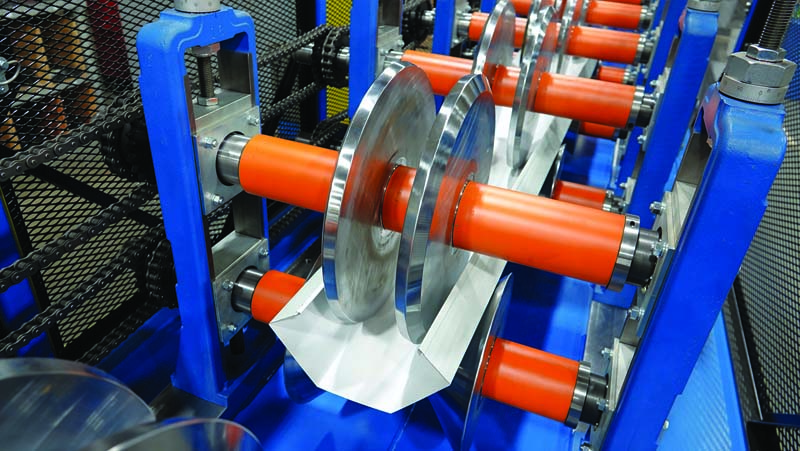
Changing between 5- and 6-inch production on a combination machine can take approximately 15 to 30 minutes, depending on the equipment and operator’s training and skill. Find out which components move, what adjustments follow, and how the operator checks the result. Include changeovers, loading, measuring, cutting, and supporting finished gutters when estimating output. Forming speed alone will not tell you how much work a crew can complete.
Power Where You Need It
“Standard gutter machines commonly operate on 110-volt electrical power,” said Tom Laird of New Tech Machinery. “Depending on the model, 220-volt and 12-volt options are also available, with 12-volt equipment allowing battery operation. Machines generally require a minimum of 5,000W. Confirm the supply required by the specific machine, especially when moving into larger box-gutter equipment,” Laird added.
A generator is useful on new construction sites where electrical service may be unavailable. Requirements vary: recommendations for the equipment covered here range from a 5,000-watt minimum to 6,500 watts for standard K-style machines and 7,500 watts for larger 7-inch gutter equipment. Have the manufacturer specify the appropriate generator for your purchase. Include any drills or other tools that will share its power when determining needed capacity.
Coil Capacity & Handling
Choose a coil arrangement that fits your purchasing habits and workspace. Reels can carry larger coils, while cradles can simplify loading smaller quantities for custom jobs. Examples include 1,000-pound reels and 400-pound cradles; verify the ratings for your equipment. The larger capacity is useful only if your operation can load and handle it efficiently.
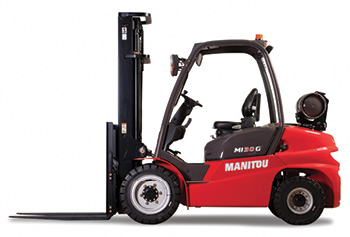
For heavy coils, plan for a forklift and a suitable coil-handling boom. Obtain the boom specifications from the supplier and match the handling equipment to the load. Check the loading path inside your truck, trailer, or shop before settling on the arrangement. A reel that fits may still leave too little room to work, making a cradle more practical.
Two reels, with an optional third, can keep commonly used colors ready. An operation running substantial amounts of white gutter may benefit from keeping that coil on a reel while using a cradle for smaller custom-color orders. Consider how often you change colors and how much material each job consumes.
Runout supports belong in the equipment budget. Long seamless gutters need support as they leave the machine; one recommended arrangement places stands every 15 feet. Confirm spacing with your supplier and provide enough stands and clear working space for the lengths you produce.
Accessories and Operator Training
A tape measure and guillotine shear provide a basic measuring and cutting arrangement. Digital counters offer another way to track length, while limit switches or automatic footage controls can simplify repeated production. Ask to see the complete sequence, including how the machine stops and the gutter is cut. Choose controls that reduce measuring errors and waste on your actual jobs. An optional saw can add miter-cutting capability, and a workstation with room for tools and clippings can keep the work organized.
Shear lubrication affects both cut quality and the effort required to operate the handle. Follow the machine’s instructions for lubrication intervals and approved products, including the separate requirements for chains and gears.
Training should include loading, size changes, adjustments, and safe operation. Look for emergency stops accessible from both sides. Operators may need to learn a machine’s idiosyncrasies such as jogging newly fed material through the machine until it exits the shear, allowing problems to be caught before more coil is damaged.
During the demonstration examine straightness, twist, profile consistency, finish damage, and cut quality. Learn how to recognize a needed adjustment and who to call for technical support.
“Buyers should expect to be shown the machine’s routine maintenance. The supplier should train the operator on all adjustments upon purchase of the machine,” said Jonathan Giacchi, Englert Inc.
Ask about annual service, replacement parts, warranty coverage, and phone or video troubleshooting. Include these ownership costs, transportation, and handling equipment when comparing purchases. Reliable production depends on the whole setup.
Resources
Jonathan Giacchi, Englert Inc., www.englertinc.com
Tom Laird, Colton Kuddes, New Tech Machinery www.newtechmachinery.com