


Trim profiles may be smaller than roof and wall panels, but they play a critical role in both performance and aesthetics. A building simply isn’t complete without them. Whether it’s a ridge cap, corner trim, drip edge, or J-channel, a well-formed trim piece finishes the job right.
For many metal-forming shops, adding a dedicated trim roll former can improve efficiency, expand product offerings, and boost productivity and profitability. But before you commit to a machine, it’s worth taking a close look at your current capabilities, your needs, your future goals, and what different machines can deliver.
Define Your Needs and Goals
Before investing in a roll former, be clear about what you want the machine to produce. Will it be dedicated to just one or two high-demand profiles, or do you need it to handle a wider variety? Consider your current order volume and whether it’s likely to grow in the coming years. If you’re producing the same trim components in high volume, a trim roll former may be a wise addition. If you anticipate new profiles or markets, choosing a more versatile machine now could save you an upgrade later.
Look at how you’re currently using your trim folder. If someone is spending full shifts bending the same part, it may be time to free up the folder with a roll former. Many shops also add a single-profile machine specifically for longer components like corners to avoid lapping shorter pieces.
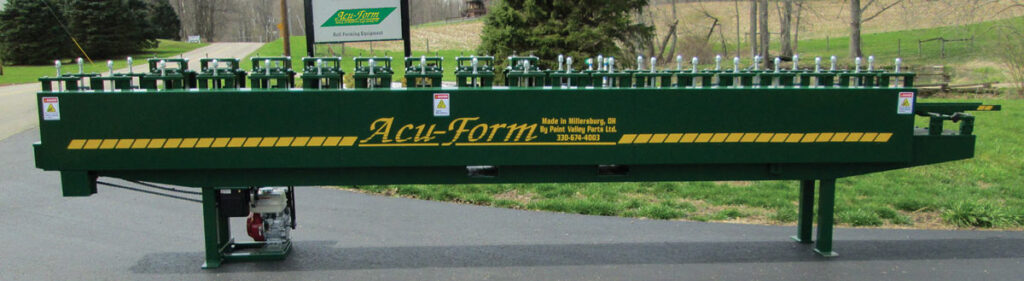
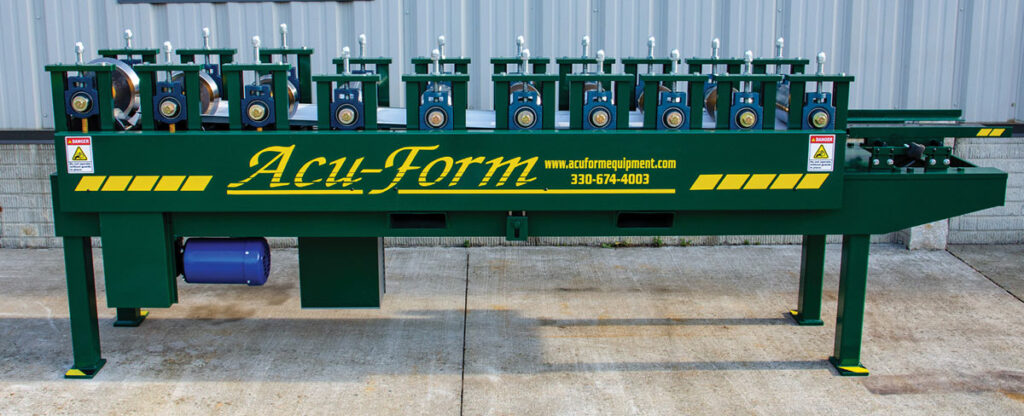
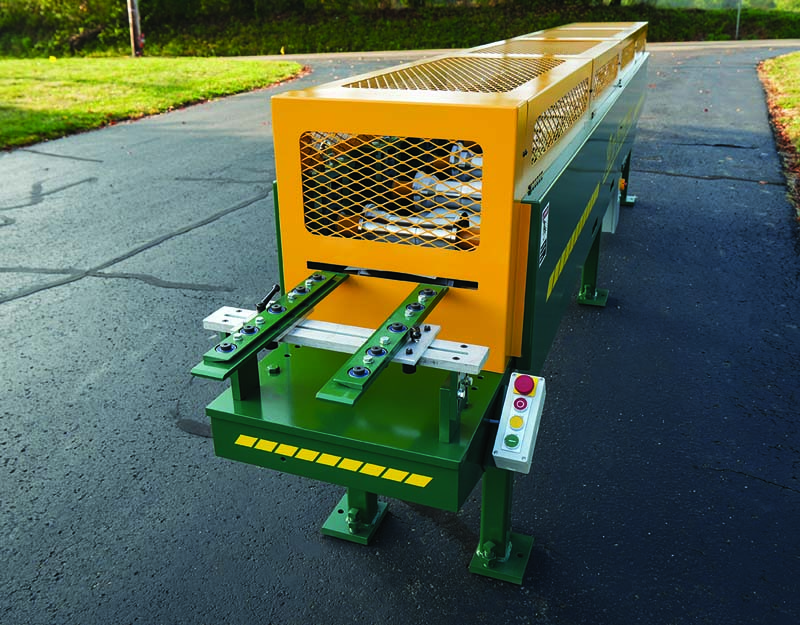
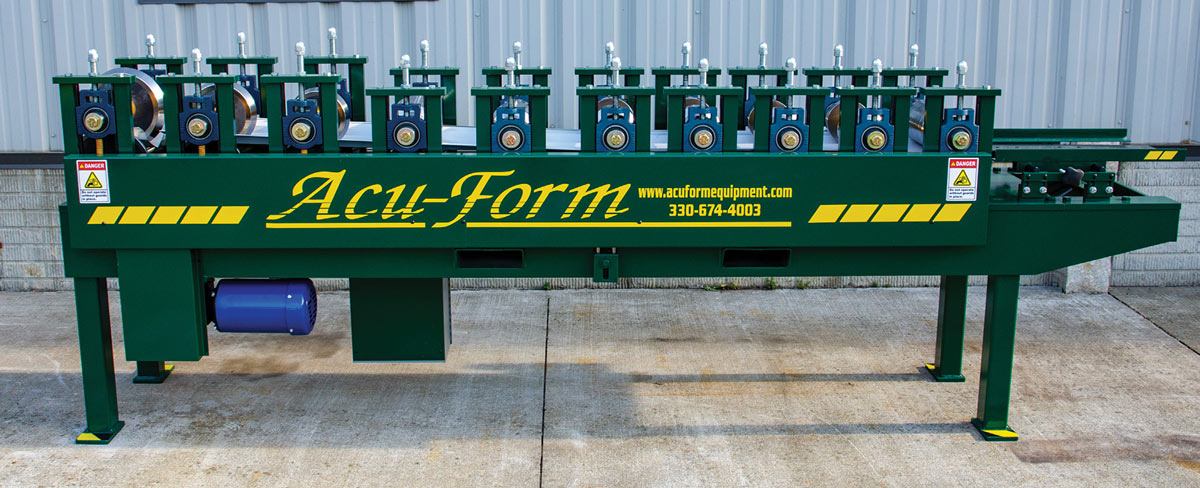
The amount of tooling required has a significant impact on the price of the machine. A basic profile like a ridge cap requires only 10 stands, while an F & J channel machine needs more tooling. Photos courtesy of Acu-Form Equipment.
Get Specific About Profile Design
Machine design starts with knowing exactly what you’ll be forming. Talk with contractors to learn which profiles they use most so you can be confident your machine will stay busy. If you already have samples or detailed drawings, share them with the manufacturer. This ensures the machine is engineered to produce exactly what you need.
Sometimes even a hand-drawn sketch with accurate measurements is enough for a manufacturer to create a technical drawing. Once the specs are finalized and approved, the order is placed, tooling is designed, and production begins.
Look Closely at Machine Features
Not all trim roll formers are created equal. Be sure to ask equipment manufacturers about these key factors:
Forming Stations – The number of stations affects how smoothly a profile is formed. A ridge cap may require 10 stations, while corners often need 12. Dies are a major cost factor, and quality matters—low-grade dies wear quickly and compromise trim quality. Always ask about tooling longevity.
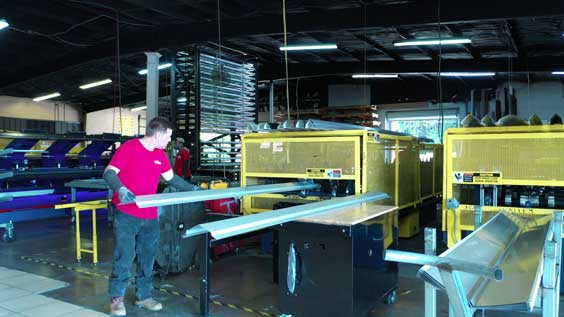
Face Up or Face Down? – Each method has pros and cons. Running face up minimizes handling, but stacking requires careful attention to avoid scratches. Running face down means blanks must be flipped, but ridge caps and similar parts can drop directly into a trough, allowing one person to run the machine.
Multiple Profiles – Machines designed for multiple profiles cost more and require additional dies. They’re powered by a single motor, so downtime affects all profiles. Another option is to use multiple single-profile machines, each with its own motor.
Speed and Throughput – Faster isn’t always better. Match machine speed to your actual production needs and budget.
Material Compatibility – Confirm the machine can handle the gauges, coatings, and substrates you plan to run. Provide detailed specs such as gauge, hardness, and coating type. (For example, will you be running G50 or G90?)
Flexibility – Some machines allow limited adjustments, such as varying face dimensions on a drip edge, which can save time and increase versatility.
Plan for Space, Power, and Workflow
Even the best machine won’t perform well if it doesn’t fit your shop. Most trim formers run 16–18 feet long, but space at the output end must match the length of the trim you’re producing. Running 32-foot corners requires more than 32 feet of clearance.
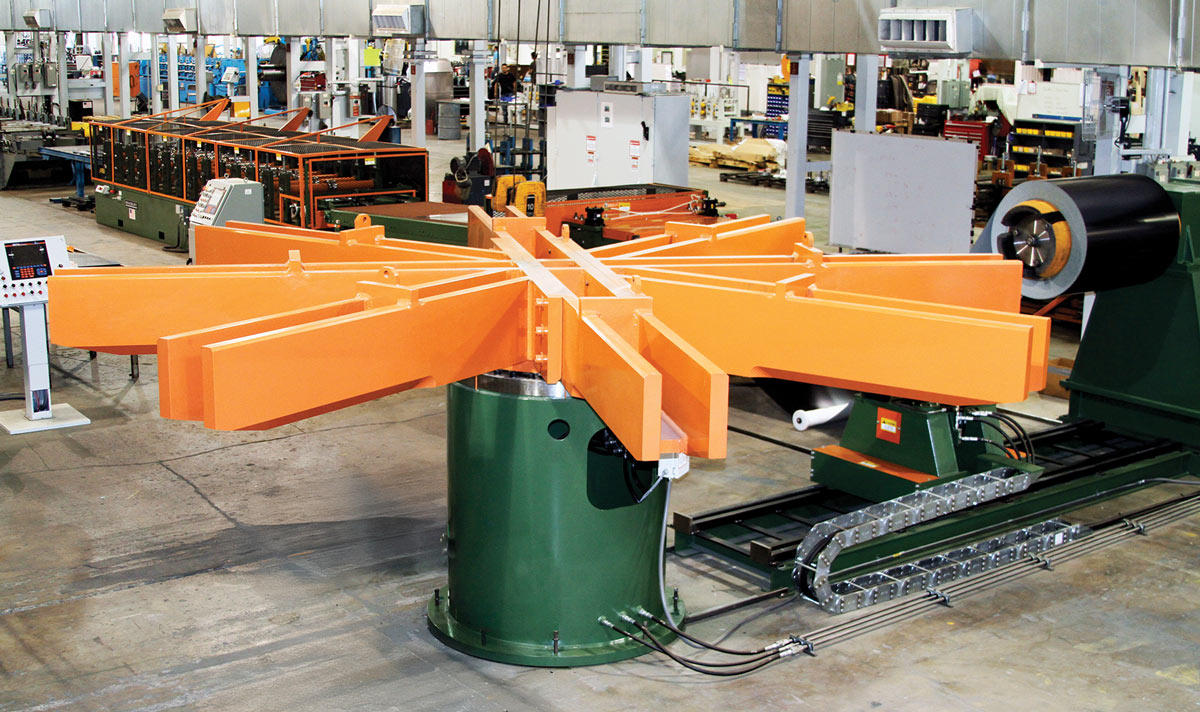
Check your building’s electrical capacity to make sure it can handle the machine’s requirements. Also, plan how the roll former will integrate with coil handling equipment like uncoilers and feeders.
Factor in Quality and Maintenance
The quality of your finished trim depends on the precision and durability of the machine. A solid frame, accurate tooling, and smooth operation reduce downtime and extend tooling life. Maintenance matters, too—look for designs that allow easy lubrication and adjustments. Ask about replacement part availability and cost.
Evaluate Manufacturer Support
A trim roll former is a significant investment, and the manufacturer you choose is as important as the machine itself. Look for a company with proven engineering capabilities and a strong track record. Training for your operators and maintenance team can shorten the learning curve. Don’t forget to ask about warranty coverage, response times for technical support, and service agreement options.
Run the Numbers
Trim roll formers vary widely in size, speed, and price. Even an economical model designed to run a standard shift can dramatically outpace a trim folder. At 80 feet per minute, a roll former can produce around 38,000 linear feet in a day—far more than a folder can handle.
A modestly priced machine can still be a workhorse that lasts decades if backed by a reputable manufacturer. When comparing costs, look beyond the purchase price to factor in energy use, tooling wear, labor, and production savings. The right machine should pay for itself quickly through higher output and freed-up equipment.
Final Thoughts
Adding a trim roll former can be a smart move for many shops, but it’s about more than just buying equipment—it’s about finding the right partner for the long term. By matching your current and future needs with the right machine, you’ll position your shop for consistent quality, smoother workflow, and stronger profitability for years to come.
Resources
Acu-Form • www.acuformequipment.com
Bradbury Group • www.bradburygroup.com
MetalForming • www.metalforming-usa.com
Roll Former LLC • www.rollformerllc.com
Multiple Manufacturers, One Location
If you already know the profiles you need and have the specs, you can speak with multiple equipment manufacturers in one location at the Construction Rollforming Show Oct. 1-2 in Dayton, Ohio.