


Originally Published as: Metal Shop Security: Practices To Keep Your Investment Safe
When considering your own metal shop, safety and security may not come up as your first concerns. Though we would all like to say, “That won’t happen to us,” unfortunately, theft, robbery, and vandalism do happen daily. With the proper knowledge, equipment, and preparation, you can make your shop safer and lessen the risk of unwanted guests.
Physical Entry Points
Heavy-duty hollow metal steel doors with welded frames, internal hinges, and high security deadbolts are the safest doors to ensure metal shop security. These doors are made from galvanized steel to resist cutting, bending, and impact damage, which will help withstand an attempted forced entry. The downside of these doors is that they can be very heavy, requiring a large frame and robust installation. Other safety options include stainless steel for durability or reinforced aluminum for lighter security, in low-risk areas.

For windows, laminated glass, polycarbonate, or glass-clad polycarbonate are suggested for best security. These options offer force, impact, and breakage protection. Glass-clad polycarbonate is the best option for bullet and projectile resistance, which offers the maximum security. The next choice for high-risk areas would be laminated glass. This glass is made of layers and remains intact even if broken, which offers protection against forced entry and reduces risk of injury from broken glass.
Polycarbonate is lightweight and impact resistant. As a plastic alternative, these offer clear visibility with enhanced security against breakage. For additional safety, it may be beneficial to install extra hardware such as window bars or anti-vandal shutters.
Perimeter & Exterior Security
LED and motion sensing flood lights are suggested for the best lighting security. These provide security by offering high visibility, energy efficiency, and low maintenance. LED floodlights have a long lifespan, offers improved visibility, and offer directional lighting. Motion sensing lights are energy saving by only activating when light is needed. They also offer enhanced deterrence, startling an intruder, causing them to flee.
To ensure the lights offer uninterrupted protection, it is beneficial to have a backup battery. During a power outage, a backup battery can allow your lights to continue to work to deter intruders. Power outages are common times for intruders to act. When the light source fails, the backup battery automatically switches on, allowing the products to continue working.
Fencing & Gates
For a metal shop, a combination of chain or steel fencing is considered to offer the best security. These options are difficult to cut or climb. Motorized cantilever slide gates are ideal gates to use for safety and access control. These gates are heavy duty and allow vehicle entry and exit to/from a facility. They are reliable and offer high security.

An access control system may also be beneficial. This allows for secure and managed entry. These systems can offer remote management, vehicle detection, intercoms, and camera. Another, less technical yet efficient option, would be utilizing padlocks.
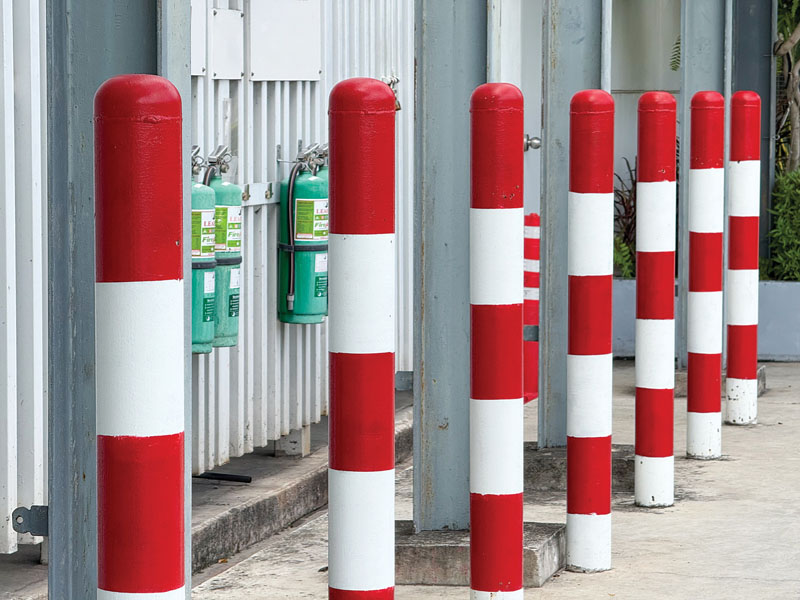
Barriers or bollards are critical to deter and protect against a vehicle crashing through the doors or windows of a shop. Placing bollards at door edges will prevent damage to the building should a driver miss the opening. Heavy-duty steel bollards, often filled with concrete, could be posted around all primary access points and spaced no more than five feet apart.
Signage
“Authorized Personnel Only” signs deter theft by warning intruders that the area is protected, and access is restricted. These signs imply that there may be security cameras and/or repercussions if an unauthorized individual entered.
Additionally, safety and restricted access warning signs prevent accidents and protect sensitive areas. These signs communicate hazards and discourage unauthorized entry. They help legal compliance, reduce liability, improve operational efficiency, and foster a safer, more secure environment for everyone.
Interior Security
Intruder alarms on doors and windows have proven to cause 60% of burglars to completely avoid the property. Eighty-one percent of burglars who attempt to break in will stop the attempt if they discover an alarm system. Overall, alarm systems are beneficial in deterring intruders.
Motion sensors in work areas and storage rooms may also deter intruders. Immediate lighting or alarms may startle and scare off trespassers. Motion lights may also enhance safety by preventing accidents and allowing monitoring for quick responses to unauthorized access.
Glass break detectors near vulnerable entry points offer another layer of security. They offer early detection of intruders and can serve as a deterrent to prevent break ins. These detectors detect the noise or frequencies of the glass breaking which triggers an alarm. The alarm allows for rapid response from security personnel or authorities before the intruder even enters the building.
Cameras
CCTV cameras, a type of camera used in a “closed-circuit” system, with 24/7 recording and remote access offer evidence for incidents and provide remote monitoring. This also may reduce insurance costs. Cameras and recorded footage enhance business security and safety. Along with deterring intruders, it may help protect against false claims and resolve staff disputes.
Asset Protection
Inventory and equipment tagging assigns an identifier to an item which allows for tracking and managing the item. This practice acts as a visible deterrent against theft. It increases the chance of catching a thief, setting off an alarm, and/or allowing for quick item identification.
For equipment, anchor points are beneficial. Anchor points are secure, load-bearing attachment points attached to the equipment. These make theft more difficult and time-consuming.
An end of the day lockup checklist will ensure that whichever staff is on duty will ensure the same safety measures as the last employee. This checklist will remind the person which doors or windows to lock and alarms to set, avoiding easy mistakes and forgetfulness. Additionally, there should be limited key distribution and a tracking log to hold those with keys accountable.
Lastly, all codes and passwords should be updated regularly. A past employee or an overheard conversation may cause a risk of security breach. Regularly changing codes will help prevent this from happening.
Conclusion
Metal shops, like any business, need proper security and safety measures. From sturdy doors and windows and bolts on doors to cameras and alarms, the right equipment may be the difference between theft and security. Proper knowledge and preparation may keep your shop in safe hands.
Courtney Glover is a freelance writer and photographer based in Milwaukee, Wisconsin. She contributes her talents to various publications and is the author of the “Max Builds” children’s book series from Shield Wall Media.
Related Article: Tips for Avoiding Fraud and Cybersecurity Risks (https://rollformingmagazine.com/tips-for-avoiding-fraudand-cybersecurity-risks/)