

Originally Published as: Multi-Profile Machines: Are They Right For Your Shop?
Rollformers today have more options than ever when it comes to running multiple profiles on a single machine. Multi-profile panel lines and multi-trim systems promise flexibility, but they do so in different ways. Understanding how these machines actually function and where they fit operationally is the key to making a smart investment.
At the most basic level, multi-profile capability is about reducing the need for multiple standalone machines. The tradeoff is almost always between flexibility and throughput.
How Multi-Profile Panel Lines Work
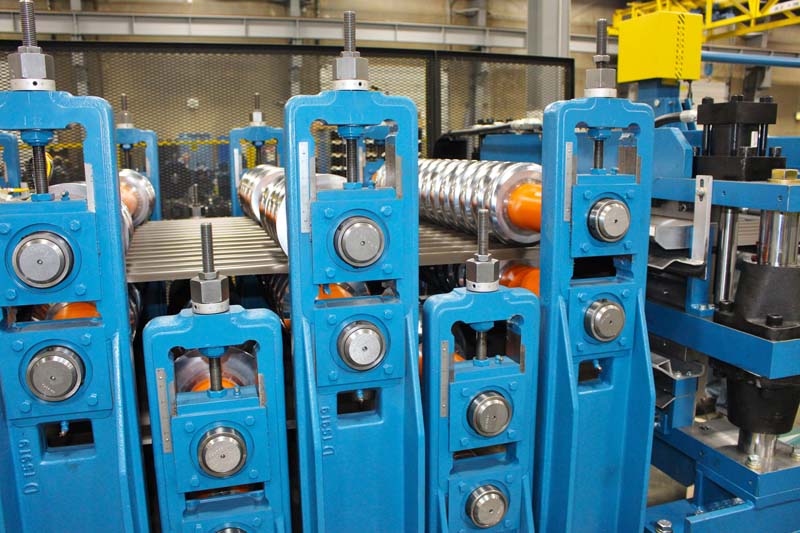
There are two primary approaches to running multiple panel profiles on a single line. One is a dual height or double level configuration. The other uses interchangeable tooling mounted on subplates or rafts.
In a dual height system, two profiles are built into the same machine footprint, one on the lower level and one above it. This allows a roll former to switch between two profiles without removing tooling, but only one profile can run at a time.
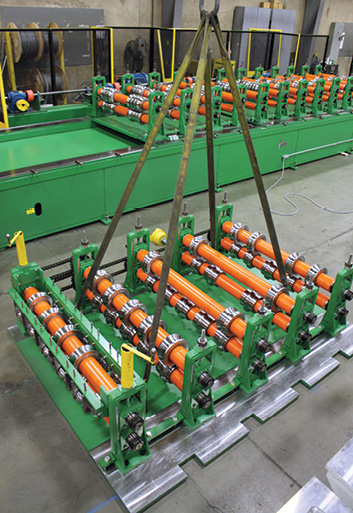
The second approach uses rafts or subplates that hold complete sets of roll tooling. Entire tooling assemblies can be lifted out and replaced as a unit. This allows more than two profiles to be run on the same base machine, depending on how many tooling sets are owned and stored.
Changeover time varies depending on the system. With rafted or subplated tooling, a full changeover may take around 30 minutes and typically requires a forklift or overhead crane to remove and install tooling. In contrast, some quick-change systems allow swaps in minutes once operators are trained, though larger tooling sets limit how fast this can realistically be done.
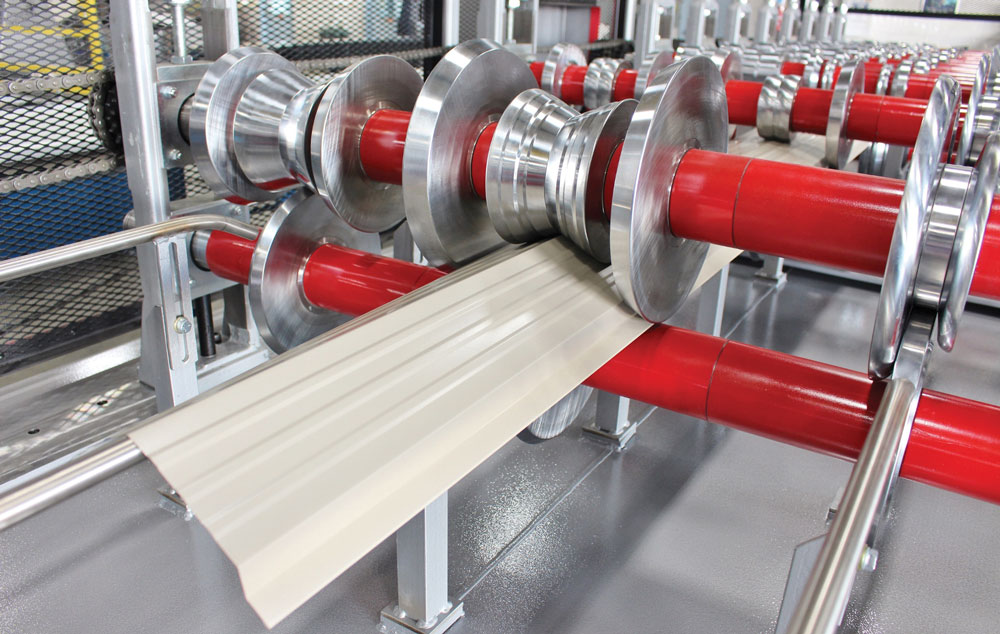
Despite the physical differences, the forming process itself remains the same. Material feeds through a series of stations where it is gradually shaped until the final profile is achieved. Quality is not inherently affected by whether the machine is single-profile or multi-profile, assuming proper setup.
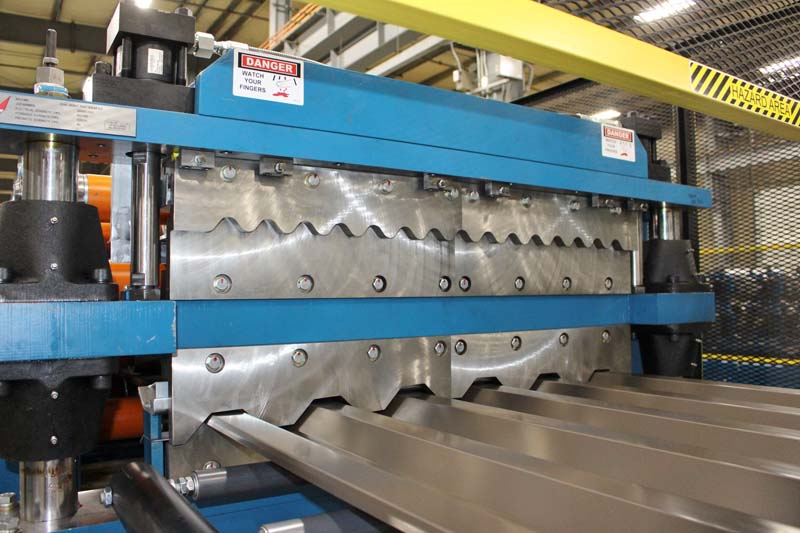
Plate-Based and Adjustable Tooling Systems
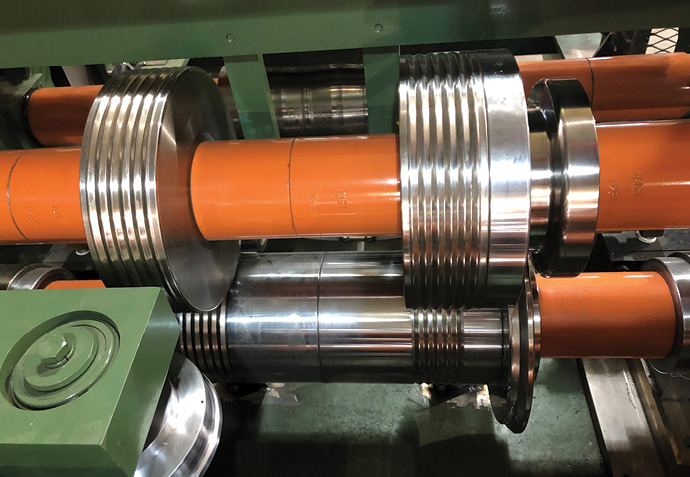
A variation of the second type of multi-profile machine involves machines where tooling plates are pushed into position against a fixed shoulder and aligned for each run. In these systems, the rollers and stations remain largely intact, and the operator adjusts or swaps specific tooling elements as needed.
In these plate-based systems, maintaining alignment between runs becomes a key advantage, allowing experienced operators to reduce setup time while still holding tolerances. Because many of these systems retain baseline alignment, the consistency of the finished product depends less on full teardown and more on careful verification of settings before production begins.
Adjustments may include roller settings, shear components, or profile-specific tooling such as lip boxes or forming blocks. On some systems, operators must also change shear plates depending on the profile being produced.
These machines often retain alignment between changeovers, which reduces setup time once operators are familiar with the process. However, accuracy depends heavily on following procedures and verifying settings before running production.
Multi-Profile Framing Machines
In the framing segment, multi-profile machines function somewhat differently but follow the same principle of flexibility.
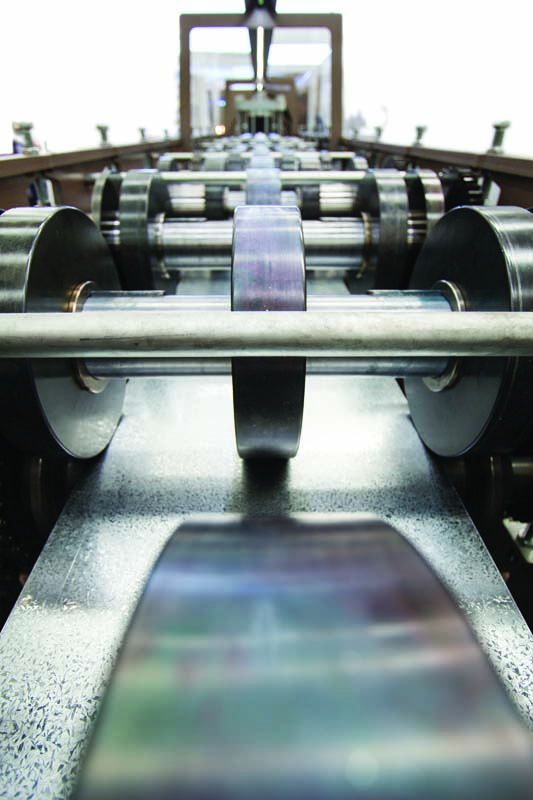
A typical system feeds coil through a sequence of stations that punch, notch, and form the material. A stripper block may create service holes and notches early in the process, followed by forming stations that progressively bend the material. Additional components such as lip boxes and swaging units complete the final shape and connection details.
Multi-profile capability in these machines allows operators to run different web sizes or structural profiles by changing tooling blocks and making adjustments to rollers and forming components. This may include changing stripper blocks, adjusting roll positions, and resetting forming stations.
Changeovers introduce the risk of setup errors, especially if the wrong coil size or tooling configuration is used. Operators typically run test pieces through the machine to verify setup before full production begins. This verification step is critical, as even small setup inconsistencies can compound through the forming stations and affect downstream fit and performance.
Compared to dedicated high-performance machines, multi-profile framing systems trade some speed and throughput for versatility, though some configurations may provide the ability to run twice as much of a particular panel in the same timeframe.
Trim Rollers and Multi-Trim Systems
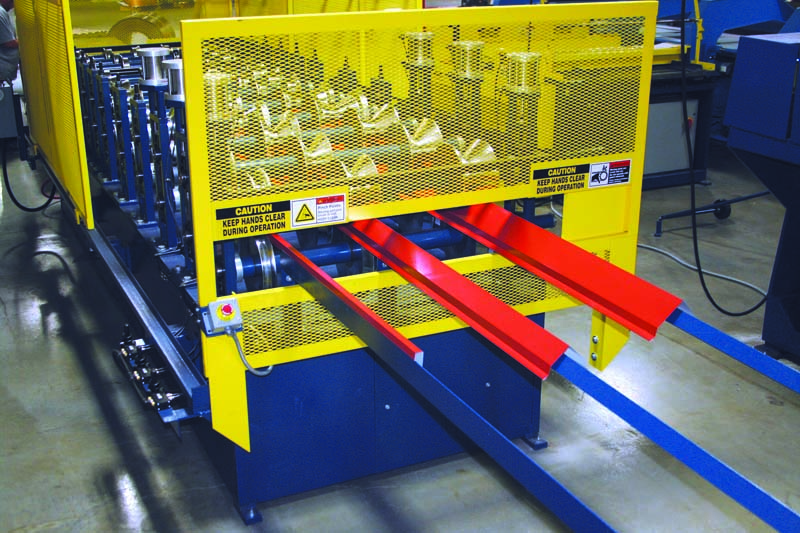
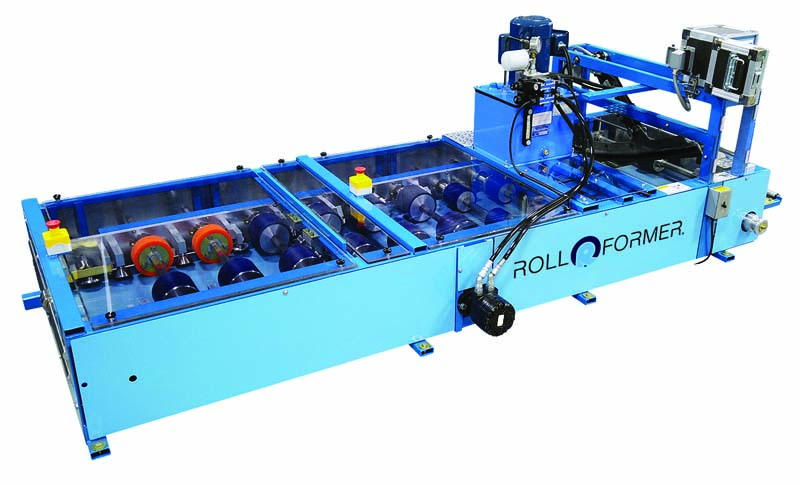
Trim production introduces another layer of multi-profile capability. A trim line can be configured to run several trim profiles, such as fascia or gutter components, often positioned side by side within the same machine.
However, even in multi-trim systems, only one profile is typically produced at a time. The advantage is that multiple tooling sets are available within the same footprint, reducing the need for separate machines. Additional equipment such as hemming machines can extend this flexibility further, allowing shops to expand trim offerings without investing in entirely new lines.
Additional equipment such as hemming machines can further increase flexibility by allowing operators to produce a wider range of trim configurations. These systems can often accept additional tooling over time, extending their capabilities as production needs evolve.
Changeover Realities
Changeover is the defining factor in multi-profile operations.
Depending on the system, changeover may take anywhere from a few minutes to 45 minutes or more. The time required depends on the size of the tooling, the complexity of the profile, and the experience of the operator.
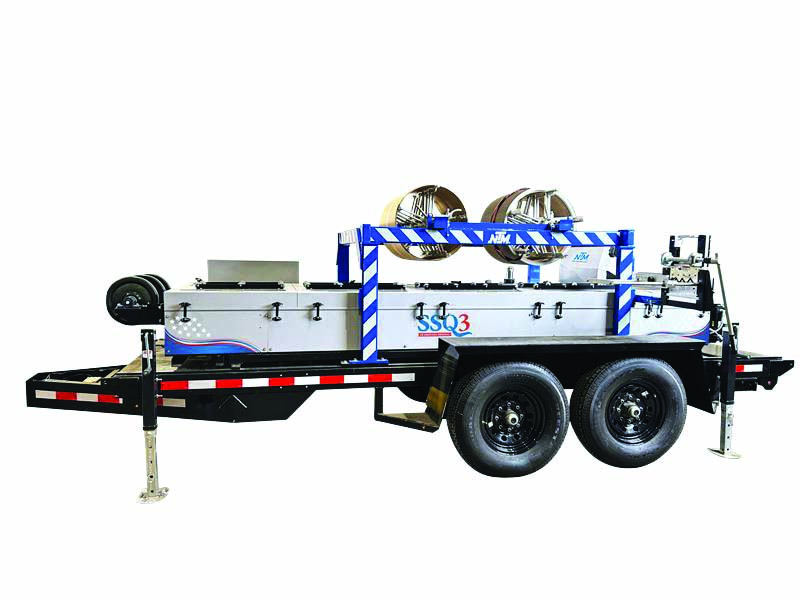
Portable roll-forming machines have an advantage over many machines when it comes to changeovers. These machines are much smaller, so changeovers are quicker and easier and there is less to clean and lubricate.
With all machines there is a learning curve. Operators who are new to the equipment will take longer to complete changeovers and are more likely to make mistakes. Training and repetition significantly reduce both time and error rates.
Material waste is another consideration. Changing profiles often requires running out remaining coil or scrapping partial material, which can add up. For this reason, many operators plan production runs carefully, grouping jobs by profile and coil type to minimize changeovers and maximize efficiency.
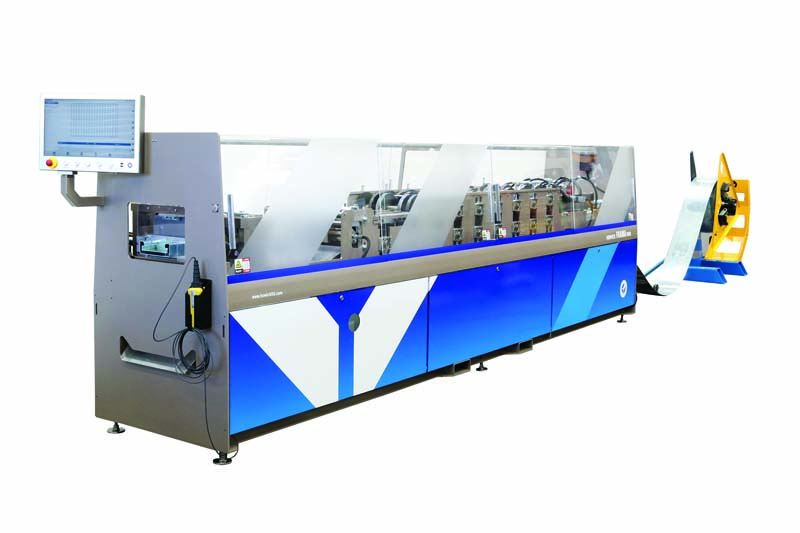
Photo courtesy of Howick LTD
Throughput Versus Flexibility
The central tradeoff with multi-profile machines is speed versus versatility.
A dedicated single-profile machine or a high-performance line will generally produce higher throughput because it does not require changeovers. Multiple single-profile machines can also run simultaneously, increasing total output.
In contrast, a multi-profile machine runs one profile at a time. Even with fast changeovers, production pauses during transitions. This makes multi-profile systems less efficient for high volume, single-profile operations. Furthermore, if the machine breaks down, it’s possible that none of the profiles can be produced during the breakdown period.
However, for shops that run a variety of profiles in smaller quantities, the flexibility of a multi-profile system can outweigh the loss in speed. It can also provide redundancy, allowing production to continue if another machine is down.
How to Decide What Fits
Choosing between a multi-profile machine and multiple single-profile machines comes down to a few core questions.
First, what profiles are you running, and how often? Shops producing large volumes of one or two profiles may benefit more from dedicated machines. Shops handling a wide mix of profiles in smaller runs may gain efficiency from a multi-profile setup.
Second, what is your annual volume in linear footage? Higher volumes tend to favor dedicated equipment, while lower or variable volumes support multi-profile flexibility.
Third, where is the business headed in the next three to four years? If growth or diversification is expected, a machine that can accept additional tooling later may be a better long-term investment.
Fourth, what are the space and labor constraints? A single multi-profile machine uses one footprint, one uncoiler or decoiler, and one set of operators. Multiple machines require more floor space and more labor but can run simultaneously.
Finally, what is the budget? Multi-profile systems typically require a higher upfront investment, especially when additional tooling is included. However, they may reduce the need for future equipment purchases if growth occurs.
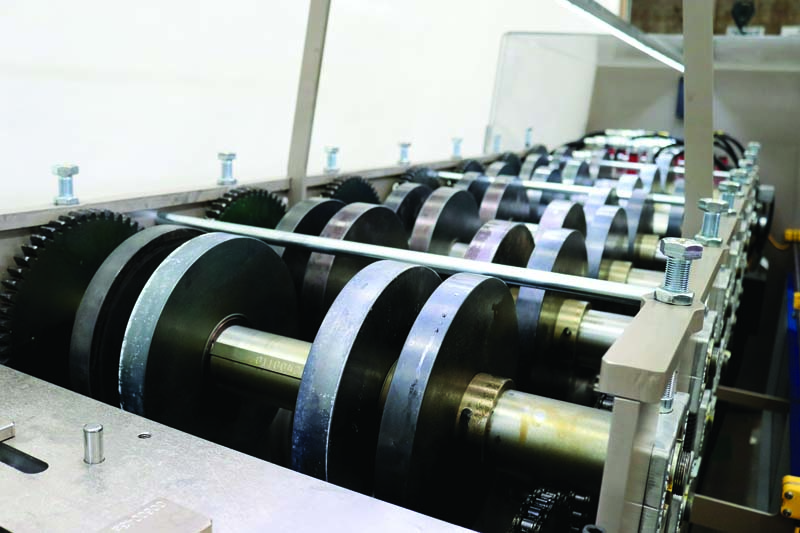
Photo courtesy of Howick Ltd.
Common Stumbling Blocks
One of the most common challenges is underestimating the impact of changeovers. Shops that switch profiles frequently without planning can lose significant production time. The solution is to schedule runs strategically and group similar jobs together.
Another issue is inadequate training. Operators who are not fully familiar with changeover procedures are more likely to make setup errors, leading to scrap or downtime. Taking advantage of training and practicing changeovers before production is critical.
Storage is often an overlooked factor. Rafted or subplated tooling sets require space and proper handling equipment. Without organized storage, changeovers become slower and more difficult.
Maintenance can also become a problem if neglected. As with any roll-forming machine, multi-profile machines still require routine care such as greasing, hydraulic fluid changes, and blade maintenance. Skipping these steps can lead to breakdowns and lost production time.
Finally, some shops invest in capability they never use. Buying a machine with expansion potential only makes sense if future expansion is realistic. Otherwise, a simpler and more affordable solution may be the better choice.
The Bottom Line
Multi-profile rollformers and trim systems offer clear advantages in flexibility, footprint, and future expansion. They allow a single machine to handle a range of profiles and adapt as business needs change.
At the same time, they require disciplined production planning, trained operators, and a clear understanding of throughput limitations.
For some operations, especially those using rafts or subplates and looking to provide a consistently high volume of a specific profile, multiple dedicated machines will be the most efficient path. For others, particularly those balancing variety and growth, a multi-profile system can provide the versatility needed to stay competitive.
The right choice is not about which machine can do more, but which one aligns best with how the shop actually runs today and where it plans to go next.
Resources
Acu-Form Equipment • www.acuformequipment.com
ASC Machine Tools, Inc. • www.ascmt.com
Bradbury Group • www.bradburygroup.com
Howick Ltd • www.howickltd.com
Metal Rollforming Systems • www.mrsrollform.com
New Tech Machinery • www.newtechmachinery.com
Roll Former LLC • www.rollformerllc.com