


Originally Published as: Structural Roll Forming: Where Precision Becomes Critical
In today’s construction and manufacturing environment, the margin for error in structural components is rapidly shrinking. As buildings grow more complex, materials become stronger, larger sections, and production speeds increase; manufacturers are under greater pressure than ever to deliver absolute precision — every time. In this landscape, even minor inconsistencies in forming can translate into costly failures in the field.
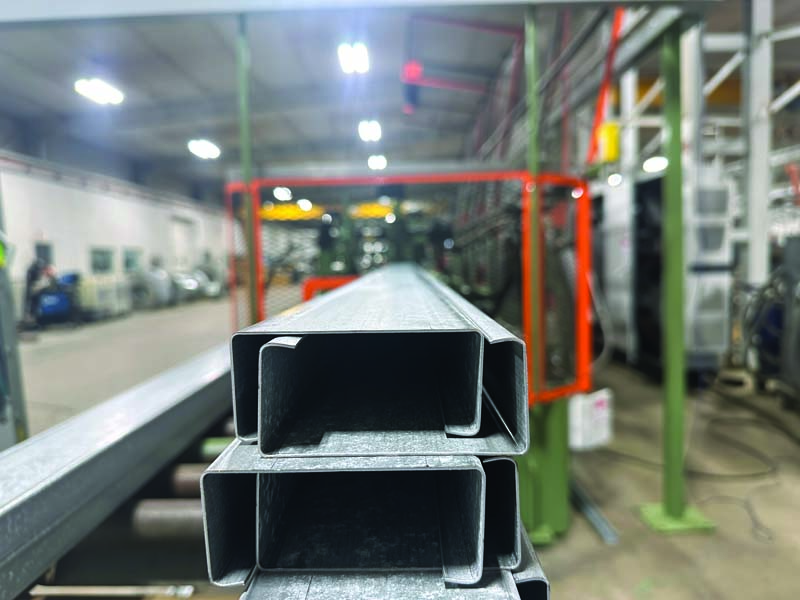
Roll forming has long been a cornerstone of efficient metal shaping, but not all applications are created equally. When it comes to structural components — studs, joists, purlins, girts, struts, and track — the stakes are significantly higher than for light-gauge or architectural profiles.
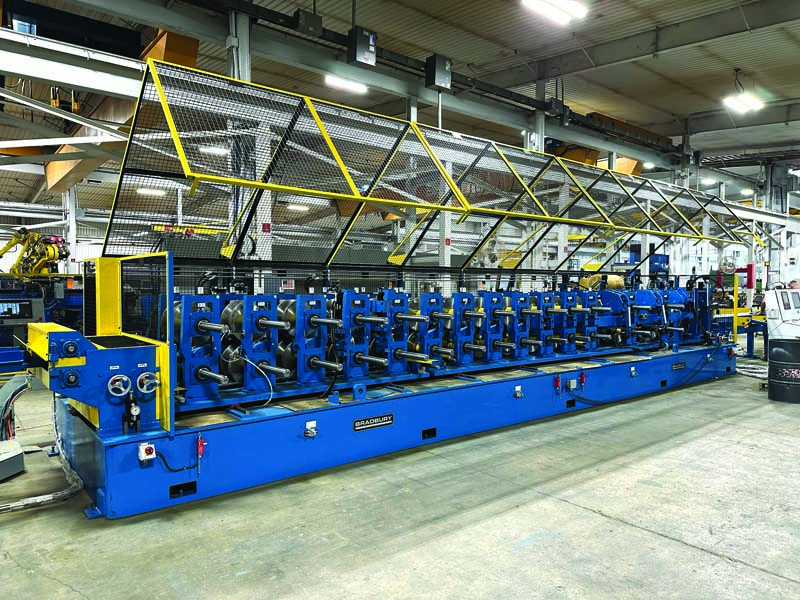
These are not simply shaped; they are load-bearing elements that must perform reliably in real-world building environments. Producing them consistently requires far more than a standard roll forming setup. It demands a tightly integrated system of engineering expertise, advanced tooling, robust equipment, and intelligent automation.
Engineering Performance into Every Profile
Structural components are governed by strict building codes, load tables, and often customer-specific design criteria. Every profile must meet requirements for strength, stiffness, and dimensional precision. That includes maintaining yield and tensile strength, achieving exact section properties, and ensuring reliable deflection and buckling performance. Even hole placement must be precise to support downstream assembly.
Unlike some non-structural products, there is little tolerance for variation. The roll forming process must preserve material integrity while delivering repeatable geometry. Poor alignment, inconsistent forming, or excessive cold work can compromise performance long before installation.
From Coil to Cutoff: Controlling the Process
That level of consistency begins at the front end of the line. Structural members are typically produced from thicker-gauge, higher-strength steel — materials that place greater demands on coil handling and strip preparation. Robust uncoilers, precision straighteners, and stable entry guides are essential to ensure consistent strip guidance. Any variation at this stage—whether from coil camber, edge condition, or feed instability — will be amplified throughout the process.
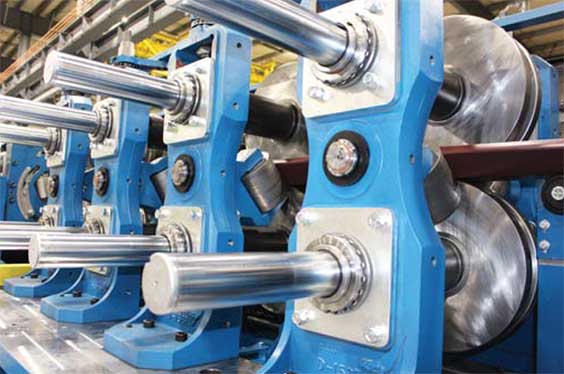
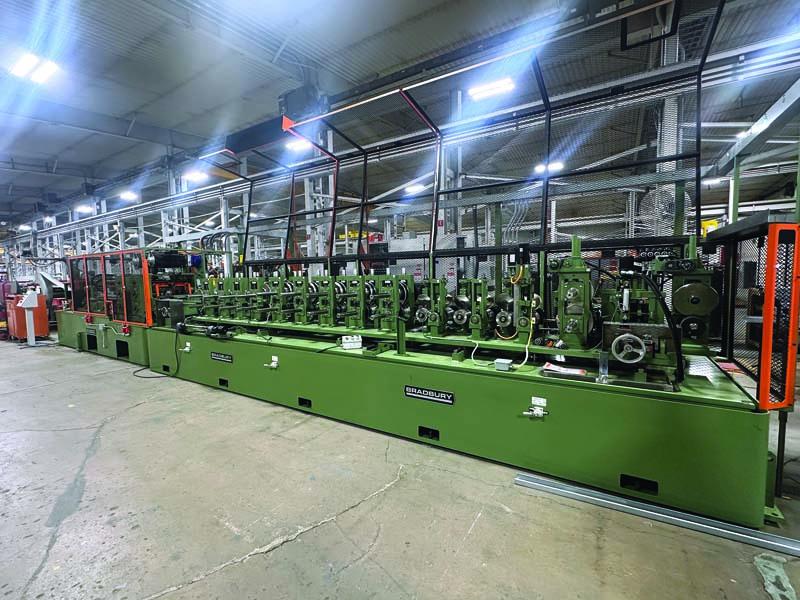
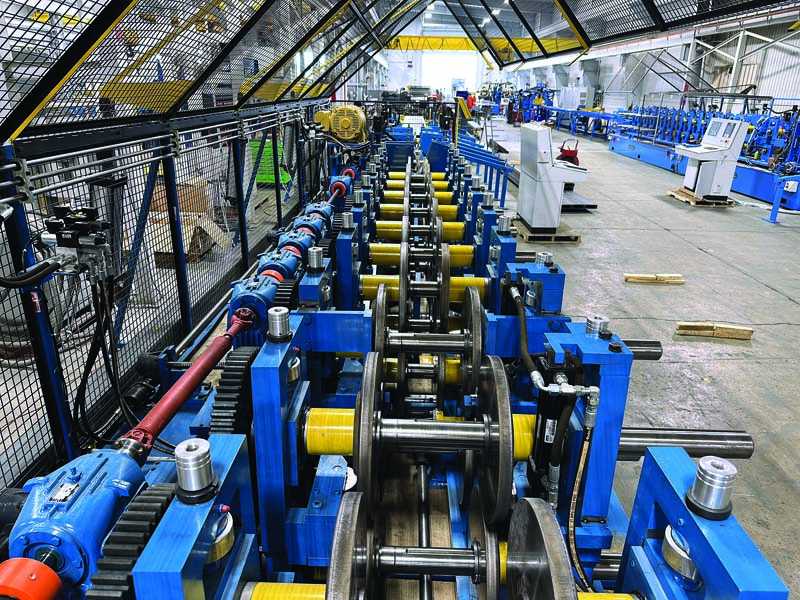
The roll forming mill itself must be engineered for durability and precision under load. Structural profiles require higher forming forces, more forming stations, and tighter tolerance control over long production runs. Mill stands must resist deflection, while shafting, bearings, and gearboxes must be sized for continuous-duty structural production — not light-gauge applications. At the same time, flexibility remains important, especially for producers running multiple profiles or material thicknesses.
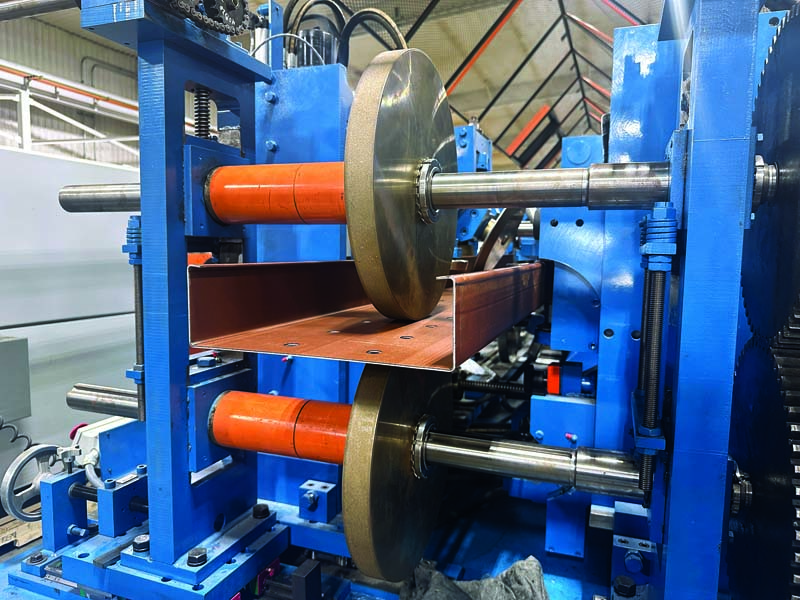
Tooling plays a defining role in this process. Effective pass design must gradually form the material to avoid cracking or excessive work hardening while also compensating for spring back, particularly in high-strength steels. Strategies often include pre-forming stages, controlled over-bending, and specialized stations to maintain consistent web, flange, and lip dimensions. Precision manufacturing and proper heat treatment ensure tooling durability and repeatability over time.
Most structural components also require holes, slots, and sometimes end features for fastening and assembly. Integrating these processes inline demands precise synchronization with line speed. Servo-driven punching systems provide repeatable hole placement across varying profiles and gauges, while robust cutoff systems are required to cleanly process thicker materials. Accuracy is critical — misaligned features can render a structural member unusable.
Automation, Handling, and Quality Assurance
Automation plays a significant role in maintaining precision and efficiency. Modern control systems enable recipe-based changeovers, allowing operators to switch between profiles and materials with minimal downtime. Closed-loop monitoring ensures coordination between punching, forming, and cutoff operations, improving consistency while reducing reliance on operator experience.
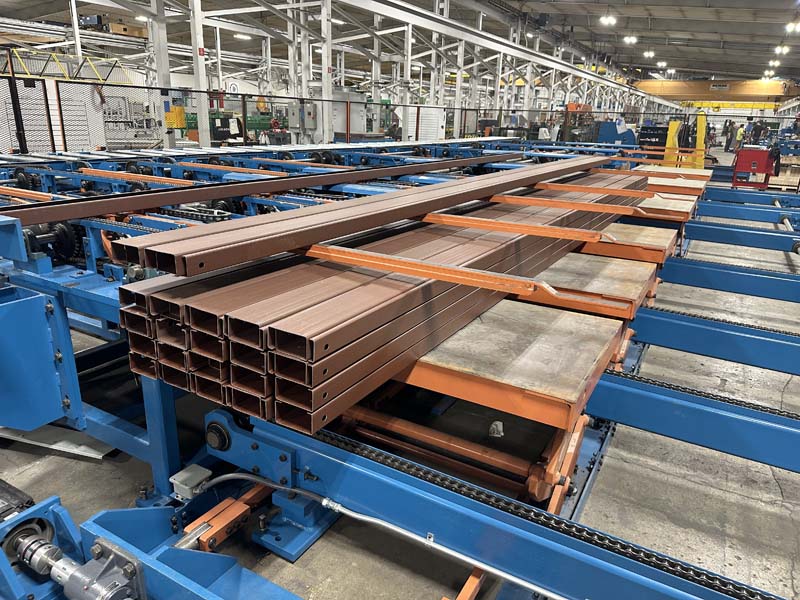
Just as critical as forming the profile itself is how finished components are handled once they exit the line. Structural members are often long, heavy, and produced at high speeds, making manual handling very difficult and sometimes unsafe. Automated runout tables, servo-controlled stackers, and bundle-forming systems ensure parts are aligned, counted, and stacked without introducing twist, bow, or surface damage. Integrated packaging solutions—such as banding, wrapping, or palletizing—prepare components for downstream handling and shipment while reducing labor requirements. Effective handling systems preserve product quality while improving safety and throughput.
In structural applications, quality must be continuously verified. Producers rely on dimensional inspections, statistical process control, and material traceability to ensure compliance with internal standards and external requirements. A well-designed roll forming system supports this effort by delivering consistent parts while allowing for efficient inspection and adjustment when necessary.
The Bigger Picture
Success in structural roll forming extends beyond the equipment itself. It depends on engineering expertise, application knowledge, and long-term support. Producers benefit most from partners who understand structural performance requirements and can assist with profile optimization, troubleshooting, and system evolution as demands change.
Structural roll forming sits at the intersection of engineering precision, manufacturing strength, and automation intelligence. It requires not only shaping metal but controlling how that material behaves throughout the process and in its final application. When all these elements come together, the result is a system capable of producing high-performance structural components — ready to support the buildings and infrastructure they are designed to serve.
Companies like The Bradbury Group exemplify what it means to support structural roll forming at an elevated level. With decades of experience in designing and building heavy-duty roll forming systems, Bradbury brings together engineering expertise, robust equipment design, and application-specific knowledge to help producers meet demanding structural requirements.
Their capabilities extend across the full production line — from coil handling and mill design to advanced tooling, precision punching integration, and automated downstream systems. This comprehensive approach allows manufacturers to implement complete, coordinated solutions rather than piecing together individual components, resulting in improved efficiency, consistency, and long-term reliability.
Equally important is the depth of application knowledge behind the equipment. Experience with structural profiles such as studs and track, purlins, joists, and strut systems enables more effective pass design, better material utilization, and faster problem-solving when challenges arise. Combined with ongoing support, training, and service, partners with this level of capability play a critical role in helping manufacturers optimize performance and adapt as project demands and market conditions evolve.
About The Bradbury Company
The companies of the Bradbury Group [https://bradburygroup.com] are known for the cutting-edge technology and reliability built into every product – and for the exceptional service that helps satisfy customers worldwide. Bradbury strives to set the standard for automated production and systems integration in the metal processing industry. Bradbury believes its leveling, cutoff, punch, folding, roll forming machines and automated systems set the highest standard for productivity, reliability and safety in coil processing.