


Originally Published as: Board and Batten’s Evolution: And Why It Still Presents Opportunities for Rollformers
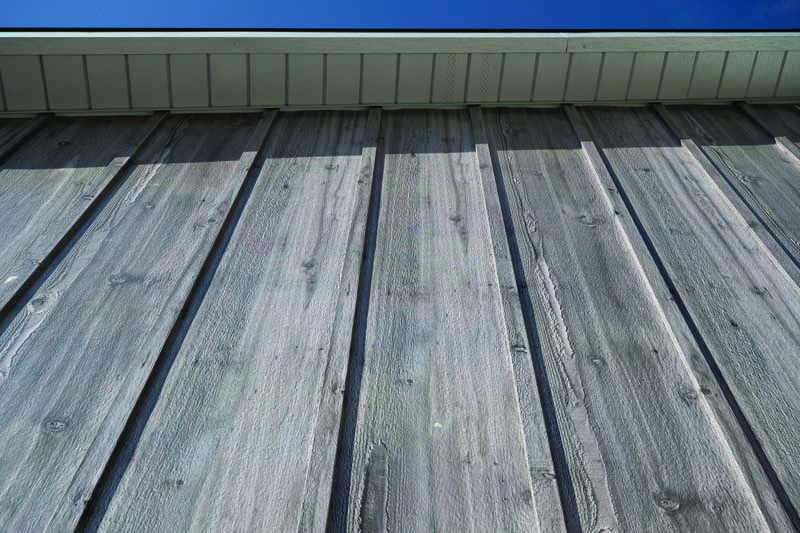
Board and batten, a historical design originally used in wood, has moved well beyond a niche aesthetic into a meaningful growth category for metal construction. What began as a regional trend has expanded into broader residential and light commercial markets, driven by demand for distinctive exterior cladding that blends traditional appearance with modern performance.
For rollformers, this shift represents more than a style trend—it is a production opportunity. Board and batten profiles allow shops to move beyond commodity panels and into higher-margin, design-driven products. Because many systems can be produced using existing coil inventories, the barrier to entry remains relatively low compared to entirely new product categories. At a time when many contractors and suppliers are looking to differentiate themselves in competitive markets, board and batten offers a relatively accessible way to add value.
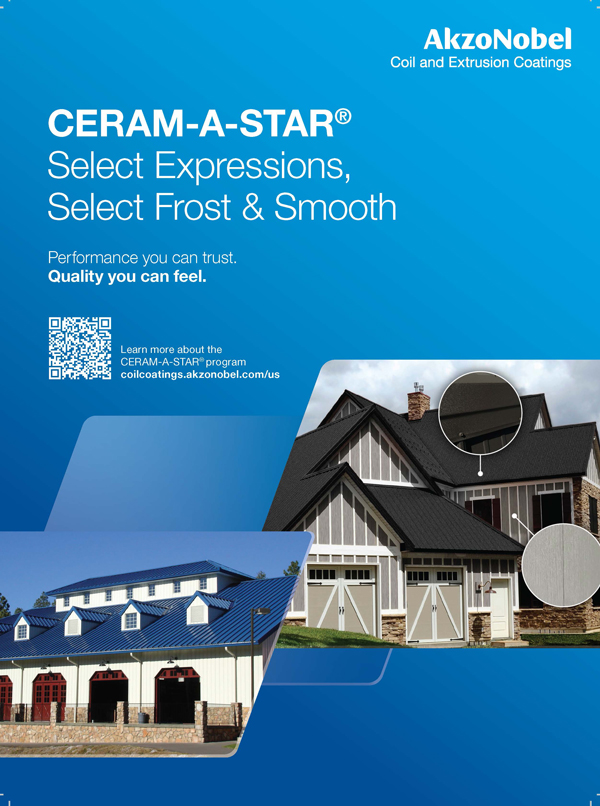
The profile itself replicates the look of traditional wood construction through wide panels paired with a batten that conceals fasteners and protects seams. In metal applications, this design not only delivers a sought-after aesthetic, but also improves durability and reduces maintenance compared to wood alternatives. Resistance to moisture, insects, and dimensional instability makes metal board and batten especially attractive in regions where wood siding has historically required frequent upkeep or replacement.
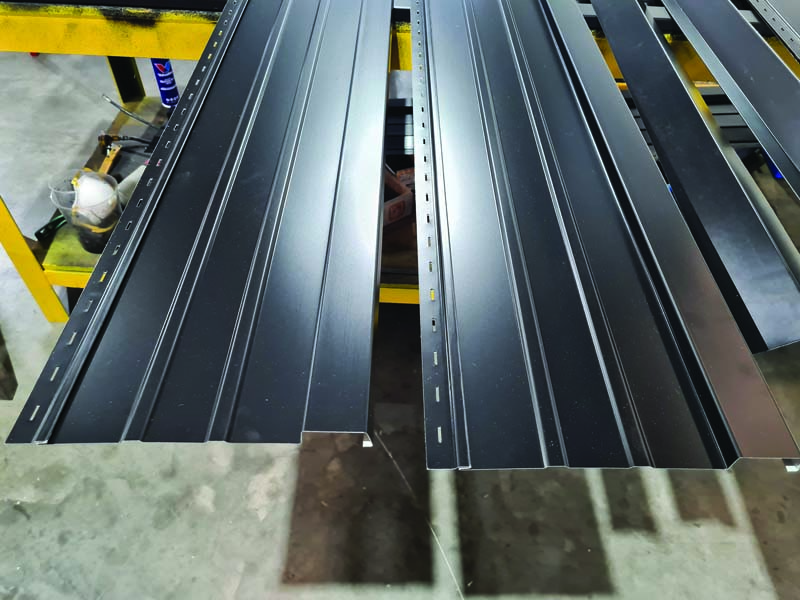
Courtesy of The Bradbury Group.
In the post-frame segment, the profile is finding particular traction. Builders who once relied almost exclusively on ribbed through-fastened panels are increasingly incorporating board and batten into residential-style post-frame homes, barndominiums, and hybrid structures. This shift reflects a broader trend you’re familiar with: post-frame construction is no longer limited to agricultural or utility buildings. As expectations rise, so does demand for exterior finishes that align with residential design preferences while maintaining the structural efficiency of post-frame systems.
Board and batten fits naturally into that evolution. Its vertical orientation complements the structural lines of post-frame buildings, while its concealed fastener appearance elevates the overall aesthetic. For builders, this creates an opportunity to deliver a higher-end look without abandoning the efficiencies that define post-frame construction. For rollformers, it expands the customer base beyond traditional agricultural and commercial applications into residential and architectural markets.
Recent developments across the industry show that board and batten is no longer limited to exterior walls. Interior applications—such as feature walls, ceilings, and accent areas—are expanding demand even further. Designers are increasingly using metal panels to create visual continuity between exterior and interior spaces, particularly in barndominiums and modern rural homes. Perforated panels and acoustical adaptations are also emerging, opening the door to functional as well as aesthetic applications.
This diversification matters for rollformers because it increases utilization opportunities. Instead of producing panels solely for exterior cladding, shops can supply material for multiple phases of a project, improving production efficiency and strengthening relationships with builders and contractors.
Equipment advancements have also played a role in making board and batten more accessible. Modern roll forming systems are capable of producing consistent, repeatable profiles across a range of substrates, including steel and aluminum. Many systems are adaptable to both portable and in-plant setups, allowing contractors to manufacture panels on-site or in controlled shop environments. This flexibility reduces transportation costs, shortens lead times, and allows for greater responsiveness to project needs.
At the same time, the growth of designer profiles is pushing suppliers to think more strategically about their product mix. Board and batten often serves as an entry point into a broader portfolio of architectural profiles, including lap siding variations, flush panels, and other visually distinct designs. Offering both vertical and horizontal solutions provides greater flexibility when working with builders, architects, and homeowners who are looking to combine multiple profiles on a single structure.
This trend toward mixed-profile design is particularly evident in residential and post-frame projects, where combining textures and orientations helps break up large wall expanses and create visual interest. Board and batten panels are frequently paired with horizontal profiles or traditional ribbed panels to achieve a balanced aesthetic. For rollformers, this creates an opportunity not just to sell a single product, but to become a supplier of coordinated systems.
Another major factor accelerating adoption is the advancement of painted, embossed, and digitally printed coil.
“Our Tru-Steel HD woodgrain digital prints images have really increased the end users’ interest and willingness to use steel siding on their projects,” explained Will Waldrip, President, United Steel Supply. “Some of our woodgrain prints have plank patterns baked in, which has been really popular on board and batten.”
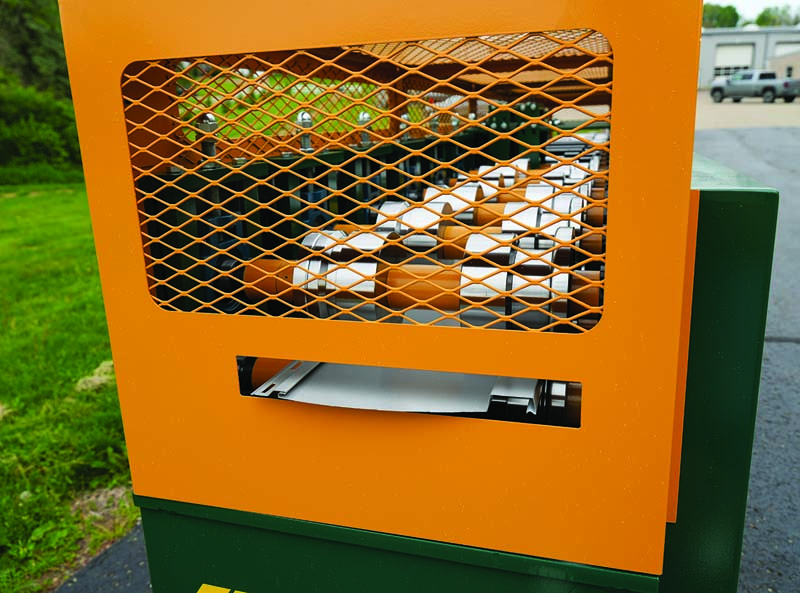
Courtesy of Acu-Form
Recent innovations have significantly improved the realism and durability of woodgrain, stone, and other natural finishes. These developments align particularly well with board and batten, where texture and visual depth play a central role in the finished appearance. That demand is showing up in specific finish preferences.
Hixwood has also noticed the continually rising interest in board and batten, for both its form and the finishes available. “Black Textured and Rough Edge Barnwood are driving a lot of sales in board and batten,” said Paul Zimmerman.
Earlier generations of faux-finish metal often struggled with issues such as fading, chalking, or unrealistic pattern repetition. Over the past several years, however, improvements in coating technology have addressed many of these concerns. High-performance paint systems combined with advanced embossing and digital printing techniques now allow for more consistent, non-repeating patterns and longer-lasting color retention.
“Finish quality is extremely important for any steel siding profile since customers are paying for long-lasting surface durability,” Waldrip added. “Board and batten profiles tend to have a lot of flat surface area which can make coating flaws more noticeable, so we’d argue that a high-quality finish is even more important there. It’s a big part of why we only stock coils from reputable domestic manufacturers with solid warranties.”
For builders and owners, this means metal board and batten can deliver the warmth and character of wood without the associated maintenance. For rollformers, it creates an opportunity to offer premium products that command higher margins while meeting customer expectations for both aesthetics and performance.
The ability to mix and match colors, textures, and finishes further enhances design flexibility. Projects can incorporate multiple tones or materials to create contrast and highlight architectural features. This aligns with broader trends in residential construction, where personalization and visual differentiation are increasingly important.
From a business perspective, the convergence of profile innovation and advanced coil technology creates a compelling value proposition. Rollformers can leverage existing equipment and supply chains while expanding into new market segments. At the same time, they can respond to growing demand for low-maintenance, visually distinctive building materials that appeal to both builders and end users.
There are also practical considerations that support the continued growth of board and batten. Installation familiarity is improving as more contractors gain experience with the profile. In addition, compatibility with common trim systems and accessories simplifies integration into existing construction practices. As more projects incorporate board and batten, the learning curve continues to decrease, further accelerating adoption.
Looking ahead, the long-term outlook for board and batten remains strong across multiple segments. “Board and batten will continue to see strong growth in post-frame, residential, and equestrian applications,” Zimmerman said. “With the wide variety of prints and textures available, the options feel nearly endless—and long-term durability will continue to drive adoption.”

Photo courtesy of Hixwood
The continued evolution of profiles and finishes suggests that board and batten is not a passing trend, but part of a broader shift toward design-driven metal cladding.
In both roll forming and post-frame construction, the emphasis is moving toward solutions that combine performance, efficiency, and visual appeal.
For those in the roll-forming industry, board and batten represents a practical and scalable way to participate in that shift. It bridges the gap between traditional construction aesthetics and modern manufacturing capabilities, offering a path toward greater product differentiation and long-term growth.