

Originally Published as: Engaging New Customers: Marketing to the Next Generation of Builders & Buyers
James Charles is the co-owner and COO of E-Impact Marketing, an internet marketing company based in Lancaster, PA that specializes in serving small- to medium-sized businesses. A former Pennsylvania-based roofer, he’s since transitioned into helping builders and construction companies grow their businesses through effective online strategies.
The people purchasing buildings, roofing systems, machinery, and construction services today are younger than you may think they are. Millennials, those of us born between 1981 and 1996, are firmly in our prime earning years, and Generation Z, the folks born between 1997 and 2012, are slowly but increasingly stepping into management, ownership, and purchasing roles.
These generations grew up with the internet, and, as a result, they research differently, evaluate vendors differently, and have come to expect an entirely different online experience than the generations that came before them.
For rollformers, builders, and manufacturers, that shift means the companies that make it easy for younger buyers to find information, compare products, and build trust online are the ones winning now and in the future.
So what do younger decision-makers expect to see online, and how can companies modernize without losing the values that built their business in the first place?
The Next Generation is Already Buying
For many companies in the construction and rollforming industries, it’s easy to think of younger generations as future customers. In reality, they’re already here.
A 2025 Deloitte report found that roughly 60% of millennials hold management positions1, and a 2024 National Mortgage study found that about 55% of millennials own a home2. Gen Z isn’t far behind on the career side: the same Deloitte report found 10% already hold management positions, with 45% in supervisory roles, even though homeownership lags at roughly 16%.
It would be a mistake to think that younger generations use the internet in the same way. Millennials lean toward Instagram, Facebook, and YouTube (76, 70, 69% of Millennials use each, respectively). Gen Z splits its attention more evenly across search and social. A 2025 Sprout Social survey found 41% turn to social platforms first, compared to 32% who start with a search engine, and within social, Instagram (80% have an account, 58% check daily) and TikTok (63% have an account, 56% check daily) dominate. Increasingly, Gen Z uses these platforms not just for entertainment but for product research and business advice, sometimes before they ever open a search engine.
What Young Decision Makers Expect to See Online
There are a lot of general website best practices that apply across every generation. Websites that are mobile-friendly, fast-loading, up-to-date, easy to navigate, with a clear call to action, and visible contact information tend to attract and keep more users and buyers.
For younger buyers specifically, a few things matter more:
• Self-serve ordering and payment. Having to call in for a quote or to pay an invoice feels outdated to buyers used to doing everything through an online portal.
• Visual freshness. Most websites have a usable lifespan of about five years before the design starts signaling “out of date” and even the technology begins to show its age.
• Accuracy over polish. The most important thing you can keep updated on your website is your business information. Visuals play a role in how trustworthy your brand appears, but what’s most important is how accurate your site is to you and your company.
• High-quality photos, videos, and reviews. Photos, videos, and reviews have become the digital equivalent of the brochures and catalogs previous generations relied on. The time you used to put into your pamphlets and catalogs is now the effort you should put into your website.
Teach First, Sell Second
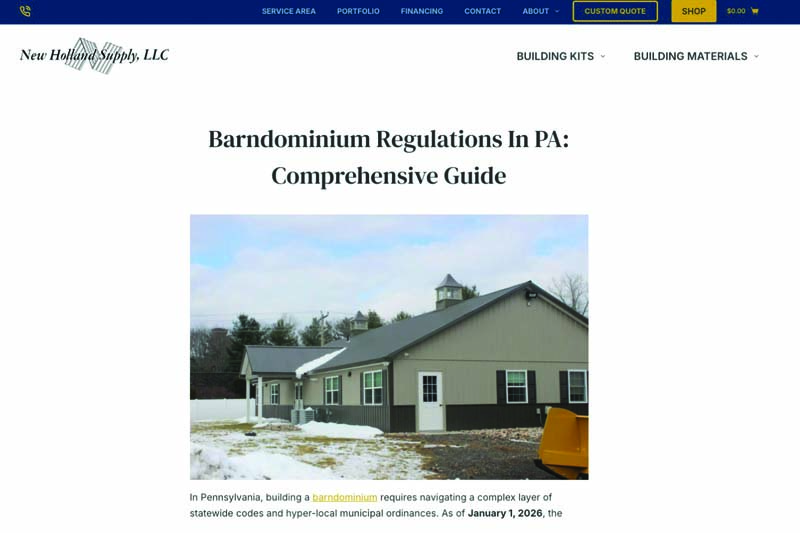
With higher-cost projects, products, or services, the more educated your consumer base is, the more comfortable they will be making a purchase from you. Content like permit regulation guides or wind-rating considerations gives customers what they need to make a confident decision. The more people can feel educated up front, the more trust they’re going to have in you.
The same logic applies to your trade customers. Give contractors quoting guidance, pricing education, product comparisons, and installation tips, and you make it easier for them to win more bids and more business for you in the long run!
Modernize Without Losing Tradition
Modern websites do not conflict or contradict traditional business values. At its basic level, marketing is about connecting people who have a problem with a company that has the solution to that problem. Modern marketing is doing the exact same thing on a different platform. People across generations want the same things from the business they work with; they want to know that the person they’re buying from and working with is selling them a good product and giving them good advice. Moving your marketing or business communication systems online does not subtract from or supersede traditional business values.
Making sure you’re visible to your customers online just means that you might need to update your marketing tools, not your business values.
Put Your Company History to Work
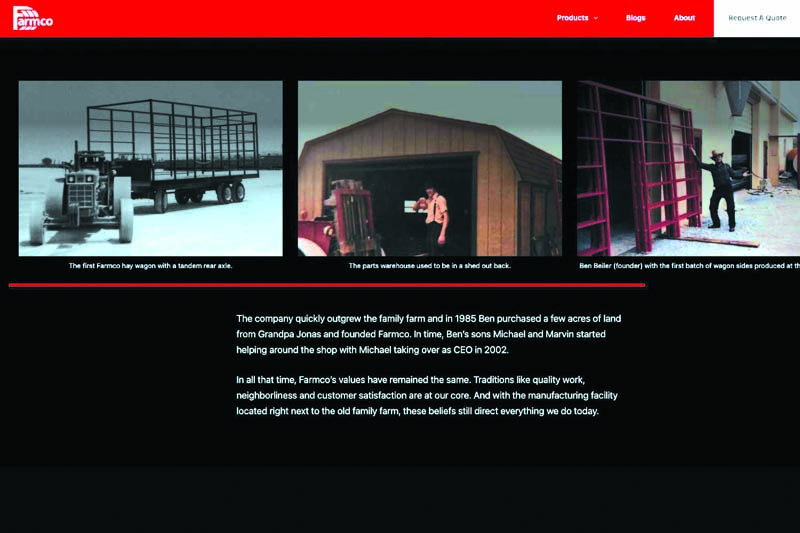
Many construction, rollforming, and building companies are family-founded, run, and passed down through generations. Listing a founding date can go a long way toward conveying how trustworthy your company is. You can even add a history or “our story” page on your website. If you have photos or content from your early days, that can help serve as a visual reference to the fact that your brand has been around for a long time.
People have more confidence in a company that’s been successful and has stood the test of time than in a brand-new company. (However, if you’re a newer brand, there’s no time like now to begin building your own legacy; every company started sometime!)
Where Young Buyers Are Researching Today
Search Engines Still Matter Most
Most buyers, across every generation, start with Google. In combination with Google Maps, Google has one of the most comprehensive indexes of every page on the internet and, arguably, the best real-world map of all the businesses in the world.
Of course, in order for Google to understand what it is that your company offers, your company has to provide that information to Google by updating your website information and keeping it organized and structured in a way that helps search engines understand your information. The more information and resources you can provide to a search engine, the better that search engine will be at matching you with buyers whose needs are aligned with what your business offers.
Your Google Business Profile is another key part of this. Buyers need to know which companies are nearby, what they offer, how well they are reviewed, and whether other customers trust them. Your Google Business Profile, as well as general local search engine optimization tactics (like making sure your name, address, and contact information are stated clearly on your site), help local buyers find you.
AI Is Becoming the Next Search Engine
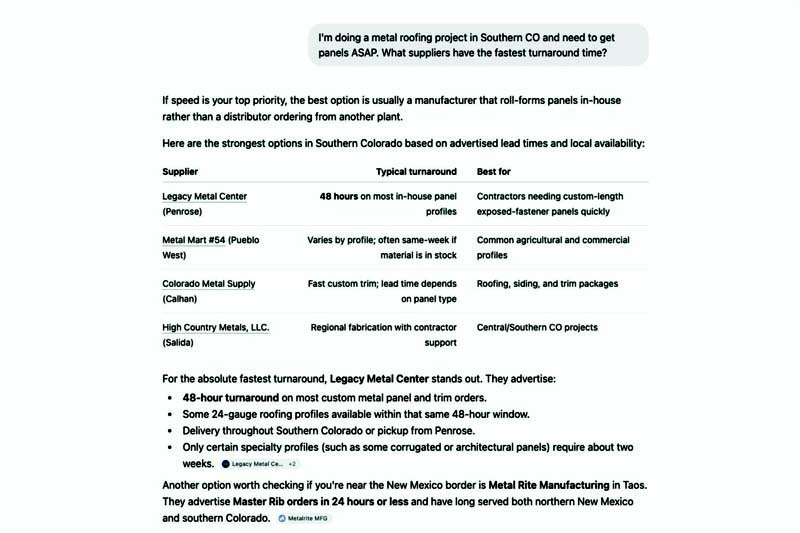
The next iteration of search engines is likely AI chat, AI tools, and generative AI. Platforms like ChatGPT, Perplexity, and Gemini can parse much longer, more detailed questions and prompts than traditional search engines and suggest answers tailored to the individual user. These tools can provide an answer that not only references all the information they can find online but also personalizes the response based on what they know about that particular user.
Short-Form Video, LinkedIn, Pinterest, and Yelp
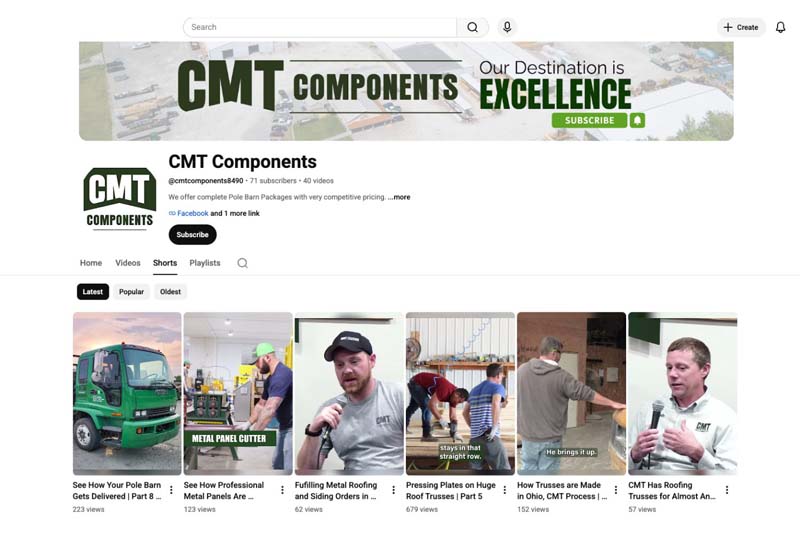
Platforms like YouTube Shorts, Instagram Reels, and TikTok are where young contractors go for advice and to see what’s working for their peers. LinkedIn serves a similar purpose for business owners, making connections and looking for advice. Pinterest and Yelp help buyers plan visually and feed the data that AI tools pull from.
Marketing Your Rollforming Business to the Next Generation of Builders and Buyers
If you’re not sure whether your online presence is up to date, here are the three things you can do right now to help improve your visibility.
1. Update your Google Business Profile and your Website
Make sure both your Google Business Profile and your website are up to date with the most accurate information about your business. List your name, address, and contact information clearly, and make sure all your products and services are clearly listed and organized.
2. Check what Search Engines and AI tools are already saying about your company.
Use Google and AI tools to mimic what a searcher in your area might ask about your products or business. How your company is (or isn’t) listed in the search results can tell you a lot about what you need to update or add more information about on your website.
3. Make sure you have a video or social media presence set up.
This can be a little more intimidating if you’re not used to being in front of a camera or are unfamiliar with short-form video platforms. Because buyers are using these platforms for connections and for research, it’s good to at least get out there. Getting used to being in front of the camera will help make you feel more comfortable with that type of content creation in the long run.
When all is said and done, young buyers are looking for the exact same qualities in your business as your current buyers. They’re looking for quality products and services, and they’re looking for someone they can trust. The main difference is that they’re primarily looking for you online. How and where you show up online now can help capture and keep the interest and trust of buyers for generations to come.