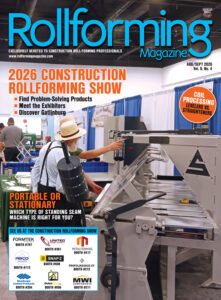



Originally Published as: Portable or Stationary? Choosing the Right Standing Seam Roll Former for Your Business
Demand for standing seam metal roofing continues to expand into residential, commercial, architectural, and retrofit markets. As more contractors enter the standing seam business, many eventually reach the same crossroads: Should they invest in a portable roll former that travels from job to job, or a stationary machine that produces panels in a shop?
Manufacturers we spoke to said both types of equipment are seeing increased demand, but the decision is less about which machine is “better” and more about which one best fits a contractor’s needs.
“The warehousing capabilities depend on what kind of business model they have,” said James Hazen, Director, Roofing Sales, Englert. “Portable machines are for in-the-field fabrication.”
“The first thing I ask a customer is, ‘What are you going to use it for?’” said Wayne Troyer of Acu-Form. “Are you doing smaller residential jobs? Large commercial projects? Are you only producing standing seam, or are you offering a full line of products? Your business determines which machine makes the most sense.”
Start with Your Business Model
Equipment manufacturers we spoke with agreed that choosing between portable and stationary equipment begins with understanding how your company operates rather than comparing machine specifications. A contractor whose crews install roofing directly for homeowners may benefit from producing panels on-site. Meanwhile, a manufacturer or distributor supplying multiple contractors may gain greater efficiencies by producing panels in a controlled facility and shipping completed orders.
Hazen summarized the decision simply: Companies with significant warehousing and shipping capabilities often favor stationary production, while contractors performing field fabrication frequently lean toward portable equipment.
Rick Zand of New Tech Machinery agrees that production requirements should drive the decision. “They should look at their overall needs,” he said. “Do they need high panel production? In-plant machines can run 24/7, while portable machines aren’t designed for that kind of production. They should also look at their budget,” he added.
Zand also noted that many customers use portable roll formers as their primary shop machine because they appreciate the lower purchase price and faster profile changeovers compared to many large in-plant systems.
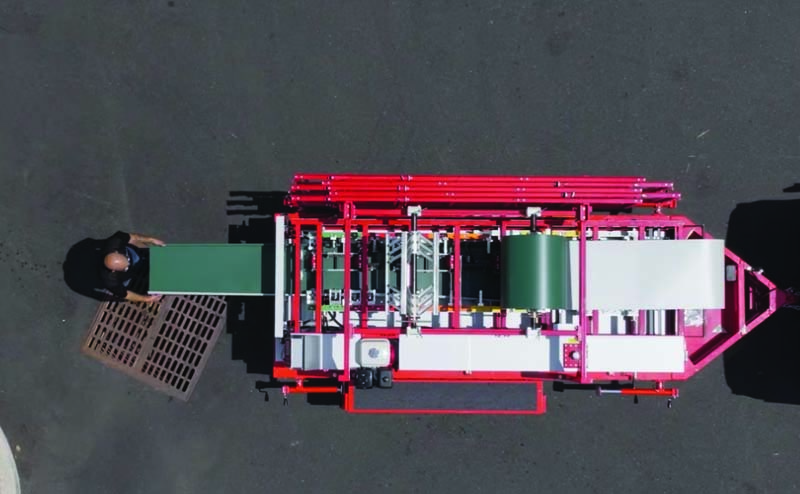
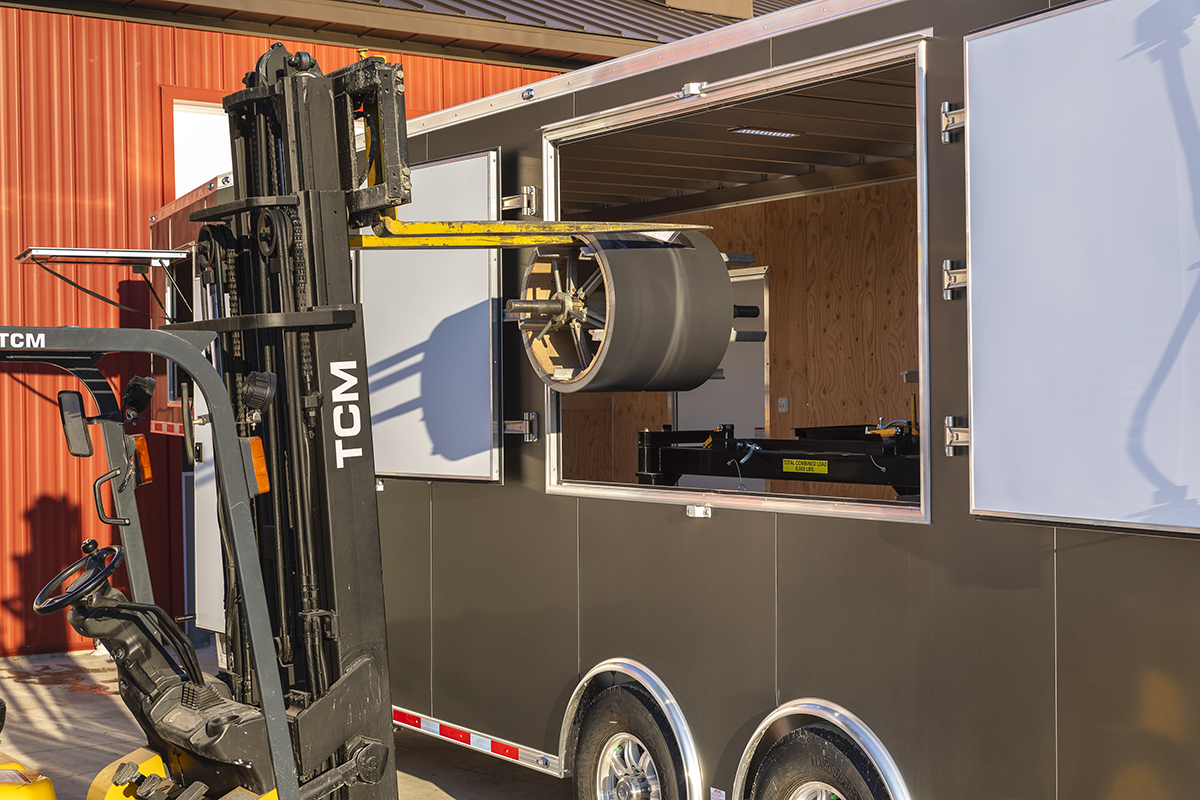
Photo courtesy of Englert.
The Case for Portable Production
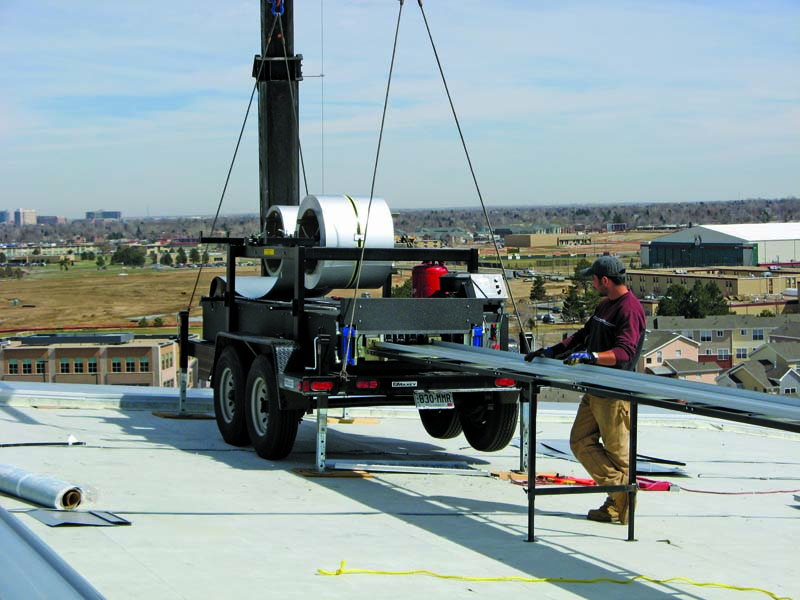
Portable standing seam roll formers have transformed how many roofing contractors operate. Instead of ordering panels and transporting them to the project, contractors can fabricate panels where and when they are needed.
This approach offers several advantages. Long panels no longer have to be packaged, shipped, unloaded, and carefully moved around a jobsite. Contractors can fabricate continuous-length panels that would be difficult or impossible to transport. If a panel is damaged or an additional panel is required, another can be produced immediately.
“One of the benefits of running portable roll formers at the jobsite is that you don’t have to deal with transportation costs, especially for long panels or in remote areas,” Zand noted. “Contractors can avoid delivery delays that can derail a job timeline.”
Zand added that customers have reported saving as much as 30 percent by producing panels on-site rather than purchasing factory-made panels.
Orv Schlabach of Formwright pointed out, “When [roll forming] on-site, you can adjust the panel according to the roof you’re working on, such as more or less striation.”
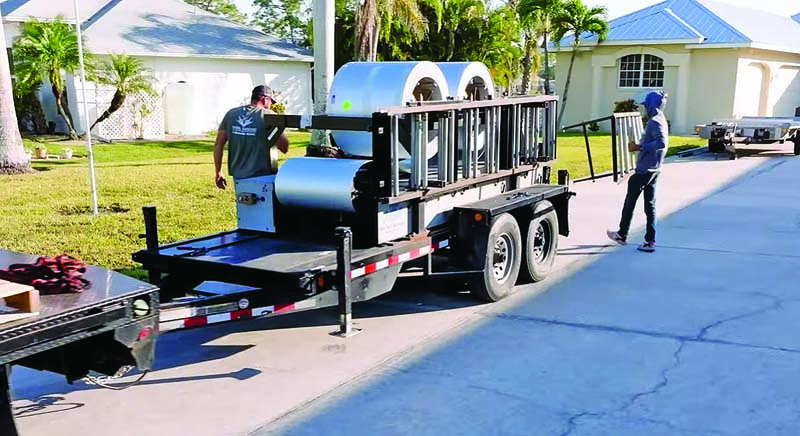
Hazen said that rising fuel costs and compressed project schedules have made on-site fabrication increasingly attractive. He also noted that continuous panels longer than about 50 feet are often best produced in the field because transporting panels of that length becomes increasingly difficult.
John Dumke, VP/Director of Sales and Marketing, Roll Former LLC, pointed to another practical advantage. If a contractor discovers one panel is short or damaged, they don’t have to wait for another shipment. They simply produce another panel and continue working.
Portable equipment is particularly attractive for residential work, custom homes, barndominiums, and projects requiring very long continuous panels. A portable machine cannot match the production speed of a stationary machine, but on-site installers would be unable to keep up with a machine running at the speeds possible with stationary roll formers.
“Forming the panels on-site gives your customers the feeling of a custom roof,” added Schlabach.
The Case For Stationary Production
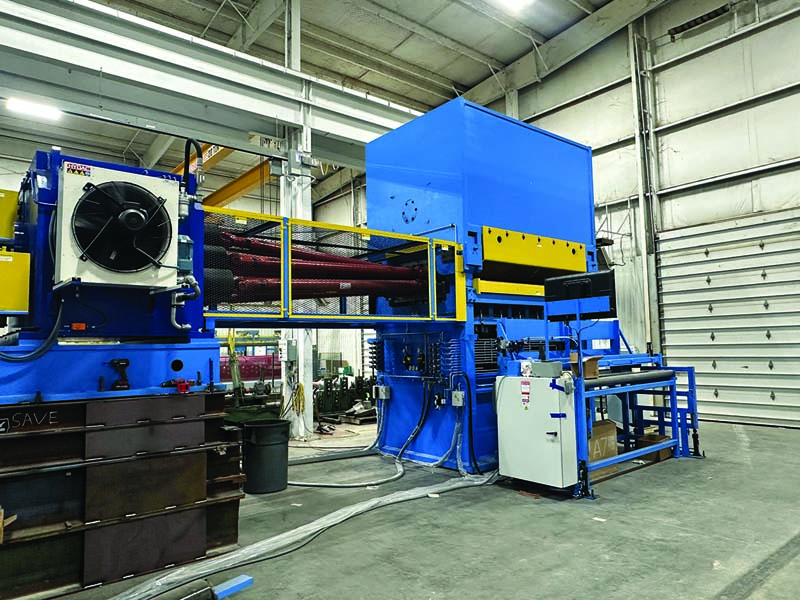
Portable equipment offers flexibility, but stationary production still excels when high-volume manufacturing becomes the priority. In-plant machines generally operate at significantly higher maximum production speeds than portable equipment. According to Zand, stationary machines commonly produce panels at approximately 150 to 200 feet per minute, while portable machines typically operate in the 50 to 75 feet per minute range.
For contractors supplying multiple projects simultaneously or manufacturing panels for other installers, stationary production often provides greater efficiency. Large facilities can process larger coils, package finished panels for shipment, and continue producing regardless of weather conditions.
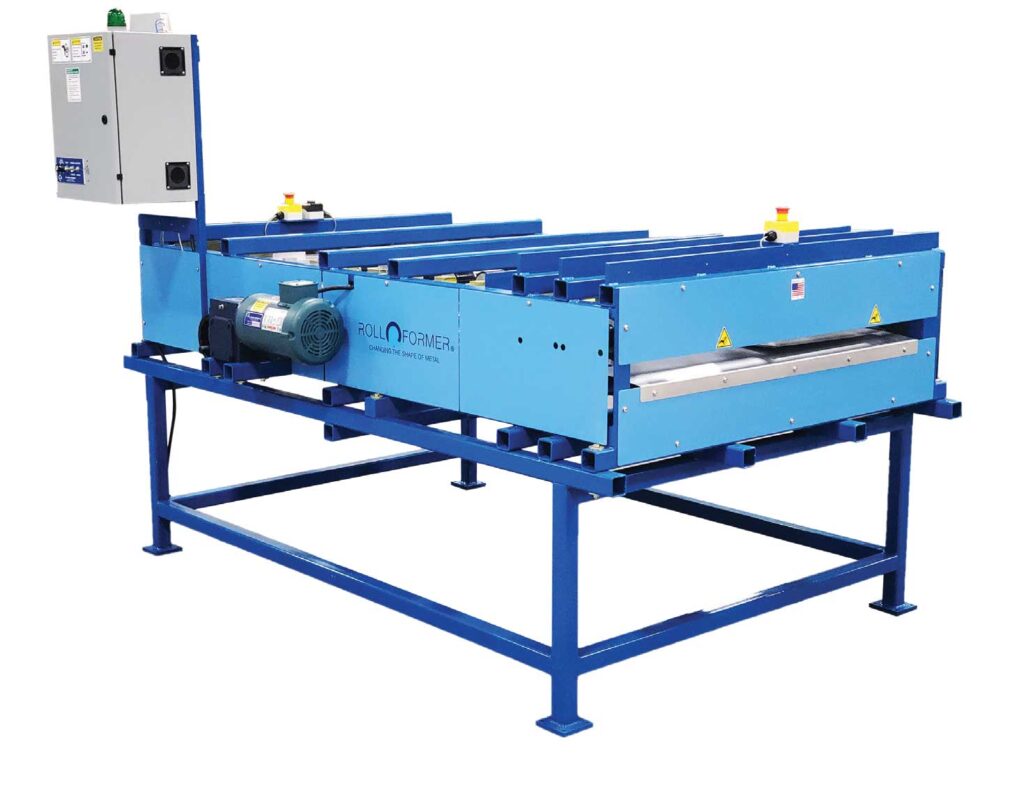
Dumke also noted that transporting packaged panels often becomes the better choice for projects located more than 100 miles away. If a portable machine experiences problems far from home, valuable production time can be lost. Shipping completed panels may reduce that risk for distant projects.
Topi Tulkki, Sales Manager at Profiilikeskus Oy, added, “Modern stationary systems can also integrate a wide range of value-added operations directly into the production line, including end notching and eaves folding, panel punching, embossing, protective film or anti-condensation fleece application, automatic stacking and packaging, and other automated post-processing operations.”
He continued, “By incorporating these processes into a single production line, manufacturers can significantly reduce manual work on the installation site, improve dimensional accuracy, and increase overall production efficiency. Integrated processing also enhances the quality of the finished panel by producing more precise and consistent end details, improving resistance to water ingress.”
Logistics Matter More Than Many Buyers Expect
One of the biggest differences between portable and stationary production isn’t the roll former itself. It’s everything surrounding it.
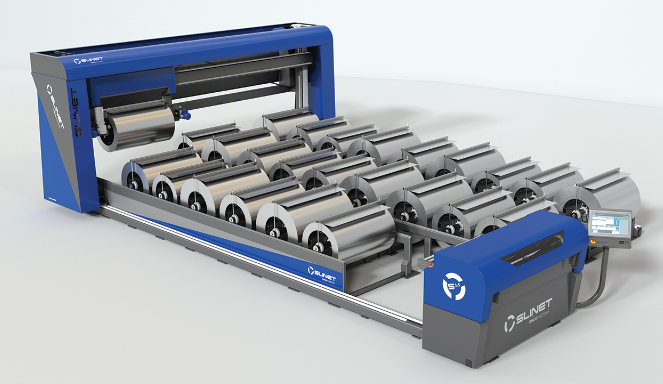
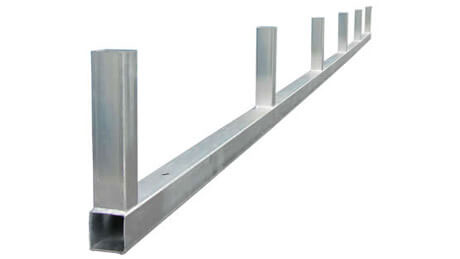
Portable operations require transportation equipment, trailers, coil handling systems, runout supports, generators or power sources when necessary, and careful planning to ensure sufficient coil inventory reaches the jobsite.
Dumke and Brandon Reeves, Sales Manager and Engineer, Roll Former LLC, recommend pre-loading coils before leaving the shop whenever possible. Otherwise, contractors may discover they need a forklift or engine hoist at the project simply to load a 600-pound coil, let alone a 1,800 pound coil. They also noted that trailer capacity limits how many coils can be transported, making advance planning especially important on larger jobs.
“The biggest challenge we see is if they have a very big job; only so many coils fit in the trailer,” Troyer said. “They might be making a trip back to get more coils.”
Stationary production introduces a different set of logistical requirements. Facilities need sufficient floor space, adequate electrical service, room for coil storage, packaging areas, and equipment capable of handling larger coils. Reeves recommends planning not only for the machine footprint, but also for material flow through the building, compressed air where pneumatic shears are used, and enough space in front of and behind the machine to accommodate panel production. Hazen emphasized the importance of climate-controlled facilities and sufficient room for machinery and material handling.
Maintaining Panel Quality
Many manufacturers agreed that panel quality depends more on preparation and maintenance than whether the machine is portable or stationary. Before leaving for a jobsite, operators should verify machine adjustments and run sample panels in the shop.
“We recommend running a few sample panels in the shop before heading out to the jobsite,” Zand advised. “It may be more difficult to make those adjustments on-site.”
Even then, transportation can change machine settings. “It can happen,” Troyer said when asked whether traveling to a jobsite can affect adjustments. “Something comes loose during those 100 miles to the jobsite … but making smaller adjustments on the jobsite is very doable.”
Reeves emphasized another important step: ensuring the trailer is reasonably level before production begins. Since the machine is mounted to the trailer, an unlevel setup can affect panel alignment. They recommend running several test panels after setup to verify dimensions and make any needed adjustments before producing the roof package.
Hazen said that operators should perform continuous quality inspections throughout production rather than assuming every panel will be correct once the machine begins running.
Tulkki advised, “Stationary roll forming lines can deliver superior and more consistent product quality thanks to their greater structural rigidity, longer forming sections, and more stable operating conditions.”
Weather and Maintenance
One advantage of stationary production is environmental control. Portable machines may have to operate in dust, rain, wind, snow, or extreme temperatures depending on the jobsite. This will not happen with stationary machines.
Troyer noted that enclosed trailers have significantly improved portable machine protection. Machines carried on open trailers or covered only with tarps require more cleaning and maintenance because of dust, dirt, condensation, and road grime.
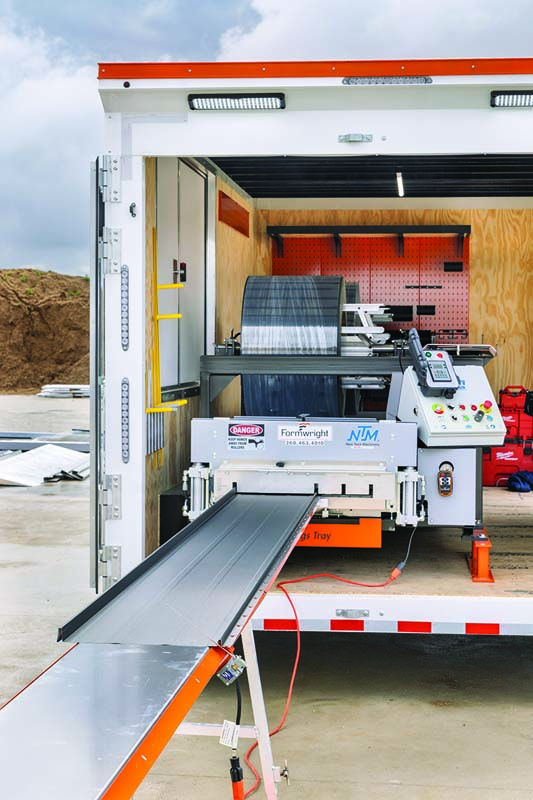
Reeves agreed, adding that exposure to rain and winter road salt can increase maintenance requirements. Portable machines should be protected whenever possible, even if crews are tempted to skip covering them after a long day. He also noted that portable machines should be inspected more frequently because of vibration during transportation, while stationary machines may actually experience greater wear when operating continuously for long production runs.
Portable equipment is designed to be transported, and Hazen observed that, aside from trailer components such as tires and wheel bearings, routine transportation should not significantly increase wear when machines are properly maintained. Zand recommends following a regular maintenance schedule that includes lubrication, chain adjustments, hydraulic fluid replacement, and routine inspections.
Training Operators
Manufacturers saw little difference in training requirements between portable and stationary equipment.
“A machine’s a machine,” Troyer said. “You should be able to train on a portable or a stationary machine in the same manner.”
Zand said their service department typically trains new owners in about a day and recommends including the entire installation crew rather than a single operator. Companies that invest in training and ongoing maintenance generally experience greater long-term success.
The most common mistakes involve machine setup rather than operation. Improper adjustments, inadequate maintenance, failing to inspect panels, or allowing machines to become dirty often create more problems than operator inexperience.
Calculating the Return on Investment
The purchase price of a roll former is easy to compare. Determining its return on investment requires a broader view.
Contractors should consider how frequently the machine will be used, whether it will eliminate outsourced panel purchases, how much transportation expense it can reduce, and whether producing panels in-house will allow crews to complete projects faster.
For contractors regularly installing standing seam roofing, the savings can compound quickly. Producing panels on-site can eliminate shipping charges, reduce the risk of damaged panels during transportation, and allow replacement panels to be produced immediately if field conditions change.
“Customers have claimed saving 30% running panels on-site versus purchasing factory-made panels,” Zand said.
Stationary production creates a different return. High-volume producers may justify a larger investment through faster throughput, larger coil capacity, centralized quality control, and the ability to manufacture panels for multiple crews or outside contractors simultaneously.
Buyers should also account for the supporting equipment that ownership requires. Reeves recommends considering forklifts or engine hoists, runout tables, brakes or folders for trim fabrication, hand seamers, packaging materials, and, for some commercial work, the costs associated with certified roof systems for wind uplift, fire resistance, or weather performance.
Manufacturers agree that the return depends less on the machine itself than on matching the equipment to the company’s workload.
Success Depends on More Than the Machine
Ultimately, successful companies distinguish themselves less by the type of roll former they purchase than by how they operate it. Dumke emphasized that the most successful owners continually educate themselves by attending trade shows, participating in seminars, staying current on industry developments, and following disciplined maintenance practices.
Troyer reached a similar conclusion. “It comes down to quality control and service,” he said. “If they control their quality and they have good service, people don’t even look at the price.”
Whether a contractor chooses portable flexibility or stationary production capacity, disciplined maintenance, thorough operator training, careful quality inspections, and a clear understanding of the company’s business model will have a far greater impact on profitability than the machine’s location alone.
RESOURCES
- Acu-Form — https://www.acuformequipment.com
- Englert Inc. — https://www.englertinc.com
- Formwright — 260-463-4010
- New Tech Machinery — https://newtechmachinery.com
- Profiilikeskus Oy —www.profiilikeskus.ca
- Roll Former LLC — https://rollformerllc.com