


Charts help eliminate guesswork and leftover material.
Editor’s Note: This article was originally published in the Fall 2018 edition of Rollforming Magazine. It is republished here for the convenience of readers. The charts should help you determine coil stock inventory in situations where labels have been lost or haven’t been updated.
Many metal roofing contractors are realizing the benefits of owning a portable standing-seam panel roll-forming machine rather than purchasing preformed panels. This offers the ability to produce engineered profiles, longer lengths, and less handling and freight. And in many cases, it’s cheaper to roll form your own panels.
However, keep in mind that once you own a roll-forming machine, you now assume the role of manufacturer—and the responsibility for ordering the proper amount of coils to complete the project.

Coils are available to fit every profile, from standing seam to R-panel, from Kynar 500/Hylar 5000 to polyester paint systems.
Each profile requires a particular gauge and width. For roll forming of standing-seam and snap-lock profiles, the industry uses standard coil widths of 24, 22, 20 and 16 inches. For agricultural products, such as the R-Panel, the standard widths are 40.875 and 41.562 inches.
In some cases, coil is left over on a project because the machine operator forgot to keep track of the amount of lineal footage on the coil. But how can you tell how much coil is left?
It’s easy. Follow these four simple steps:
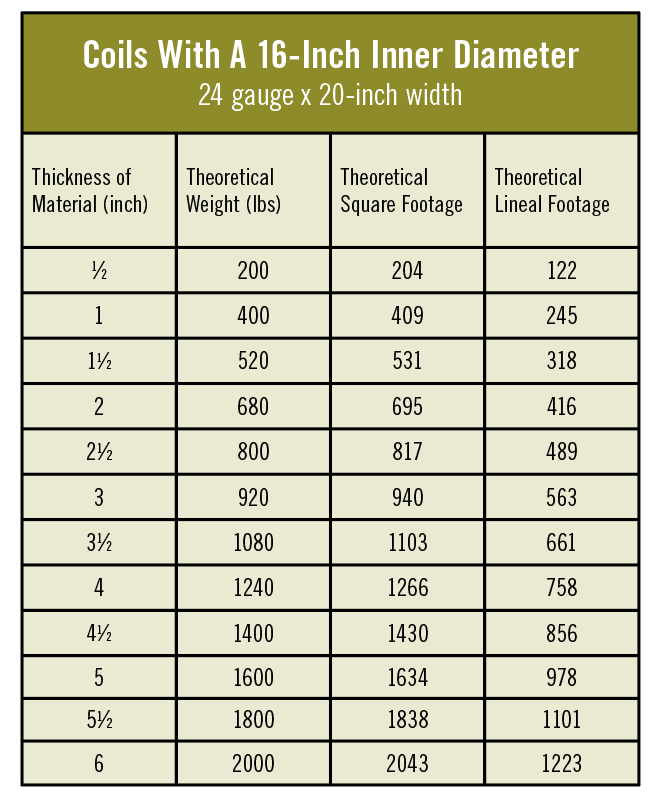
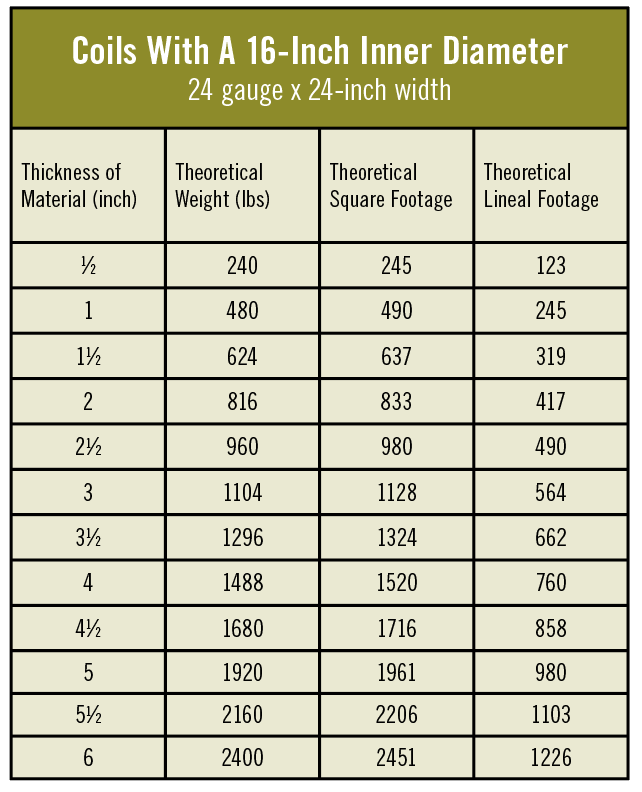
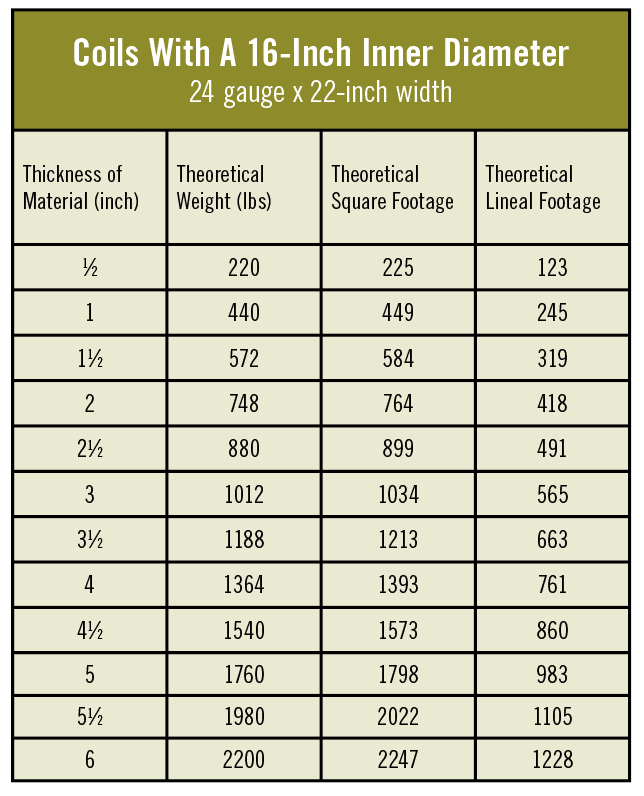
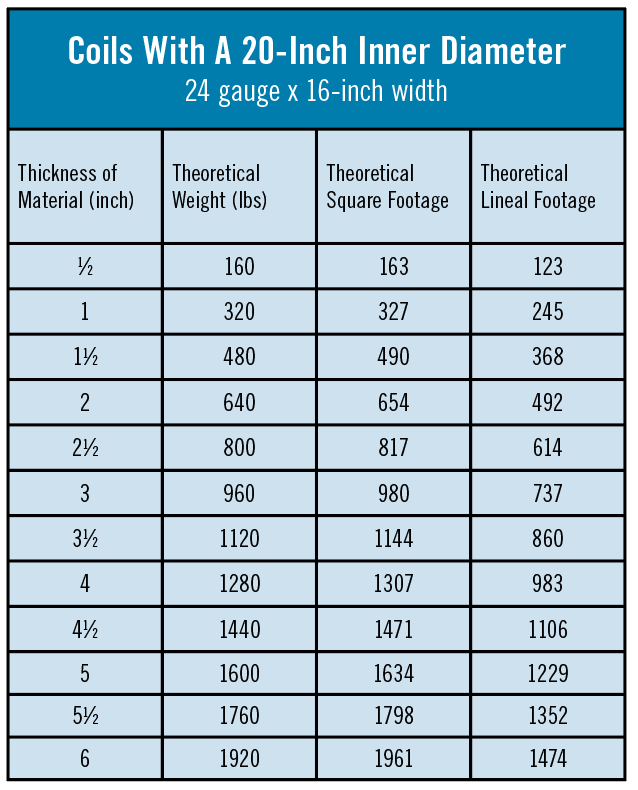
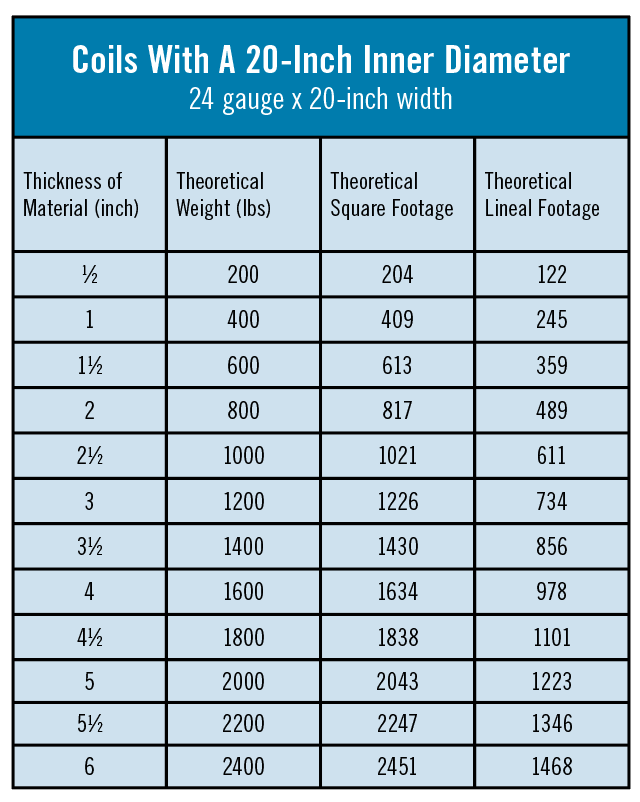
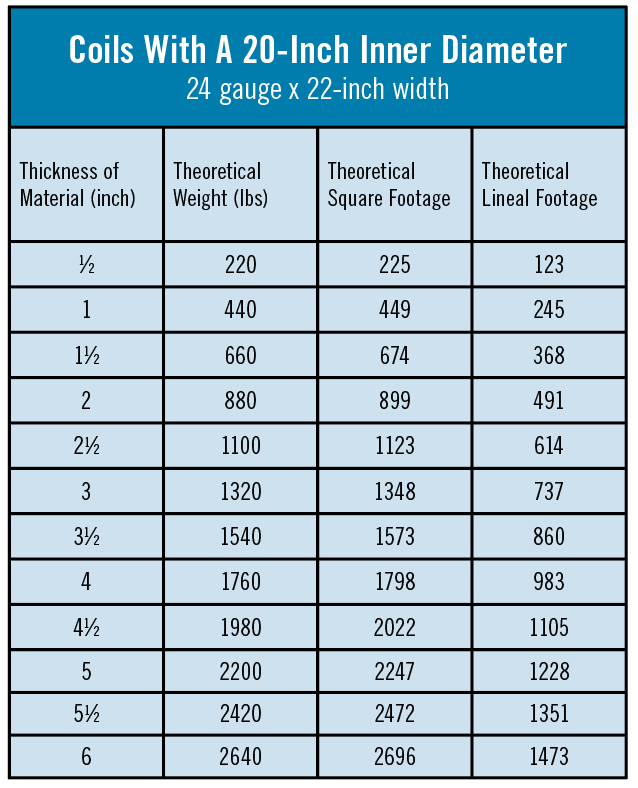
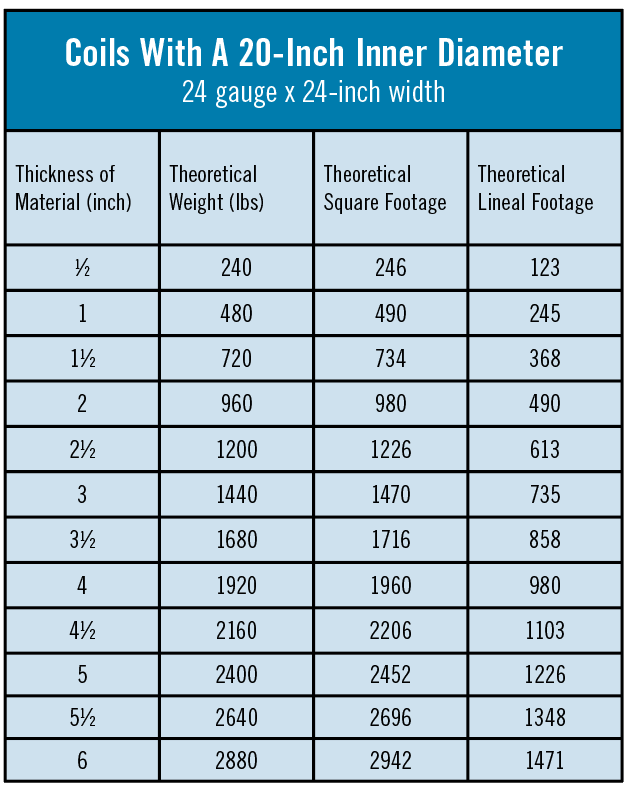
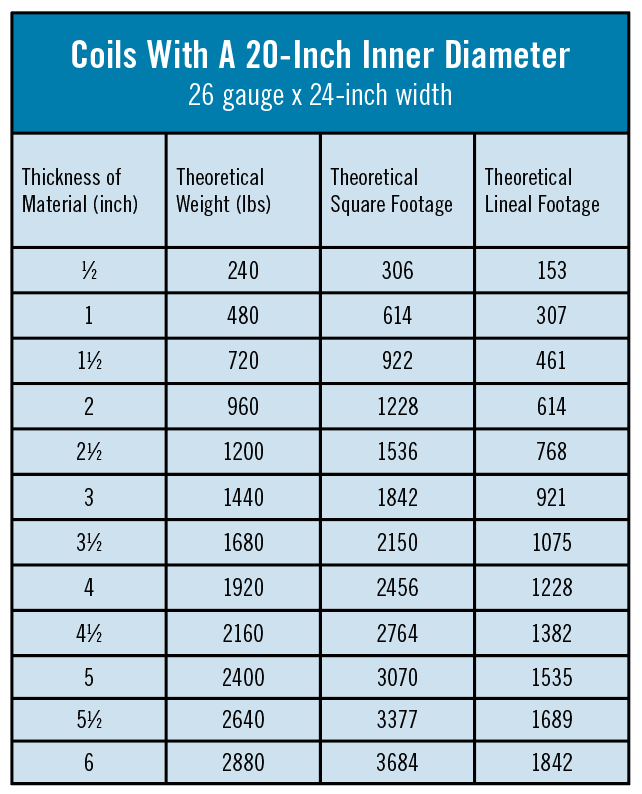
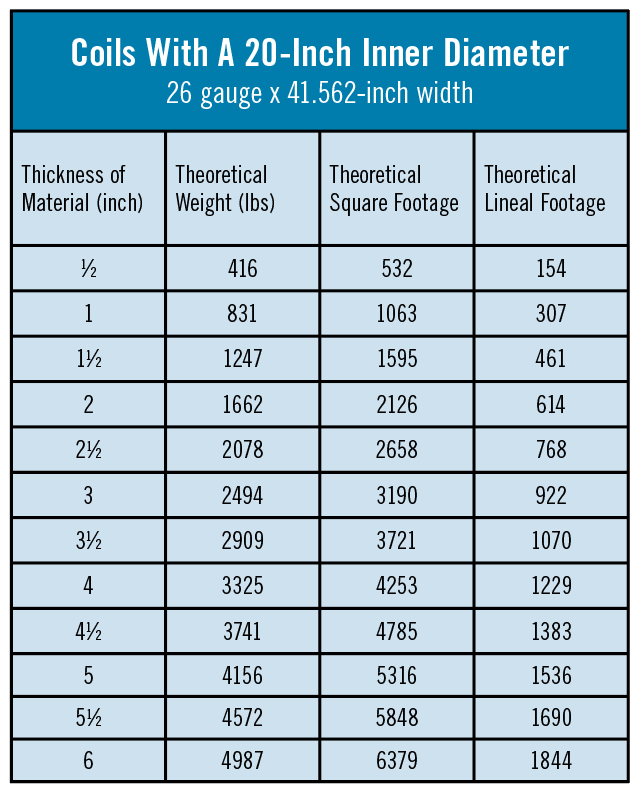
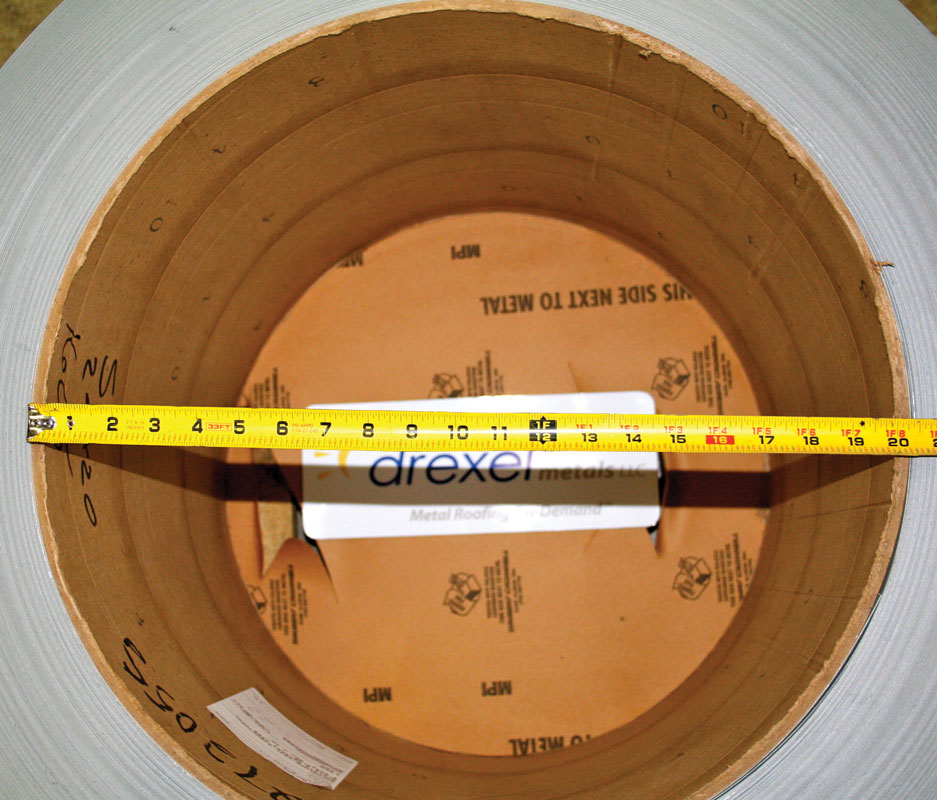
1. Measure the inner diameter of the coil (it’s probably going to be 16 or 20 inches).

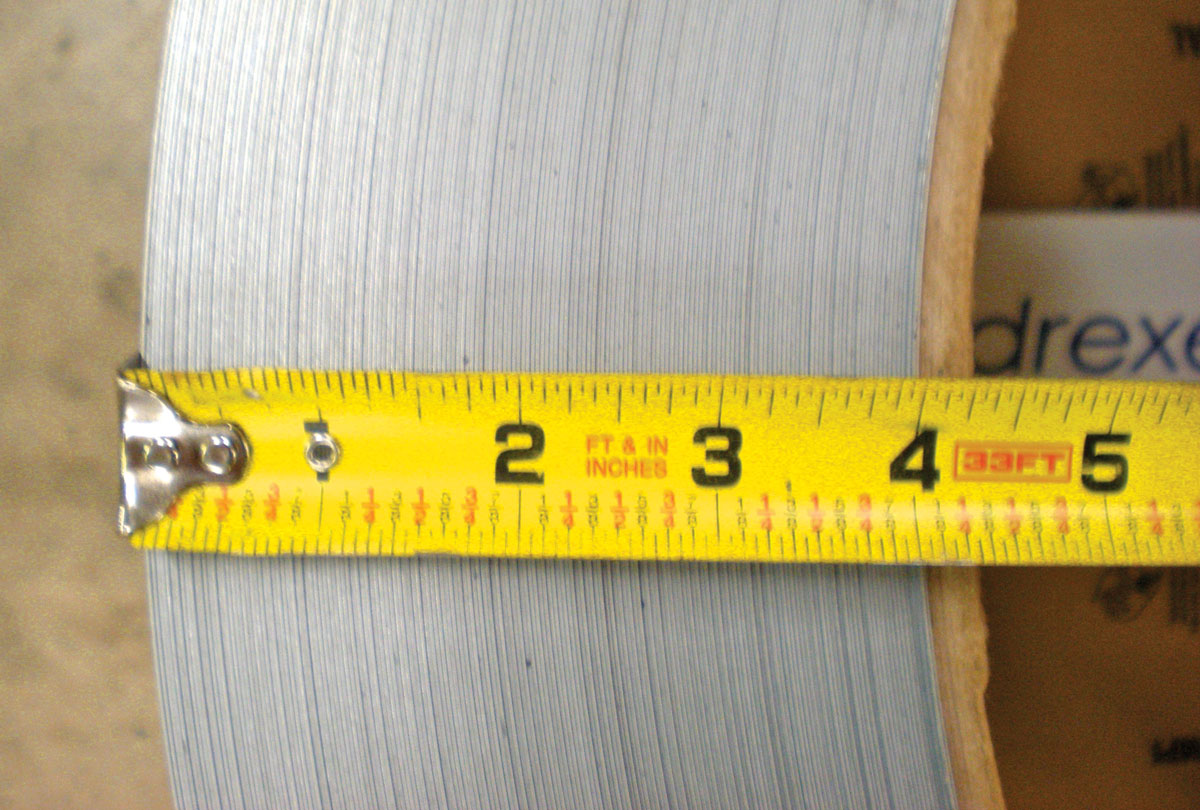
2. Measure the thickness of material on one side of the coil.
3. Determine the gauge and width.
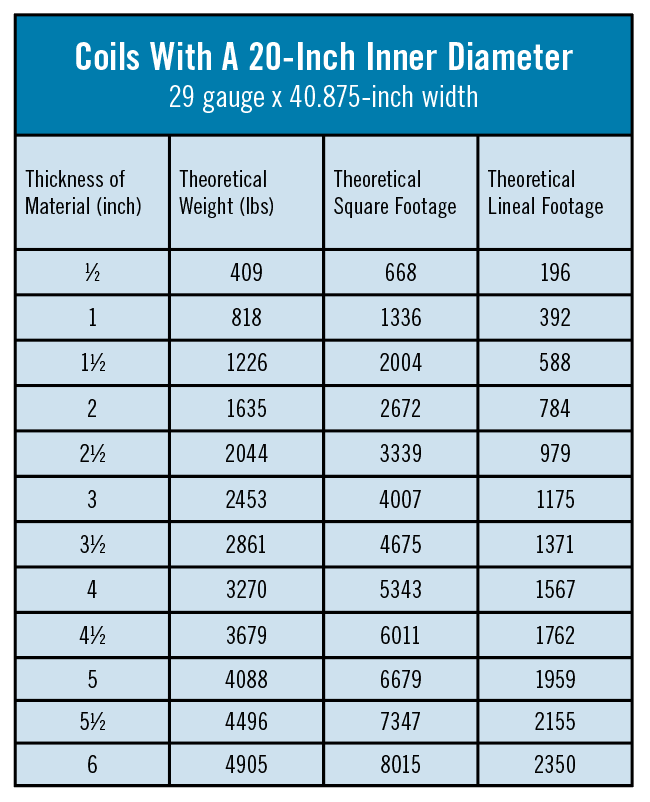
4. Refer to the charts provided on these pages to determine the theoretical weight, square footage and lineal footage left on the coil.
The charts include many of the standard gauges and coil widths used in our industry. The calculations were based on the theoretical multipliers and are medians. The multipliers will vary with each individual coil, and the numbers listed should be used as a point of reference and an estimate.
• 24 gauge = theoretical multiplier of 0.9791 pounds per square foot
• 26 gauge = theoretical multiplier of 0.7818 pounds per square foot
• 29 gauge = theoretical multiplier of 0.6120 pounds per square foot
Hopefully these charts will help you determine how much material is left over from past projects. By taking the time to measure and calculate the amount of material remaining, you will no longer look at an assortment of coils and ask yourself, “What should I do with them?” Who knows, you may be surprised how much material is there and turn your leftovers into cash. RF
Brian Partyka brings nearly 30 years of experience in the metal construction industry and is currently the Vice President of Business Development at Carlisle Companies. In this role, he plays a key part in Carlisle’s mergers and acquisitions (M&A) activities, which support Carlisle’s Vision 2030 strategy. Since selling his company, Drexel Metals, to Carlisle in 2017, Brian has also helped acquire Petersen Aluminum (PAC-CLAD) in 2019 and, in 2024, MTL Holdings, a leader in perimeter edge metal systems. As the past chairman of the Metal Construction Association, he actively participates in several councils to promote industry growth. His significant contributions include numerous technical articles, white papers on metal roofing, and presentations on sustainable metal design nationwide. Notably, in 2001, he invented the Paint Pen, an air-dry Kynar touch-up system that has become the industry standard. Brian has received several awards for his dedication, including the MCA’s Patrick R. Bush Volunteer Service Award and the “Industry Champion of the Year,” recognizing his effective advocacy and influence in the industry. RF