


Originally Published as: CMT Components: From Trusses to a Growing Roll-Forming Operation
When CMT Components opened its doors in Sardinia, Ohio, in January 2007, the business was focused on one thing: manufacturing trusses. Founder Calvin Nissley started C&M Truss LLC with two other employees and a straightforward goal: provide quality products, good service, and reasonable prices.
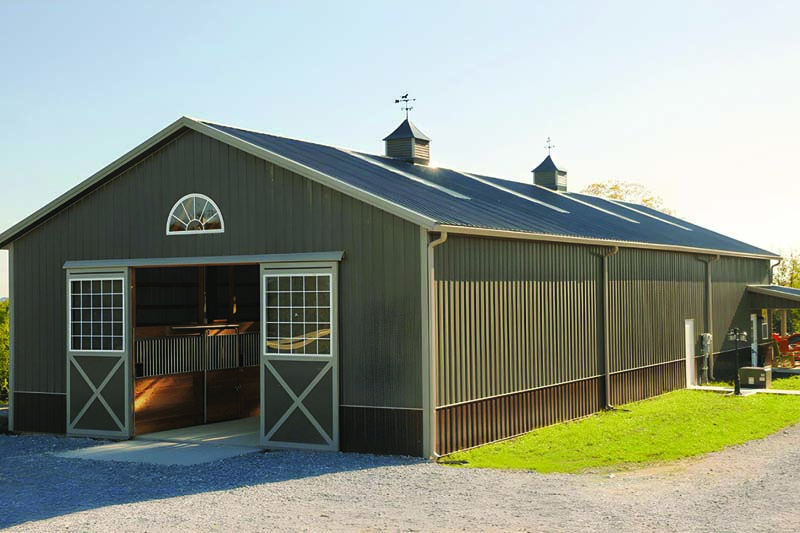
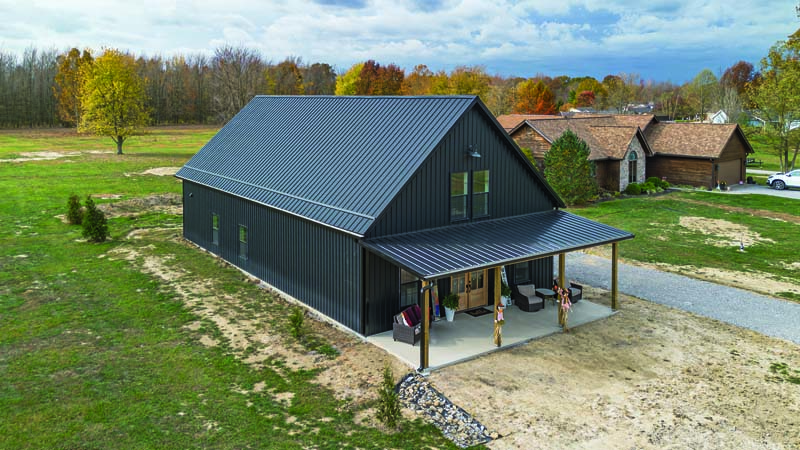
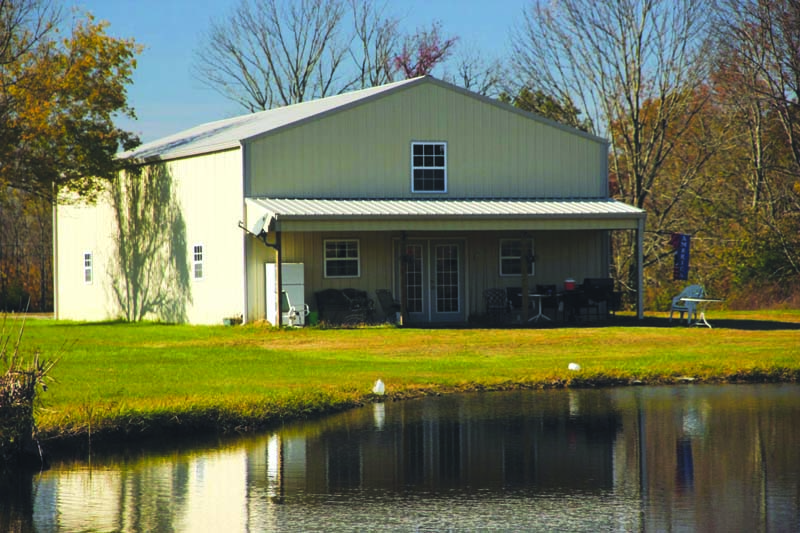
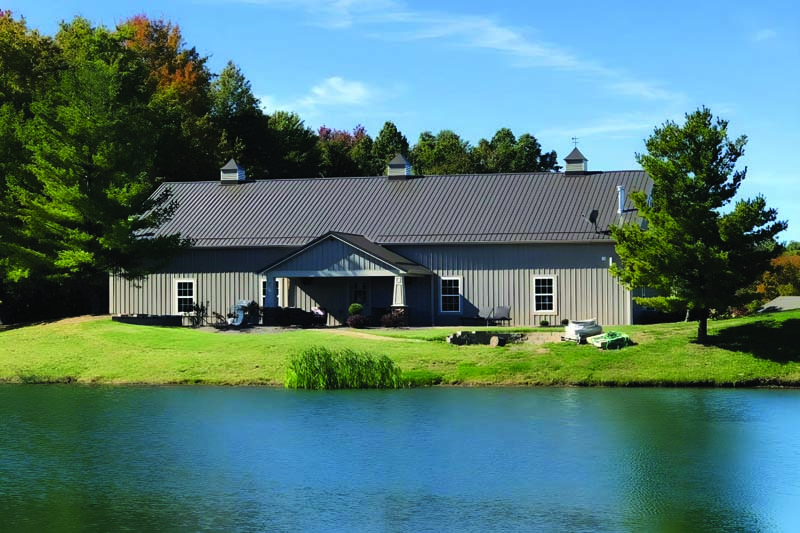
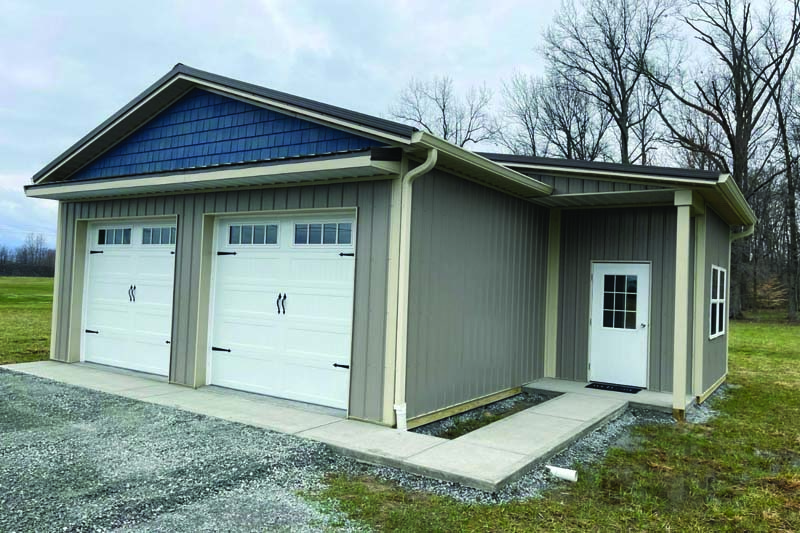
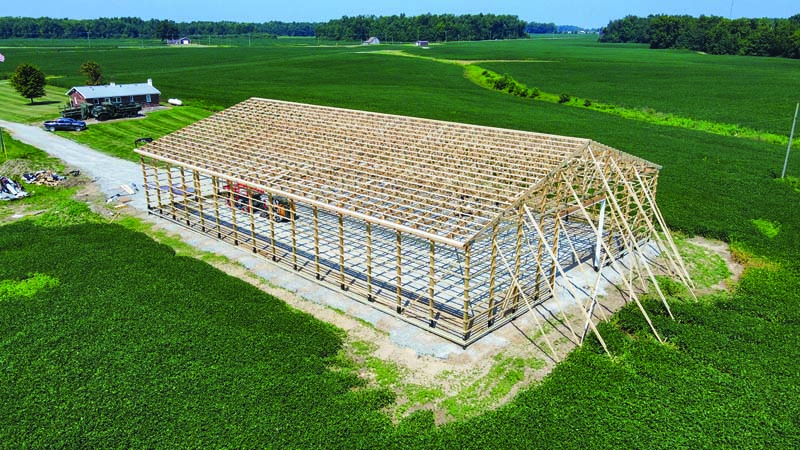
Nearly two decades later, the company looks quite different. C&M Truss became CMT Components in 2018, reflecting a much broader product offering. The company now manufactures metal roofing and siding, roll-formed trim, and roof trusses, while also supplying a wide range of components for agricultural buildings, garages, barndominiums, equestrian facilities, and commercial post-frame buildings.
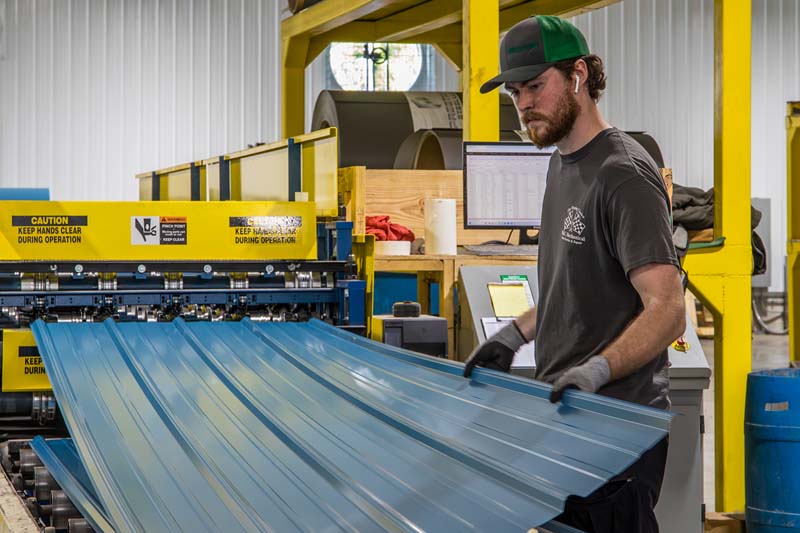
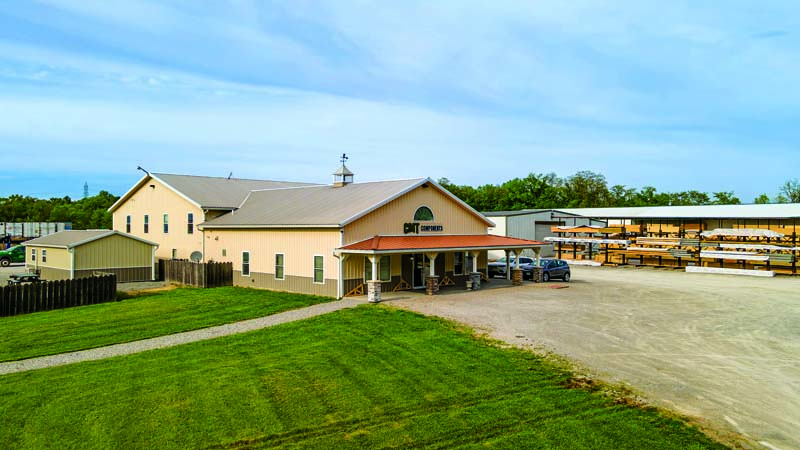
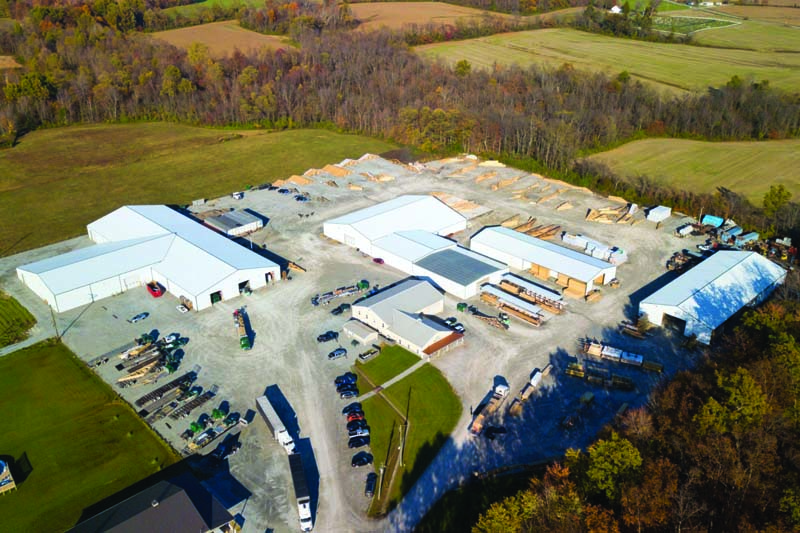
Today, Nissley operates the business with co-owners Josh Yoder and Brian Hershberger. The company has grown from three employees at its start to 73 full-time employees and serves customers throughout Ohio, Kentucky, West Virginia, and Indiana, with delivery available within about 200 air miles of its Sardinia location.
The move into roll forming wasn’t necessarily part of the original business plan. Like many companies that grow by listening to their customers, CMT gradually found itself moving into areas that made sense based on what its customers were already buying.
“We started with trusses,” Nissley and Yoder explained. “Eventually, we saw the opportunity to help our customers with more of the materials they were already using for their projects.”
That opportunity led CMT into metal roofing and siding in 2018. The company began manufacturing its own panels and the associated trim, giving customers another source for materials they needed to complete their buildings.
The roll-forming side of the operation continued to grow. In 2024, CMT added more metal-panel profiles along with a complete slit-and-recoil line. Today, the company’s panel lineup includes C-Loc Plus, A-Loc Plus, B-Loc Plus, and R-Loc Plus.
Each profile has its own place in the market. C-Loc Plus is used primarily for agricultural applications but can be used for a variety of structures. A-Loc Plus has applications in residential construction and can also be used as siding or as a ceiling panel. B-Loc Plus is intended primarily for siding applications. R-Loc Plus is geared toward commercial applications.
The variety gives CMT some flexibility when working with customers who have different project requirements. The company’s metal panels are manufactured in-house and are available in different gauges, colors, and lengths. CMT uses Sherwin-Williams coil coating systems for its metal-panel products.
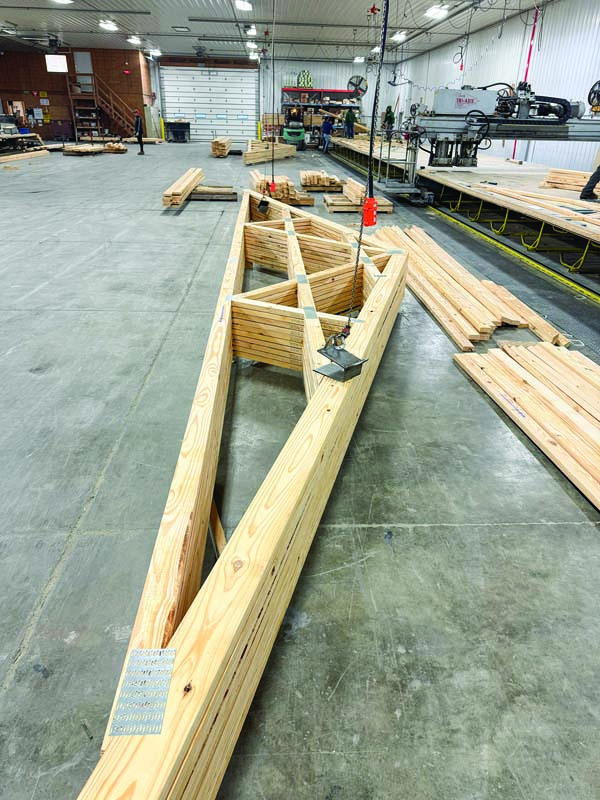
While the panels have become one of the company’s more notable product lines, trusses remain an important part of the business. CMT stocks 24-, 30-, and 40-foot trusses and also manufactures custom trusses for agricultural, residential, and commercial projects.
The company has continued to build on that manufacturing base by offering complete building packages. Customers can get components such as lumber, trusses, metal panels, trim, entry and garage doors, cupolas, soffit, vapor barrier, and insulation for pole barns and other structures.
CMT also offers garage doors from CHI Overhead Door, adding another product category to a business that started with trusses.
That growth has changed the size of the company, but the owners say it hasn’t changed the way they want to work with customers.
“We have faced the misconception that we only serve contractors or certain types of customers,” Nissley and Yoder said. “But actually, we work with pretty much everyone.”
That includes wholesalers, contractors, builders, and individual customers. The goal is to remain approachable regardless of the size or type of project.
For CMT, building those relationships starts with trust. The owners say customers come to the company with a need, and CMT’s role is to figure out how to help take care of it.
“We’re here for our customers and want to make whatever it is they’re building as easy as it possibly can be,” they said.
That philosophy also plays into one of the company’s biggest priorities: turnaround time. CMT strives to have metal orders ready for pickup within 24 hours. Metal panels can be manufactured within a few hours, while typical truss lead times are two weeks or less. The company also keeps trusses in stock and works to turn around custom trusses quickly.
For a contractor waiting on materials, those timeframes can make a real difference. A missing component can bring other work to a standstill, so having material available and ready to go is important.
The company’s delivery fleet gives it another way to keep materials moving. Deliveries can be made to jobsites, yards, or other locations where customers need them.
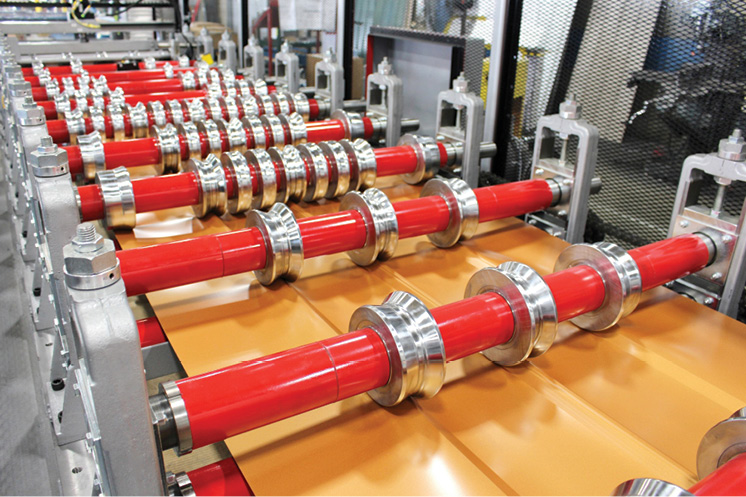
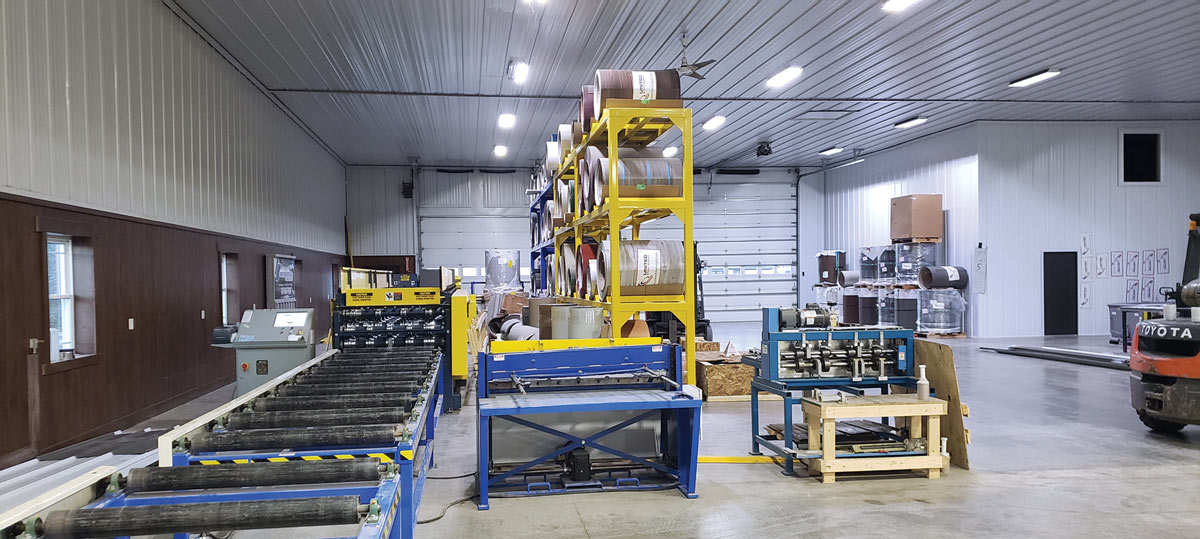
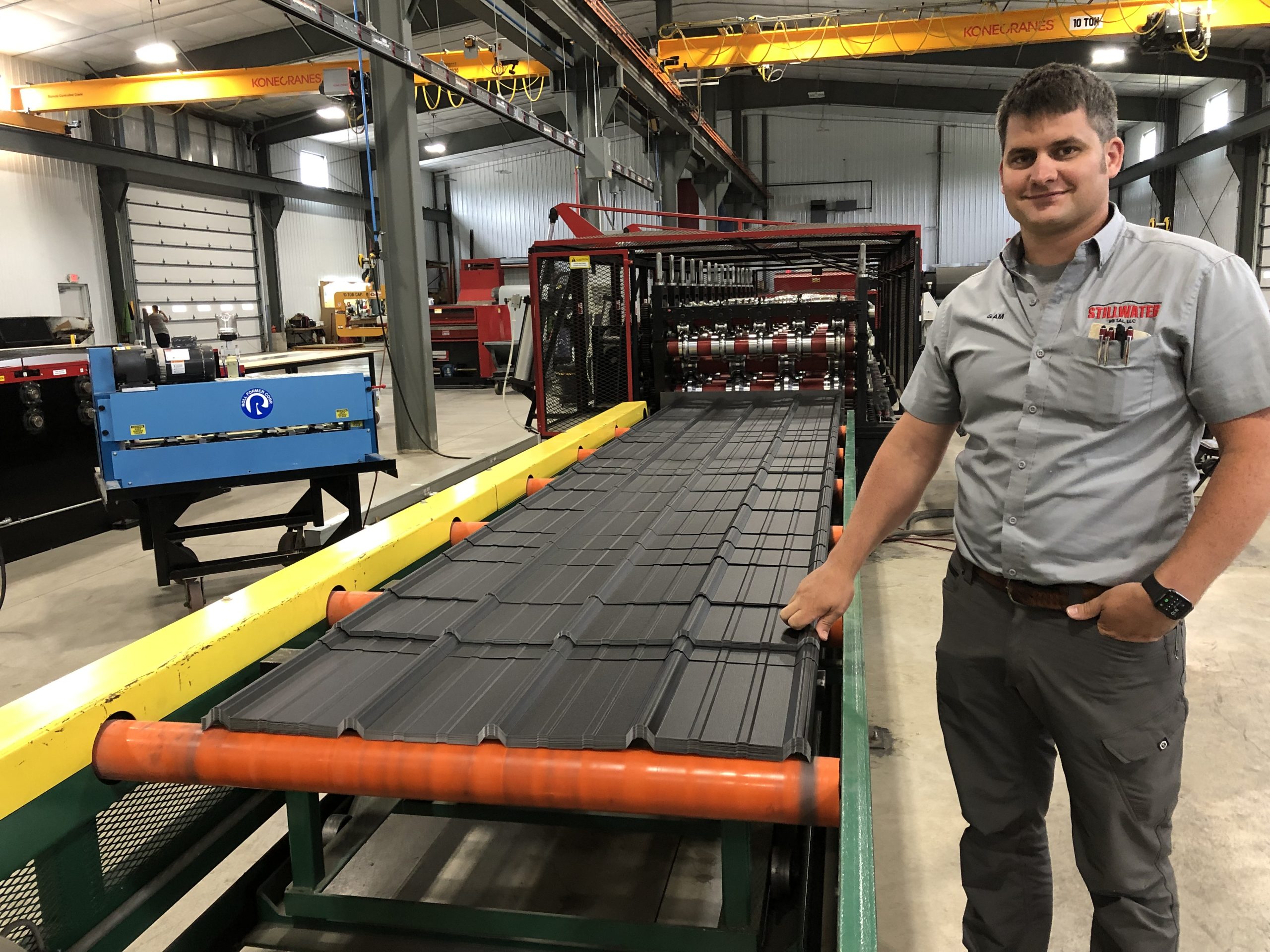
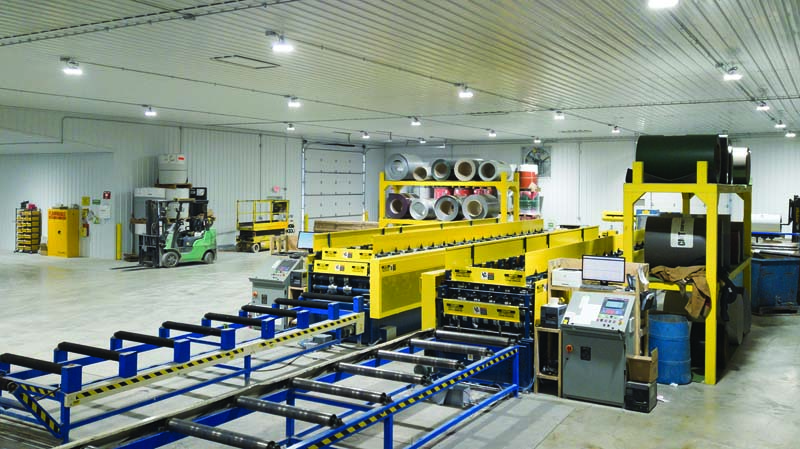
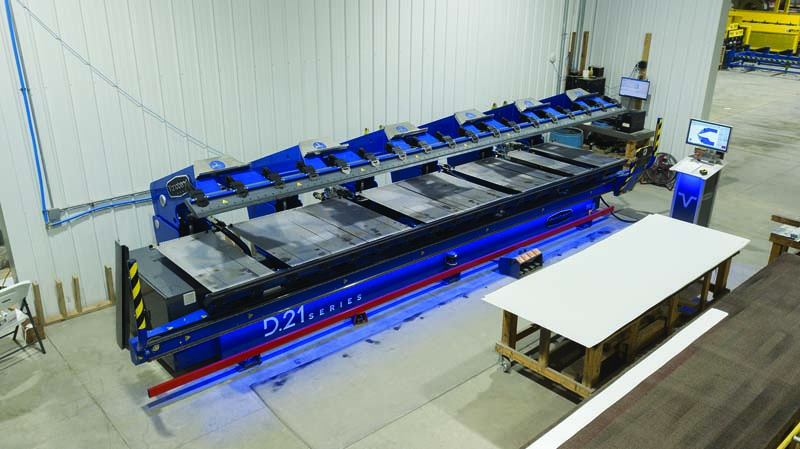
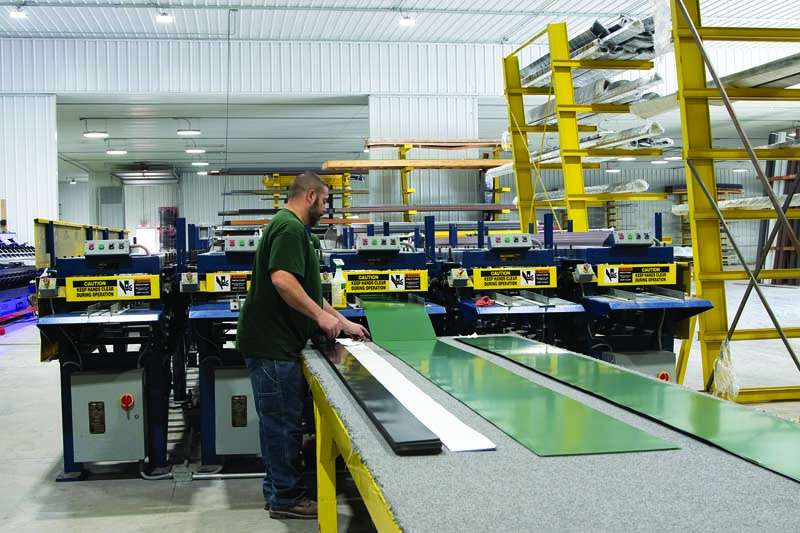
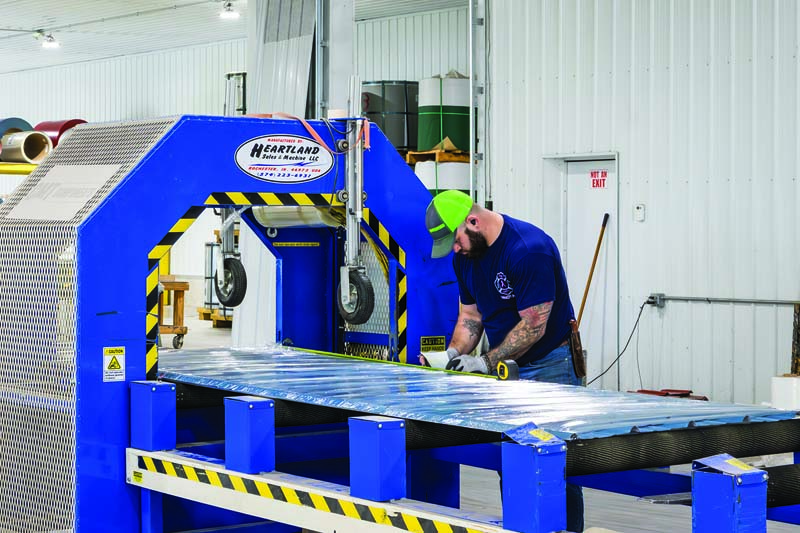
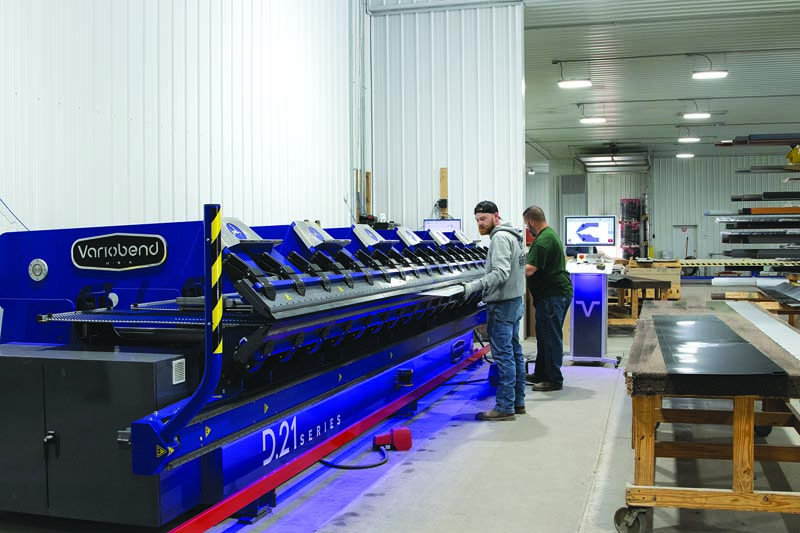
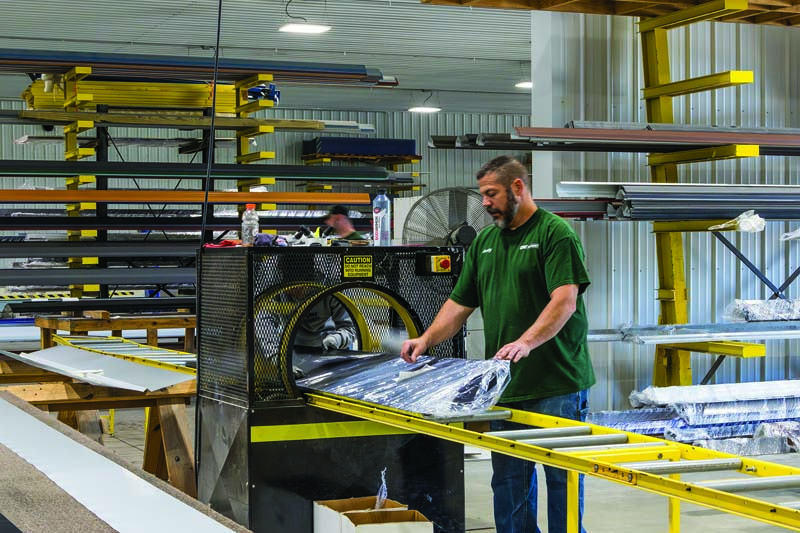
Behind the production schedule is an equipment lineup that has grown along with the company. CMT’s roll-forming equipment includes a Metal Rollforming Systems metal panel roll former, a Variobend trim brake, a trim rollformer, a metal panel cutter, a panel recoil roll former, and equipment for wrapping panels and trim from Heartland Sales & Machine.
The addition of the slit-and-recoil line in 2024 was another step in expanding the company’s ability to process and handle metal. Rather than simply adding another panel profile, the investment increased the range of work the company could perform within its own operation.
That in-house approach is one of the defining characteristics of CMT’s business. The company isn’t simply purchasing finished panels and distributing them. It manufactures its own roofing and siding, produces its own trim, and manufactures its own trusses. That gives the company greater control over production schedules and allows it to coordinate multiple components for the same project.
The company’s use of technology extends beyond the manufacturing floor. CMT offers a 3D building design tool that allows customers to visualize and customize building projects. An online ordering portal is also available for contractors and wholesalers to enter, release, schedule, and manage orders.
While equipment and technology help keep the operation moving, the owners believe people are ultimately what make the business work. Growing from three employees to 73 means that maintaining a consistent company culture becomes increasingly important.
CMT describes that culture in much the same way it describes its customer relationships: do things the right way, serve others well, communicate clearly, and pursue excellence.
That last point is reflected in the company’s motto: “Destination is excellence.”
For CMT, excellence isn’t limited to the finished product. The owners say it applies to manufacturing, communication, following through on orders, and taking care of customers after materials have been delivered.
That mindset has helped guide the company’s expansion from a small truss manufacturer into a multifaceted component manufacturer and supplier. Instead of making a dramatic leap from one business model to another, CMT has added capabilities as opportunities developed.
The path makes sense when viewed through the company’s history. Customers who originally came to CMT for trusses also needed roofing and siding. Those needs led to roll forming. As the roll-forming operation grew, CMT added profiles and processing capabilities. Building packages, garage doors, delivery services, and digital tools followed.
It is a familiar pattern in the construction industry: One product leads to another because customers need more than one piece of the puzzle.
For CMT Components, that evolution has created a business capable of supplying a substantial portion of what is needed to build a structure. A customer might need trusses, panels, trim, doors, insulation, and other components — and CMT can provide many of those products through the same operation.
The company is still growing, but its owners aren’t looking to leave behind the principles that got them here. The business that started with three employees and a focus on trusses has become a 73-employee operation with roll-forming and material-processing capabilities, but the basic objective remains familiar: take care of customers, do good work, communicate clearly, and keep moving toward that “destination of excellence.”