


Expert Daily-to-Annual Maintenance Tips
Rich Boegli of Metal Rollforming Systems gave a presentation at the 2024 Construction Rollforming Show about roll-former maintenance, sharing a wealth of useful information. Below are some of the highlights.
Before diving into the details, a word about safety: whenever guards are removed, follow a proper lockout/tagout procedure. Ensure the electrical source is locked out and the air supply to the machines is cut off before performing any service work.
Daily Maintenance
A daily routine should include:
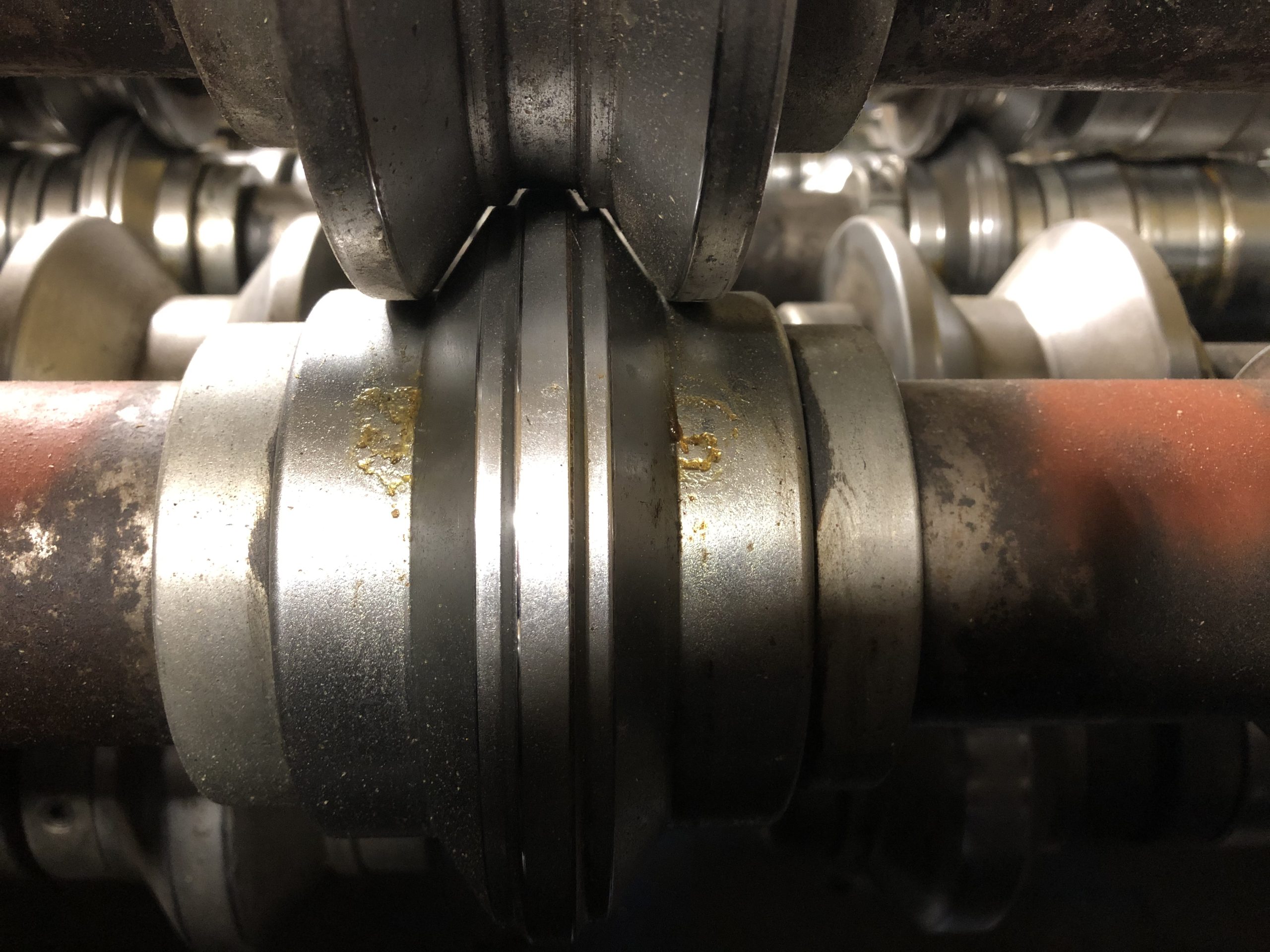
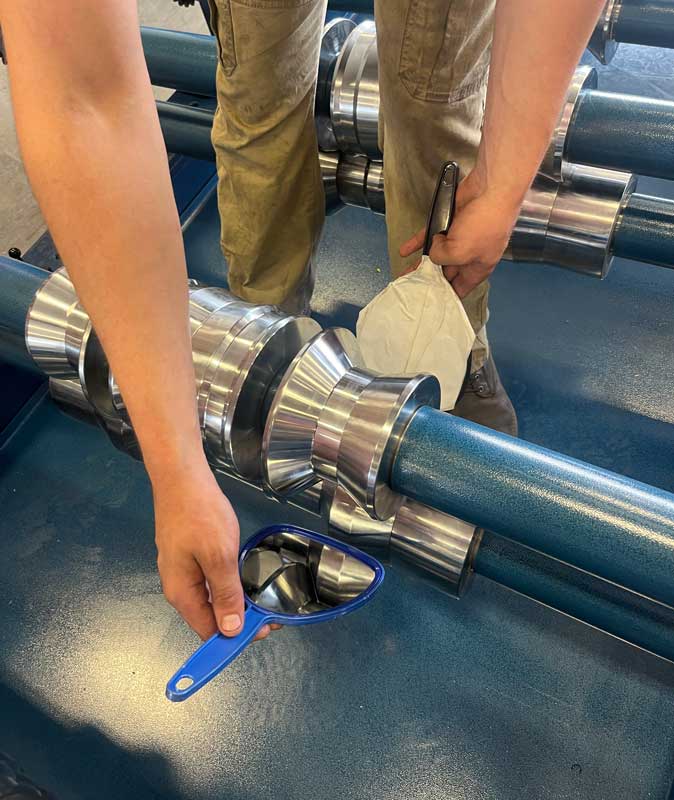
Tooling inspection. Use a mirror and a piece of paper to verify that the dies or tooling are not touching.
“If the tooling is touching, it doesn’t take more than a couple of revolutions before that tooling is marred, and you’ll have to replace dies—which gets costly,” explains Rich.
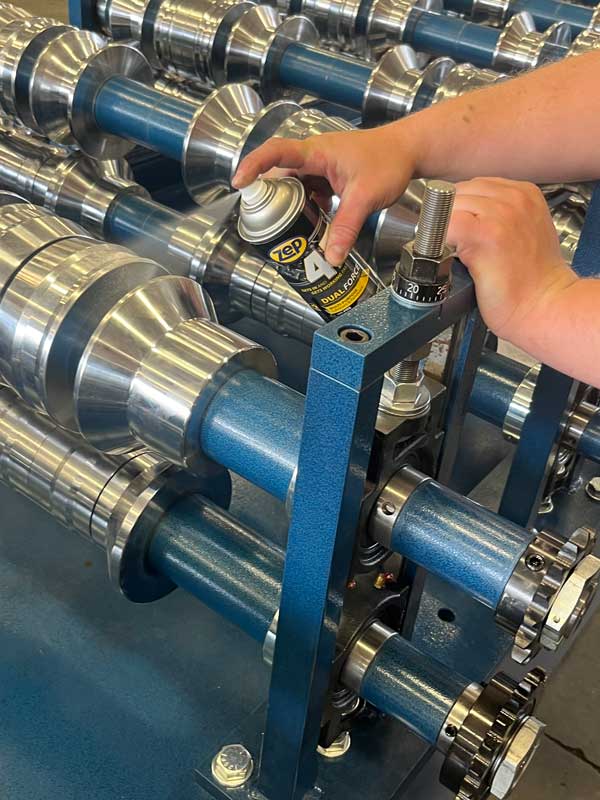
Lubrication. Roll-former tooling should be lubricated every day, per the manufacturer’s recommendation. Most recommend ZEP45, but Vanishing Oil or WD-40 will also work to minimize wear.
“That also helps clean and maintain the dies by removing dust, dirt, and debris—especially when you’re running materials like Galvalume,” Rich notes. Galvalume can leave dark lines on tooling; one workaround is to lubricate the dies and then run cardboard through them to clean off residue. “Not every machine can run cardboard because of clearance issues,” he cautions, “but this helps most panel lines avoid dark lines throughout the tooling.”
Hydraulic and pneumatic leak checks. Clean the area around hoses and fittings until you can clearly see where a leak originates. “We get many calls where people say, ‘Hey, we have a hydraulic leak, but we can’t find it,’” Rich says. “Cleaning up the area usually pinpoints the source.”
For pneumatic leaks, simply listen for the hissing sound. “That helps any manufacturer you call to pinpoint where the leak is so we can get the correct parts out to you as fast as possible.”
Pan-system cleanup. “On most of our systems, we have a pan system, and I’ve seen pans completely full of hydraulic fluid,” Rich reveals. “Clean it up daily to help locate future leaks.”
Air-system drainage. Drain water from traps and reservoirs—including all valving for the clutch, shears, and other components. “If there’s water in the system, it mixes with lubricator oils and makes valves sticky, leading to length issues or non-cutting problems.”
Oil-reservoir checks. Verify that oil reservoirs are full. Many machines have a sight line for the oil level. “If your valves aren’t getting lubricated—or if water enters the system—it dries out seals, causing them to crack or fold over and preventing the system from operating correctly,” Rich warns.
Shaft-nut torque. Ensure shaft nuts are properly tightened. “If they’re not, the shaft can move side-to-side, resulting in die damage—and you’ll spend thousands on replacement dies.”
FRL bank settings. Before startup, confirm the correct settings on your filter-regulator-lubricator (FRL) bank. “Settings vary by manufacturer. On ours, we set specific pressures for the clutch, right airbag, left airbag, and main. Over- or under-pressurizing can damage the machine or prematurely wear parts—so check with your manufacturer.”
Weekly Maintenance
Each week, you should:
Hydraulic-oil level. Check fill points on all main-tank reservoirs. If the oil level is too low, it runs excessively hot and risks failure. If the oil looks dark and brown—especially after years without changing—it’s time to replace it.
Chain condition. Inspect all chains for kinking; replace any that show stiff links.
Monthly Maintenance
On a monthly schedule, be sure to:
Shear-blade inspection. Feel the edge of your sheet for burrs. If you detect a burr, consult your manufacturer about re-tensioning the blades to achieve a clean cut. “A bad shear-blade edge can lead to customer complaints and safety hazards,” Rich emphasizes.
Chain-tension checks. Examine chains around motor areas; slack chains cause premature wear on sprockets and links, and can even break.
Encoder and belt-roller tension.
Encoders: These read sheet length on pre- or post-cut lines; proper tension on the encoder roller is crucial for accurate lengths.
Belt rollers: On infeed tables—especially double-deck systems—check belt tension while raised; tensioning on the lower deck then raising can overtighten belts and cause premature wear.
Bearing greasing. Grease bearings—but only two to three pumps. “Over-greasing extrudes grease past the seal, causing premature bearing failure. We see more failed bearings from over-greasing than under-greasing,” Rich cautions.
(“Monthly” is just a guide: if you’re running millions of feet, check more often; for lighter use, you can check less frequently.)
Annual Maintenance
Once a year, plan to:
Gearbox-oil change. Use the manufacturer’s recommended oil.
Hydraulic-fluid and filter replacement. Fresh fluid and filters help prevent premature failures.
Infeed and drive-roll cleaning. Remove guards and blow rolls clean with air. For heavily soiled rolls, use mild soap and water with a brush, then dry thoroughly. “Clean rolls feed sheets properly and maintain throughput speed,” Rich advises.
Conclusion
Consistent maintenance—daily, weekly, monthly, and annually—is essential to prolonging the life of your roll-forming equipment, ensuring product quality, and minimizing costly downtime. By following Rich Boegli’s guidelines—inspecting tooling, lubricating dies, checking fluid levels, and adhering to manufacturer-specified settings—you’ll protect your investment and keep your production running smoothly year-round. RF