


Originally Published as: Machine Developments: Recent Equipment Updates from Machine Manufacturers
Have a new product?
Call Karen, the editor, to discuss how we can help you get the word out: 715-952-1633 or email
Rollforming equipment continues to evolve as manufacturers look for ways to produce more, improve consistency and make their operations more efficient. Automation, faster production speeds, greater profile flexibility and smarter controls are among the developments shaping today’s equipment.
For this equipment update, Rollforming Magazine asked several manufacturers to highlight some of the changes they’ve made in recent years. Their responses range from relatively simple improvements that solve everyday production challenges to major advances in automation and machine design.
Here’s a look at some of the latest developments—and the production challenges they’re designed to address.
Acu-Form Equipment
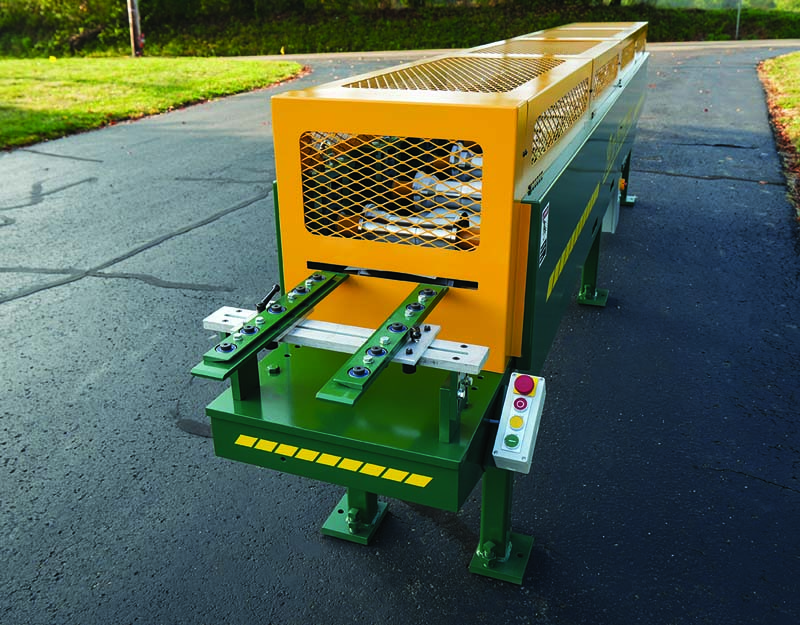
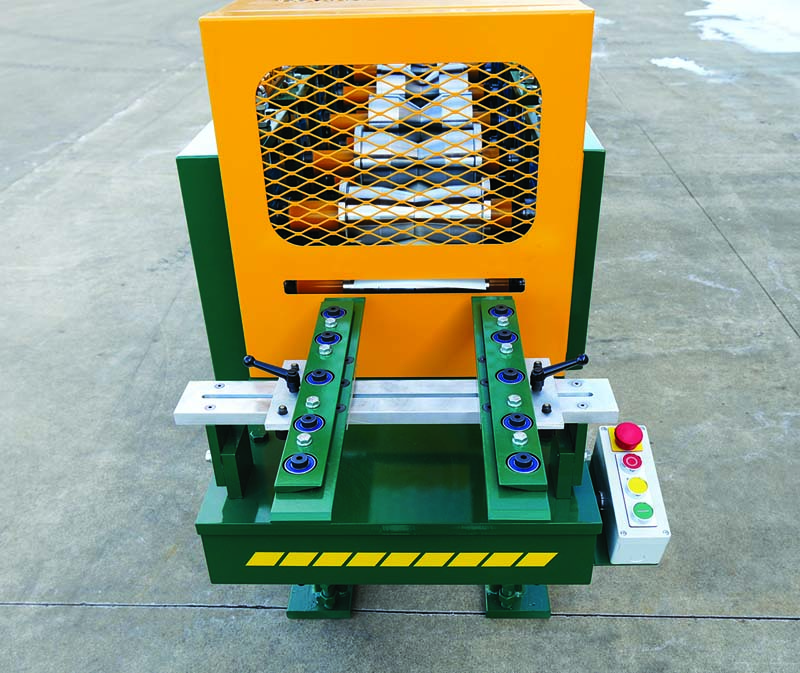
The folks at Acu-Form designed a new entry guide, which made it so the customers could feed pieces into the roll former straight – every time. Previously, parts could be fed into the machine out of square, which can cause problems with the finished components.
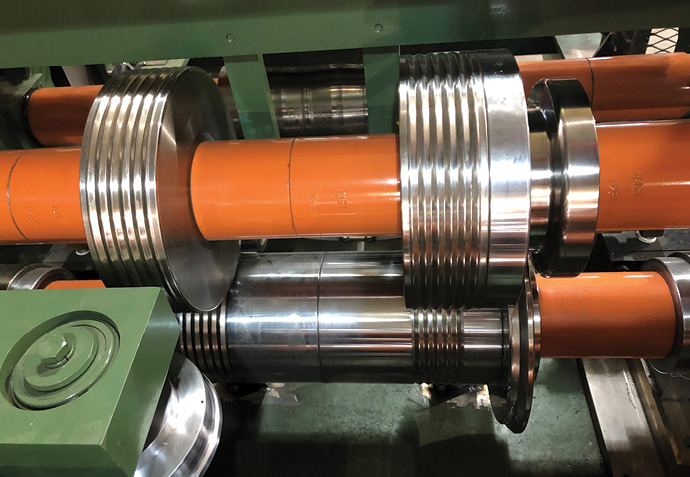
Now, even if the part stock is not cut square, it can still be fed squarely into the machine. (Shown is the Acu-Form F and J trim roll former.)

ASC Machine Tools
ASC Machine Tools has given high-speed purlin production an upgrade.
The company reports: For decades, the coil pit has been considered a necessary part of high-speed purlin rollforming. As purlin production speeds increased and servo-driven punching systems became more sophisticated, manufacturers accepted a fundamental limitation: to run a high-speed purlin line, you needed a deep pit in the factory floor.
ASC Machine Tools challenged that assumption. The result is the Lightning Uncoiler™—an electrically driven, servo-controlled uncoiler developed specifically to eliminate the need for a traditional coil pit while maintaining the speed, precision and responsiveness required for modern purlin production.
The challenge with high-speed purlin production starts at the front end of the line. Modern purlin lines can require the material to accelerate, decelerate and stop rapidly as the punching system positions the steel for each hole pattern. Traditional high-speed systems typically use a hydraulically driven drag-brake uncoiler with pneumatic brake system. While this technology has proven reliable for decades, a large steel coil has significant rotational inertia. When the punching feed system suddenly accelerates, the feed roll tower pulling material from the drag brake uncoiler cannot accelerate at the same rate.
The traditional solution was to create a large loop of material between the uncoiler with the feed roll tower, and the punching system. That loop acted as a buffer, allowing the punching system to rapidly change speed without transferring all of those forces directly back to the coil handling front end. The easiest way to create that loop was to put it in the floor. The coil pit became the solution to a problem created by the limitations of conventional coil handling.
ASC engineers asked: What if we eliminated the need for the pit altogether? That question changed the approach to the front end of the purlin line.
ASC developed the electrically driven Lightning Uncoiler™ as an active material pay-off system rather than a simple drag brake uncoiler. The Lightning Uncoiler uses an electric servo drive to actively accelerate and decelerate the coil. Working together with ASC’s servo-driven Feed Roll Tower, the system synchronizes the movement of the coil with the material demand of the punching system.
Instead of allowing the coil to react to the feed system, the Lightning Uncoiler actively participates in controlling the material. When the feed roll tower accelerates, the Lightning Uncoiler responds. When the punching cycle stops, the Lightning Uncoiler and Feed Roll Tower rapidly decelerate. Laser loop control, real-time coil diameter measurement and ASC’s proprietary control software work together to coordinate the system and minimize the effects of coil inertia.
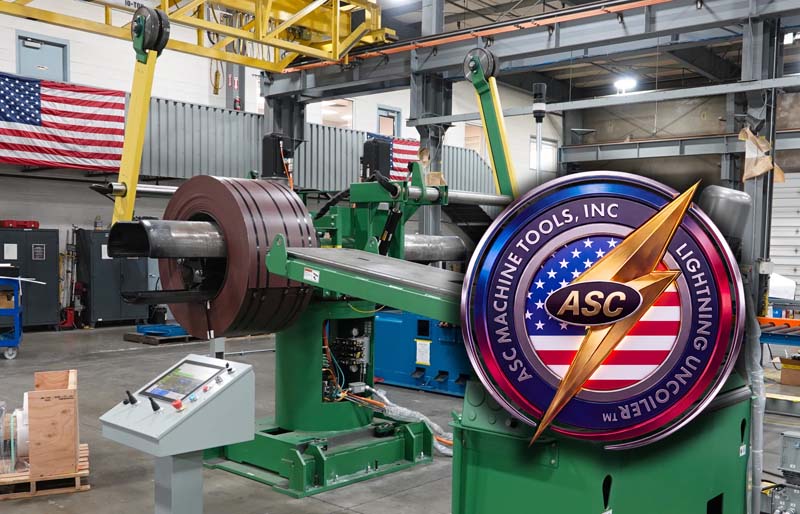
The result is a fundamentally different approach to high-speed purlin production: No pit, no compromise.
The Lightning Uncoiler allows high-speed purlin lines to operate without the traditional 8- to 10-foot-deep coil pit. That change offers advantages that go far beyond eliminating excavation.
1) A Safer Production Environment
A deep floor pit introduces an obvious physical hazard into a manufacturing facility. Guardrails, covers and other safety measures can reduce the risk, but the pit remains a permanent opening in the factory floor. Eliminating the pit removes that hazard from the production environment and can also reduce concerns associated with confined spaces and potentially hazardous atmospheric conditions.
2) Simplifying Installation
A traditional purlin pit can require substantial construction work, including excavation, concrete work, reinforcement, waterproofing, drainage and sump systems. These requirements become particularly challenging in facilities with high water tables or difficult soil conditions. With a pitless system, the equipment can be installed directly on the factory floor, eliminating much of the specialized construction associated with a deep coil pit. That can mean less construction, fewer complications and greater flexibility when planning a new production facility.
3) More Freedom for the Factory Layout
A concrete pit is permanent. Once installed, the production line’s location is largely determined. The Lightning Uncoiler™ changes that equation. By eliminating the pit, manufacturers have greater freedom when planning their factory layout and more flexibility when equipment needs to be relocated or the facility is modified in the future.
The Bradbury Group
The Bradbury Group reports the following recent machine updates:
Bradbury Auto-Flare
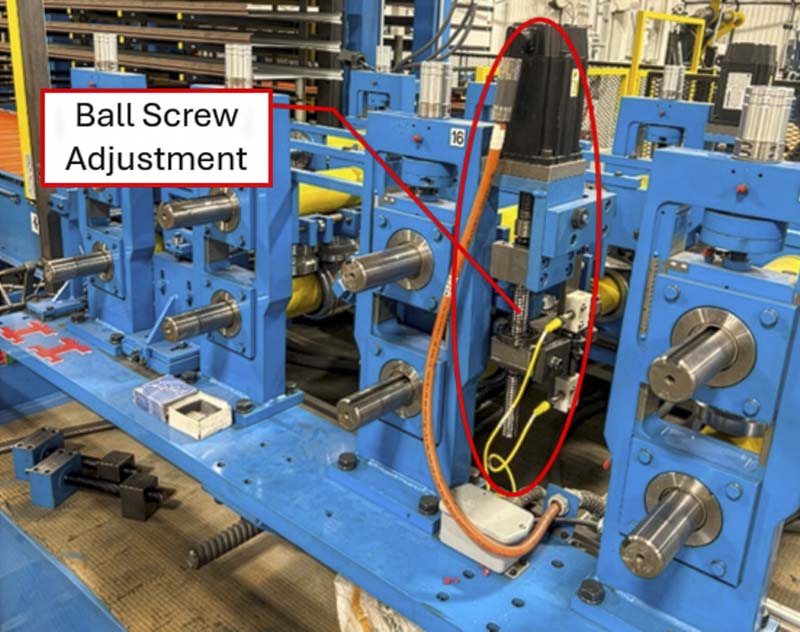
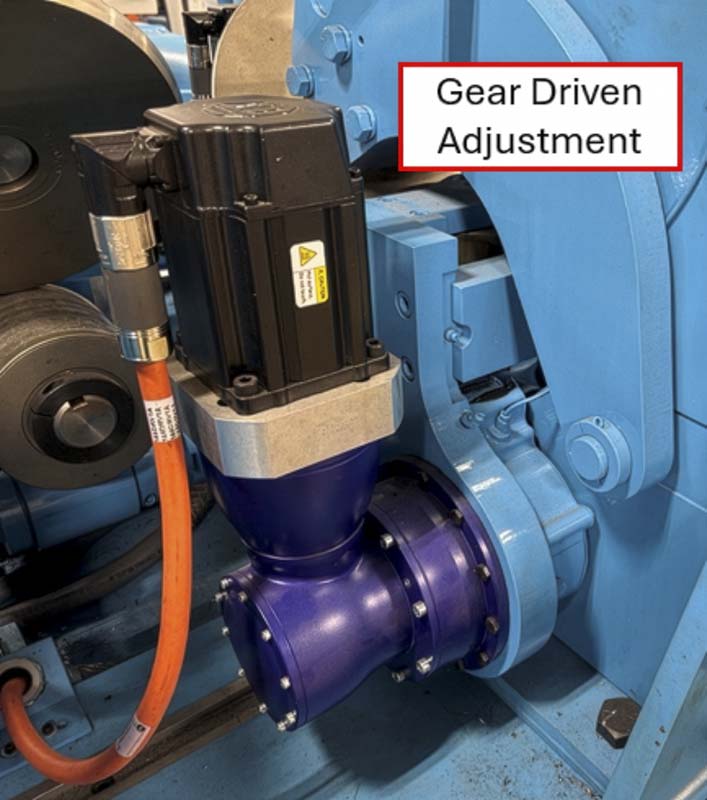
Over the past five years, Bradbury has improved its Auto Flare adjustment system by transitioning from a traditional machine screw to either a ball screw or gear-driven adjustment. This allows automatic flare adjustments to be made more quickly, reducing adjustment time during production and enabling the roll former to operate at higher speeds. The development was driven largely by customer demand for increased production rates while maintaining the benefits of automated adjustment. By improving the speed and responsiveness of the Auto Flare system, manufacturers can achieve greater throughput while maintaining consistent forming results.
Torque Vectoring®
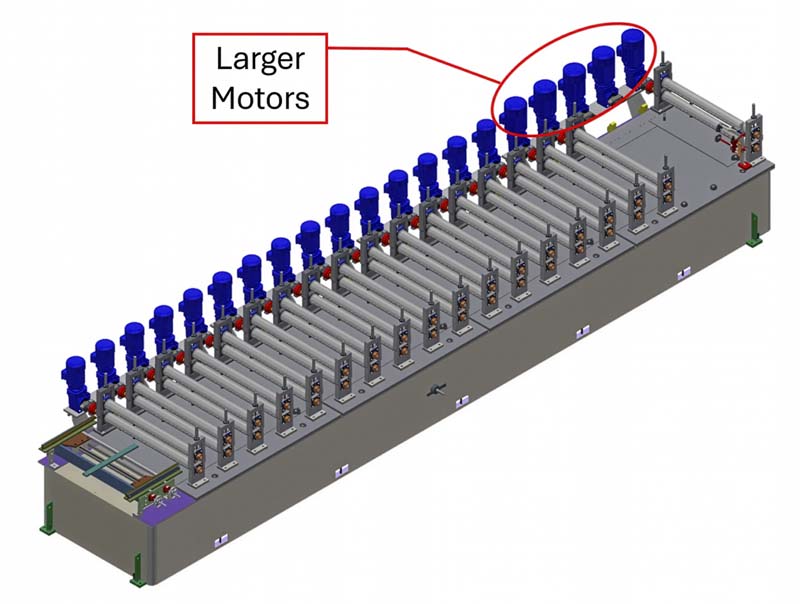
Bradbury has utilized Torque Vectoring® technology for several years, using multiple motors to drive individual forming passes or small banks of passes rather than relying on a single drive motor for the entire roll former. Traditionally, each of these motors was the same size. More recently, Bradbury has refined the system by matching motor size to the power requirements of each forming pass—using larger motors where more work is required and smaller motors for less demanding passes.
This approach maintains the full benefits of Torque Vectoring® while optimizing the drive system for the application. By appropriately sizing each motor, customers can benefit from a lower initial machine cost as well as reduced power requirements during operation.
Metal Rollforming Systems
Metal Rollforming Systems reports one of the biggest areas of development for them over the last five years has been expanding the range of profiles customers can produce while improving the productivity of the equipment itself. The company’s Titan platform can be configured for both through-fastened and concealed-fastener profiles, including AG Panel, R Panel, corrugated, Board and Batten, Quad Rib, soffit, and most industry-standard snap-lock profiles.
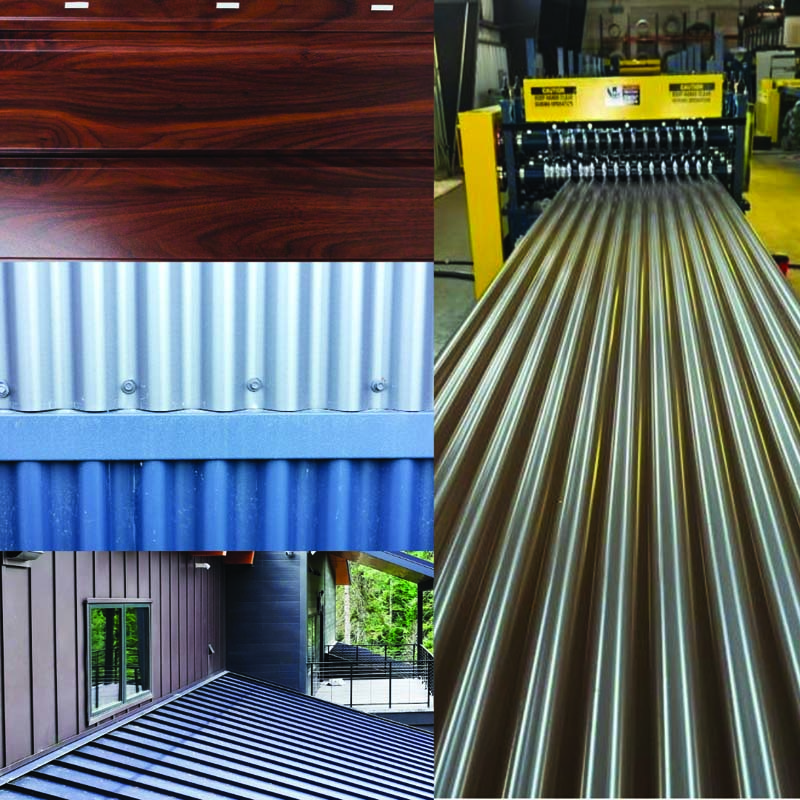
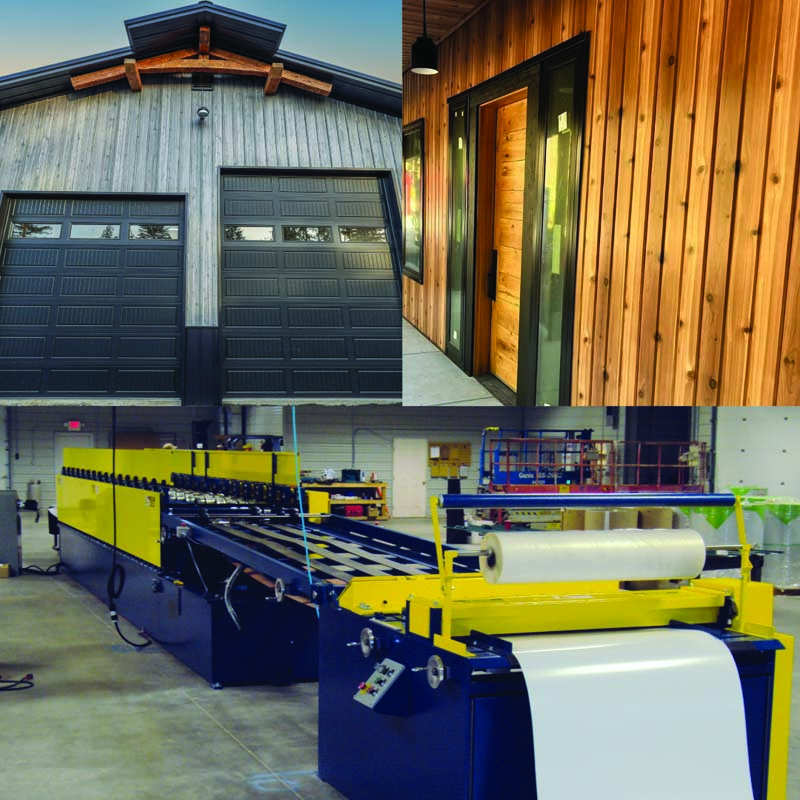
The company says, “We are seeing increasing demand for architectural through-fastened profiles such as Board and Batten and Quad Rib, which give manufacturers a more distinctive appearance while retaining the lower manufacturing, handling, and installation costs of exposed-fastener products. On the concealed-fastener side, we have expanded our in-plant snap-lock capabilities, including the ability to form 29-gauge Grade 80 material through advances in tooling design, along with optional integrated rib notching that replaces time-consuming hand notching with a more accurate, repeatable machine-formed feature. Our in-plant snap-lock systems are intended to complement, not replace, portable roll formers: portable machines remain valuable for jobsite production and very long panels, while a purpose-built in-plant system can produce most shop orders faster, more economically, and with tighter tolerances and more consistent finished-panel quality. At the same time, the Titan platform has evolved into a much more automated, higher-output production system, with servo-driven feeding, line speeds up to 275 feet per minute, approximately 50% greater throughput on applicable configurations, powered dual-head uncoiling for faster coil changes, and a multi-batch touchscreen controller with API integration to industry-specific software such as Paradigm. Together, these developments are aimed at helping customers offer a broader product mix while producing more finished feet per labor hour.”
SWI Machinery
SWI Machinery reports that automation is a highly-relevant, hot topic right now. “We’re able to automate a single process or an entire line for those companies looking to take production capacity to the next level.
“We’re not the first to bring automation to sheet metal fabricators. However, we’ve made significant advancements in controls, mechanics, and connectivity to eliminate complications seen in other solutions.”
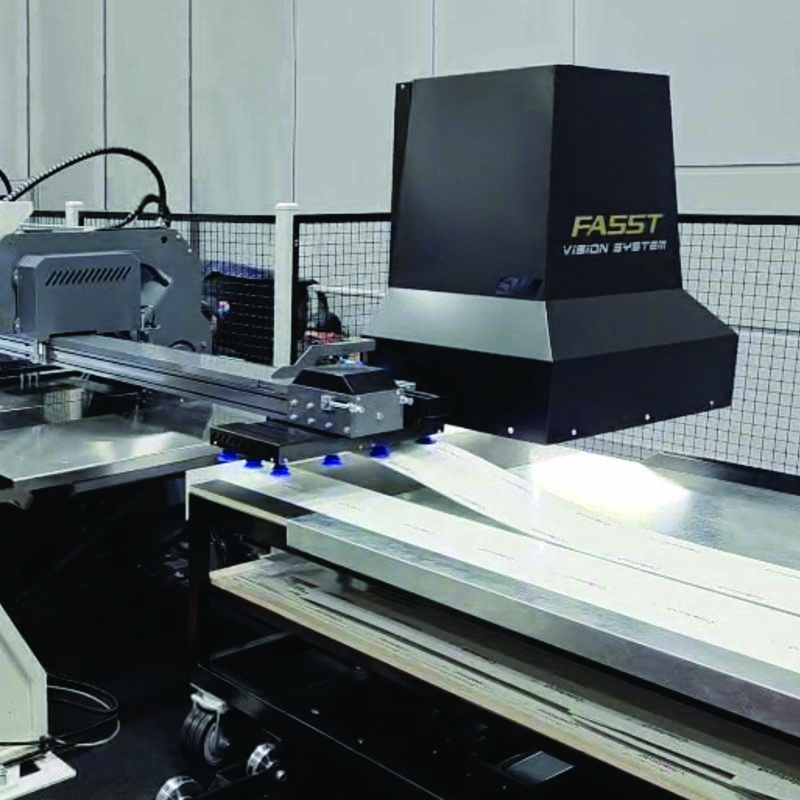
The company’s most recent development is the FASST system, which stands for Fully Automated Side Shifting Table and combines a wheeled platform, docking station, and camera system to easily and safely move blanks from a slitter operation to a Duplex folder.
The FASST Vision System automatically scans part barcodes and feeds the Side Loader.
When asked to explain the specific challenges the system addresses, the company says, “Automation as a whole comes with numerous challenges. On the FASST system specifically, the biggest hurdle was getting the camera to recognize all the pieces on the table and know in what order to load them into the folder. Since we write our own software in-house, our team was able to overcome this challenge.
“In the end, we now have a solution in our automation arsenal to collect, move, and load blanks from multiple slitting processes into a folding operation.”
SWI further explains the new development: “The driving force for our engineering and product development teams is, and always has been, that our customers always want increased efficiency and higher throughput – often times wanting to limit operator intervention and/or increase safety. Our automation solutions address our customer objectives head-on, which ultimately gives our customers a tangible competitive edge.”
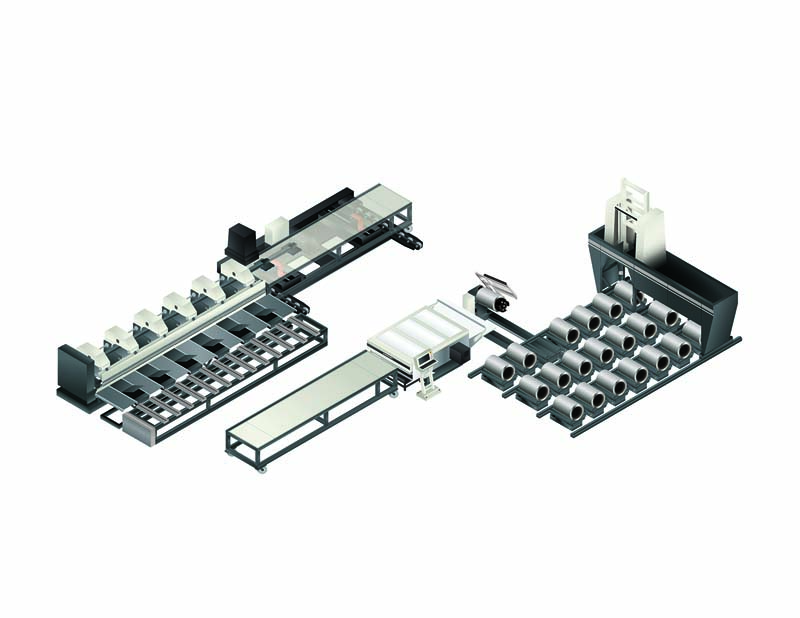
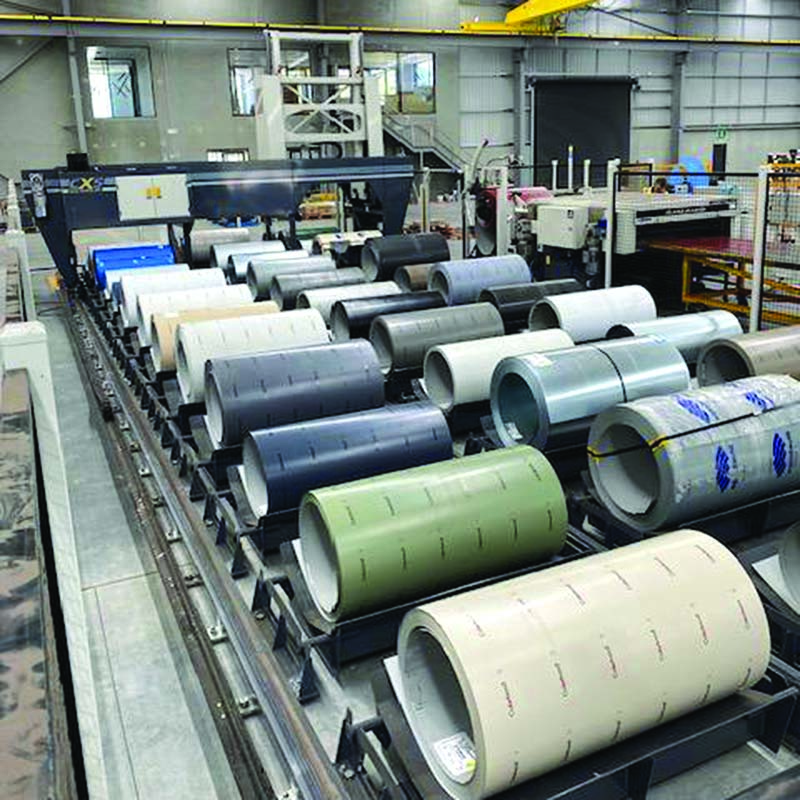
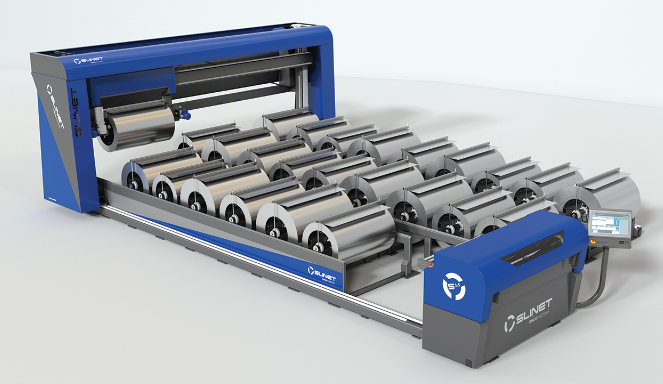
Further automation capability comes in coil storage: “Coil handling is another part of production we are automating with our CX5 coil farm. It was originally developed to load coils onto SWI slitters, but now it can automatically feed coils into rollformers.
“The newest lines we’re installing incorporate Dripstop and can run two slitting lines and two rollformers simultaneously. Pair this with the FASST Vision System on our Duplex folders and we can automate most of the shop.”
The company also adds that all of its machines can be diagnosed remotely, solving a number of issues quickly. Paired with field service technicians throughout the U.S. for service, parts, and training, it provides support long after the installation.
As technology continues to advance, the most valuable improvements may be those that address the everyday challenges rollformers face: getting material through the line efficiently, producing consistent components and making the most of available labor and floor space.
Watch future editions of Rollforming Magazine for more “equipment update” features like this.