


Originally Published as: Roper Whitney: Turning Challenges Into Opportunities for 115 Years
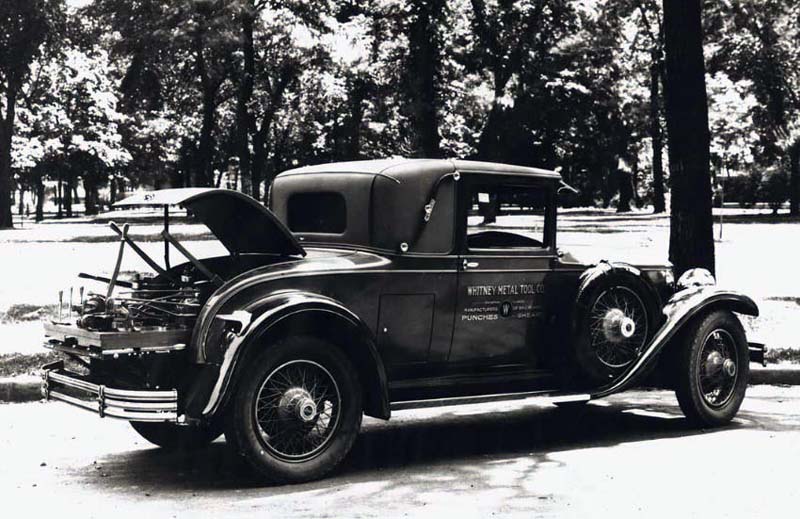
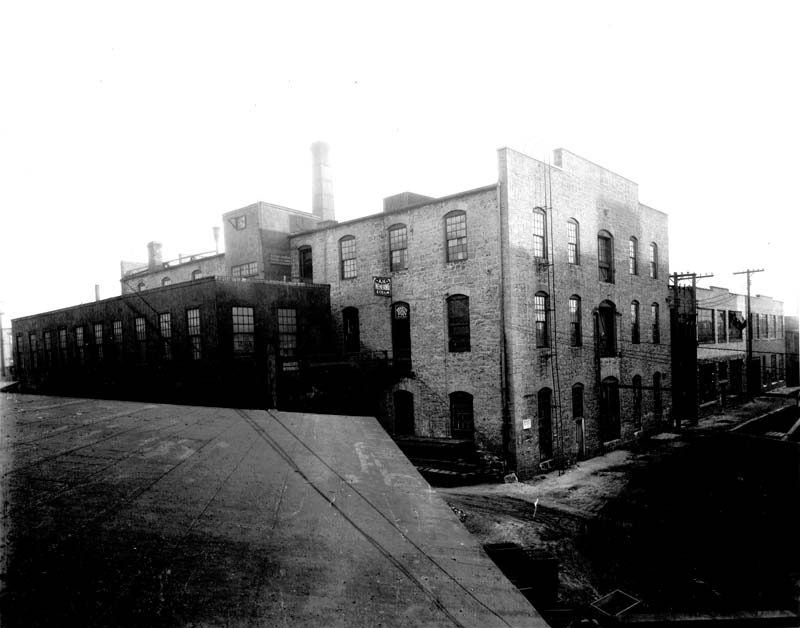
In 1910, William A. Whitney broke away from an established metal manufacturing company and founded the Whitney Metal Tool Company in Rockford, Illinois. This new venture manufactured punching hand tools, for which William Whitney held the patent. Initially, the company focused on manufacturing assorted metal fabrication tools and shears alongside the punching hand tools, all items which were familiar to Whitney. To get the business rolling, he went from business to business selling tools from the back of his car.
Whitney had nineteen patents by the end of his career, some of which were purportedly used in the construction of skyscrapers, including the Chrysler Building, completed in 1930.
Staying Relevant
In order to survive, a company has to remain relevant, offering solutions, and yet better solutions to help their customers succeed. This company has done exactly that. Over the years, they have expanded their product line, driven by the needs of the industry and the country, according to Brian McVey, Engineer. During the World Wars the company won military accounts, some of which are still active today.
In 1961, Roper Industries bought the company, and they changed the name to Roper Whitney. In 1967, construction began on the building the company currently occupies; it was completed in 1968. Then, in the 1970s the company acquired a few more businesses, including PEXTO, a manufacturer of sheet metal and woodworking tools that was started in 1785. PEXTO brought tools to the product lineup that are still manufactured today: the PS-66 Notcher, No. 383 Manual Roll Bending Machine, No. 622 Combination Rotary Machine, the No. 3617 Powered Combination Rotary Machine, and the PH-52 Hydraulic Shear.
As time went on, the company’s new machines have gotten bigger and bigger, and they have gone from manual to steam power to electric, and eventually in the ’80s and ’90s they began making some of the CNC machines they still make today. Yet, technology doesn’t stand still, and the tools are becoming progressively automated.
For all the innovation, some tools remain classics. In fact, one of their signature products is the Junior #5 Hole Punch manufactured by Whitney Metal Company, which is pictured in their 1934 catalog. This portable, hand-operated tool forces a punch pin through a substrate. It can be used instead of a drill and screw for tasks like fastening metal seams.
“You can find Junior #5 hole punches all over,” said Amanda Johnson, Sales and Marketing Manager. “They are indestructible, and they are still sold.”

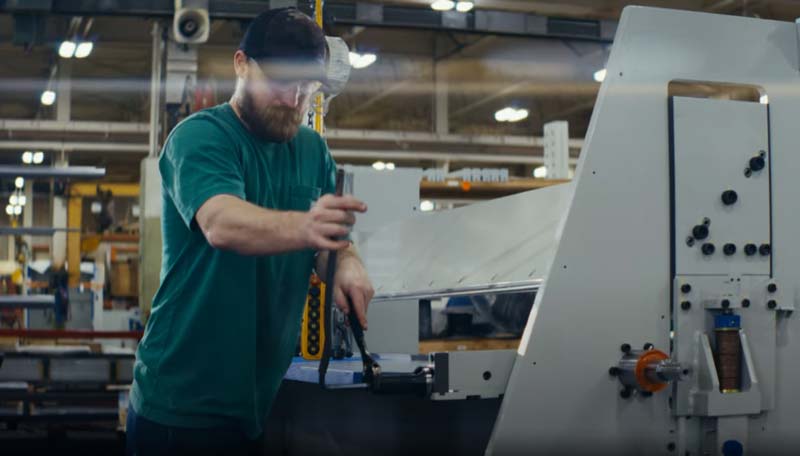
On the other hand, another of their signature products is their highly automated AutoBrake® Folder, powered by an advanced CNC system. They have many products including shears, coil processing machines, notchers, benders, roll formers, and more.
Challenges and Solutions
Like many other companies in today’s business world, Roper Whitney has found it challenging to keep its skilled trades positions filled. However, they use the same philosophy internally that they present to customers to address that workforce deficit. Their manufacturing automation has created efficiencies that allow their 75 to 80 employees to produce more than the workforce they employed in the ’80s, which is estimated to have been three to four times as many.
The recession that occurred in that timeframe threatened their success, but they adapted by expanding beyond the roofing and construction industry. They currently serve several markets including industrial and custom fabrication, automotive, aerospace, and sign manufacturing as well as architectural metal and roofing.
In the early ’90s, as computers gained in popularity, they worked on automation to remain competitive. This challenge has led to continuous improvement for the company.
The COVID-19 era challenged everyone with supply chain disruptions. The purchasing people attacked the problem by finding alternative suppliers while the engineering team got creative, finding alternative ways to create tools and machines.
While challenges are ever-present, this crew pulls together and transforms them into opportunities that propel the company forward.
Company Culture
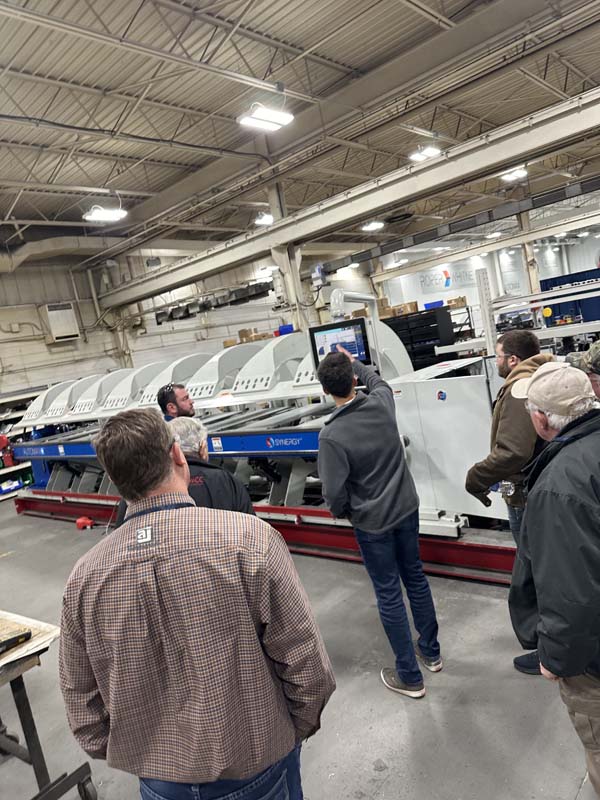
Still family-owned, the company retains that relaxed, close-knit atmosphere where everyone pulls together and every employee has the opportunity to have an important impact on outcomes, Andrea Negrini, Director of Operations, said. Yet, they compete with companies that dwarf them in size. This combination of connection paired with drive works well for them; employees tend to stay in their employ. They have people who have been with them for upwards of twenty, thirty, forty, even fifty years.
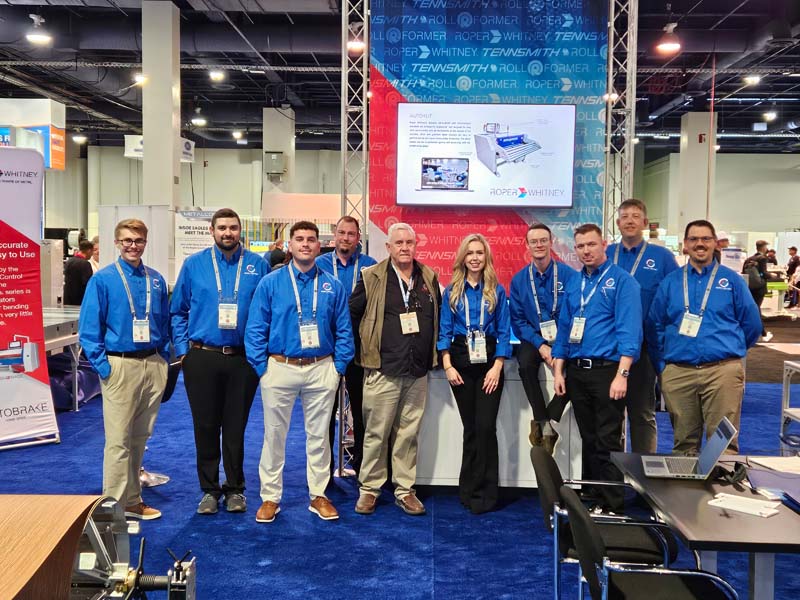
The company is owned by Tennsmith, a manufacturer that has been around since the ’30s; they specialize in manual tools such as hand brakes, roll bending machines, and slitters. Roper Whitney’s sister company is Roll Former LLC and true to their name they produce roll formers including custom trim machines. This triad of companies works well together; they share knowledge, engineering, and service. Between them they have so many options that they find they are more competitive as a team at trade shows than as individual companies.
What’s Next?
The Roper Whitney team sees ever more automation coming to the industry.
“Machines have to compensate for the fact that there are fewer and fewer people to bend the metal,” Negrini said. “AI may play a role on the control side, but it cannot replace all humans. You still need humans to operate the machines.”
The company will continue doing what it is good at: modernizing and adding new, more efficient machinery with greater safety features, both in their own production process and their product lines.
Change is necessary, according to Negrini. Companies need to push their products to be better and better and expand their offerings, he added. That is how Roper Whitney not only survives challenges, but grows through them.