

A patent allows others to be unable to make, use, sell, or import your invention for a limited amount of time. Essentially, a patent gives legal protection from others copying or profiting off your invention. When working on an invention in the construction industry, it is important to understand the “how’s” and “whys” of a patent to protect your products.
Document Your Invention
After creating an invention or an invention concept, write a detailed description. The description should include the answers to “what,” “how,” “why,” and “what problem does it solve.” The description should include the purpose, components, and materials used, along with a step-by-step usage and assembly description.
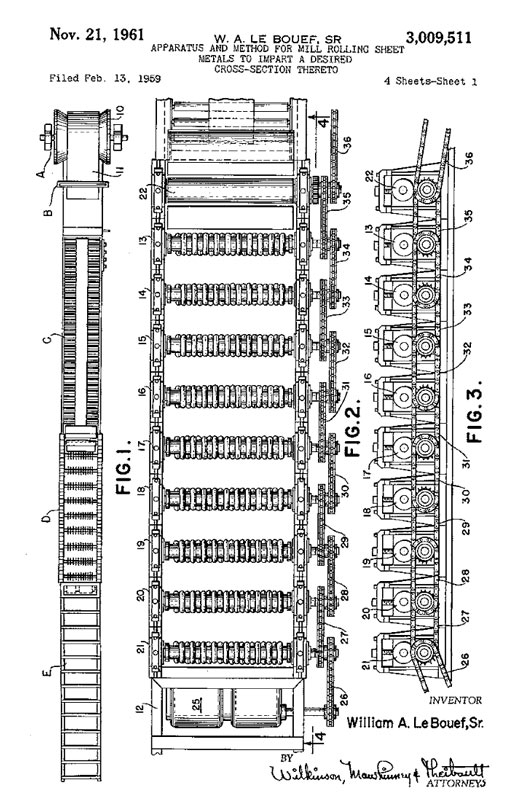
Include dates of conception and development in your product description. You should be able to prove the novelty and utility of the invention, especially for mechanical or structural components. In the U.S., The United States Patent and Trademark Office (USPTO) requires applicants to provide drawings of their invention if it is necessary in order for them to understand the subject matter. If this is the case, adding drawings and/or diagrams to the descriptions of the invention would be necessary.
Determine Patentability
Several criteria must be met for an invention to be patentable. The invention should be useful, novel, and properly described in the application. The invention must be new and not obvious to a person of ordinary skill in the relevant field.
The invention must be a patentable subject matter. Patents usually protect inventions related to processes, machines, manufacturers, or compositions of matter. Abstract ideas cannot be patented.
When considering a patent and patentability, consider whether it’s a utility, design, or plant patent. A utility patent covers how an invention works. It lasts for twenty years and is the most common patent for construction products. A design patent protects how something looks, such as shape and appearances. Lastly, a plant patent protects new plant species. This type of patent is rarely used in the construction field.
Conduct Research
If you are interested in creating a new patent, your best decision is to first conduct research. Hire a patent attorney or use the USPTO database to look for similar inventions. This helps avoid wasting time and money if the invention or patent already exists.
If a similar concept exists, it may block your patent. Some research can save you from a rejected application. In turn, research can help detail what is truly unique about your product and which parts are worth protecting. This can help to write a stronger and more focused claim.
Patent Type and Attorney
When considering a patent, you need to consider the patent type and strategy. The provisional patent is quick, inexpensive, and protects for twelve months. This patent gives “patent pending” status. A non-provisional patent is a formal application examined by USPTO. If you plan to export or manufacture overseas, consider international protection via PCT (Patent Cooperation Treaty).
It is highly recommended to hire a patent attorney. Construction inventions often involve complex mechanical systems; professional help avoids costly errors. An attorney will draft claims that protect against unnecessary workarounds along with guiding the client through the process of drafting and filing a patent, navigating the USPTO, assisting with patent litigation, and more.
Filing and Post filing the Application
After researching your invention and drafting a patent application including specifications, claims, and drawings, it is time to submit the application to the relevant patent office along with the required fees. Filing fees vary based on the type of application and the country. Most patent offices, like USPTO, enforce online filing through their websites. If you are part of a community who is unable to file electronically, hiring an outside patent attorney or agent to handle filings and communications on your behalf may be a workaround.
Required forms to file the application will be provided by the patent office. These forms include the Application Data Sheet (ADS) and any necessary oaths or declarations. It is important to ensure you have the correct forms to save time, money, and lost protection on the invention. Ensure these documents are submitted in the correct format and with the correct and necessary information.
After filing the application, a patent examiner will review the application to determine if it meets the requirements for patentability. The examiner may reach out with questions or rejections about the patent; you or your attorney must respond. This phase can involve negotiations and revisions.
Typically, 18 months after filing, your application is made public. This allows others to see your innovation and gains you prior art status. Some businesses may not prefer the application to be made public. They may be reluctant to share detailed mechanical drawings or ideas, especially if they value privacy. Filing a provisional patent allows some delay in disclosure; trade secret protection may be preferred for some inventions.
If the application is approved, the USPTO issues a notice of allowance and requires a final fee. If the application is rejected, you may appeal or modify and re-file. After your patent is issued, you receive a patent number and the legal protection on your invention begins. This patent protection is valid for 20 years from the filing date for utility patents and 15 years for design patents. Maintenance fees are due at three and a half, seven and a half, and eleven and a half years after issuance for utility patents. Missing payments can void the patent. Legal or business service providers can act as agents to manage these deadlines to avoid missed payments.
Enforce and Monetize
It is your responsibility to protect your rights. To do this, it is necessary to monitor competitors and pursue infringement if needed. You may consider licensing or using the patent to negotiate partnerships, especially if your product is widely used in the building trades.
Conclusion
A patent is a necessary legal step to ensure safety and protection on an invention. Within the three types of patents, construction companies are most likely to need a utility patent. Though the steps of receiving a patent (such as documenting, determining patentability, researching, hiring an attorney, filing, and enforcing) is a long and often difficult process, it is a necessary one in order to ensure your invention has legal protection.
Patents: The Bradbury Group
Bradbury has received dozens of patents covering a wide range of products including rollformers, levelers, press systems, and stackers. These patents benefit our company by protecting the unique mechanisms and systems we create, preventing competitors from copying our innovations. This gives us a competitive edge and helps justify all the time and effort necessary to develop new technologies. I think the most interesting aspect of the patent process is the uncertainty of it. Many patents are low value, while others become mission critical, but it’s hard to know from the start which group a new patent will fall into. One of our most valuable patents was nearly abandoned because customers didn’t initially see the value of the technology. Eventually a few pioneering users had proven its effectiveness, and suddenly that system became a core market offering for us, driving hundreds of orders over many years.
— Jamie Wollenberg, Senior Manager – Research & Development
Patents: AceClamp
Q: For what product and why did you go through the patent process?
A: One of the first products we patented in the metal roofing industry was the original A2 Clamp. This was a pivotal innovation for us because it introduced the concept of non-penetrating push pins to securely clamp onto a standing seam metal roof without damaging the panel. At the time, most solutions relied on set screws that could pierce or deform the seam. We saw a better way.
Our design provided a safer, cleaner alternative that preserved the roof warranty while offering strong holding power. Because this approach was novel and had clear advantages over existing methods, we knew it was important to protect the intellectual property. Having already had some experience with patenting products, and with the support of an excellent patent attorney, moving forward with the patent process was a straightforward and strategic decision. It not only safeguarded our innovation but also strengthened our brand and market position early on.
Q: Tell us about your patent experience. What benefits did your company or product receive from patenting?
A: Our patented non-penetrating pin design was inspired by our team’s experience developing sterile medical clamps, which had to securely attach to operating room side rails without piercing sterile drapes. We applied the same principle to metal roofs, creating a clamp that locks onto the seam without penetrating or damaging the finish—unlike set screw designs that can twist off the protective coating, our design used push-pins.
While we weren’t the first to make a metal roof clamp, we were the first to use this specific non-twisting, non-penetrating push pin concept on a flat seam that locks in place. After rigorous 3rd party testing, we worked with our patent attorney to confirm the design’s uniqueness and began the patent application process.
Though the process was costly, securing the patent gave us the confidence to invest in manufacturing, marketing, and education. It protected us from being outpaced by larger competitors and gave us the time to introduce the product to the market properly—ultimately allowing AceClamp to grow and establish our brand around a truly original innovation.
Patent: S-5!
For what products and why does your company go through the patent process?
Our company patents the majority of its products—around 90%. The decision to pursue a patent depends on whether the product is novel, inventive, unique and at risk of being replicated. We also consider whether the new product overlaps with our existing patents, which can sometimes limit our ability to file due to prior art—even our own.
The goal is to protect our intellectual property, engineering investments and extensive testing efforts. We primarily focus on metal rooftop accessories. These are often custom-designed and engineered for specific roof profiles and require significant R&D and testing. We also factor in brand protection and product safety, as imitation products could compromise both performance and customer safety.
Tell us about your patent experience, and what benefits does your company
receive from patenting?
S-5! has been issued approximately 250 patents. Because we are a global company, at any given time, we are working on patent filings in multiple jurisdictions—including the U.S., Mexico, China, India, Australia and major European and Latin American countries—to ensure comprehensive global protection. A single product may result in 5–10 patent filings across different regions. This is a strategic decision based on where the product will be sold or installed.
We have extensive experience with both utility and design patents. We file both types simultaneously:
Utility patents protect the functional, novel aspects of a product.
Design patents protect the product’s appearance to prevent lookalike knock-offs.
Design patents are faster and less expensive, so we typically file them for most products. Utility patents take longer and stay open during product development.
The benefits of patenting include:
Competitive advantage by restricting copycats and protect our investment in engineering and R&D.
Brand integrity: Design patents stop competitors from mimicking our product’s look, which could confuse customers or dilute the brand.
Legal leverage: Active patents give us legal grounds to challenge infringers.
Safety assurance: By blocking inferior knock-offs, we help ensure our customers receive fully tested, compliant products.
Product evolution: We refine patent claims and regional coverage to strengthen designs and enable future innovation.
Courtney Glover is a freelance writer and photographer based in Milwaukee, Wisconsin. She contributes her talents to various publications and is the author of the “Max Builds” children’s book series from Shield Wall Media.
Look for “Max Builds a Metal Roof” at the Construction Rollforming Show October 1-2 in Dayton, Ohio